Behavioral and Clinical Neuroscience Institute and Department of Experimental Psychology, University of Cambridge, Cambridge, UK.
Neuropsychopharmacology. 2012 Nov;37(12):2643-52. doi: 10.1038/npp.2012.128. Epub 2012 Jul 18.
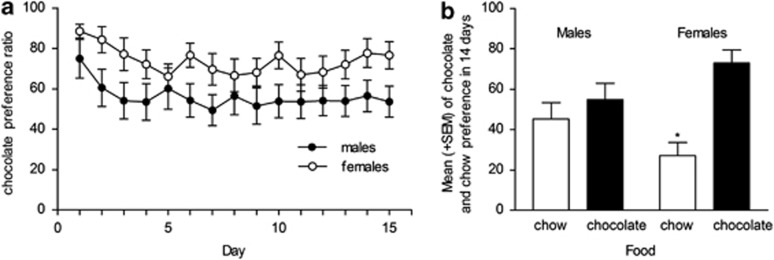
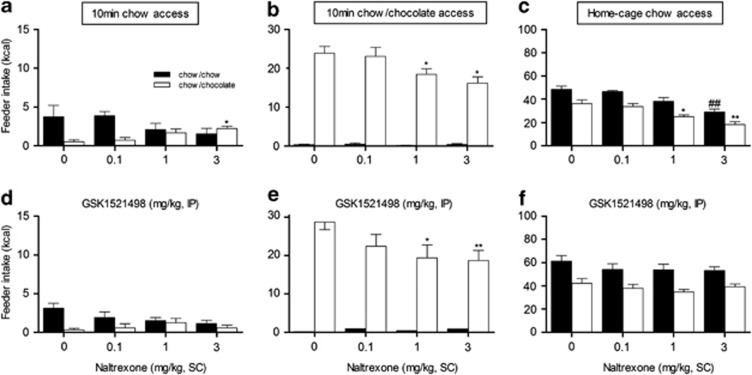
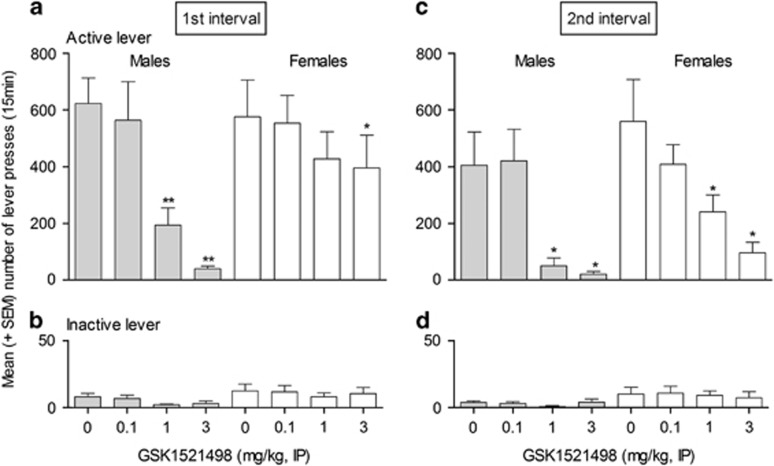
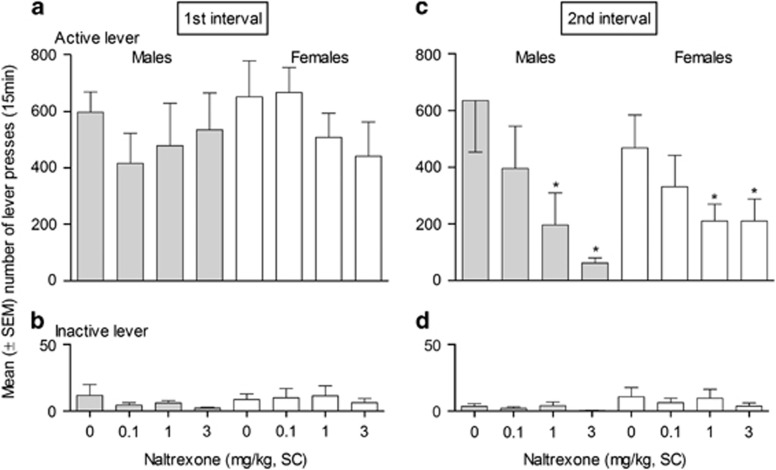
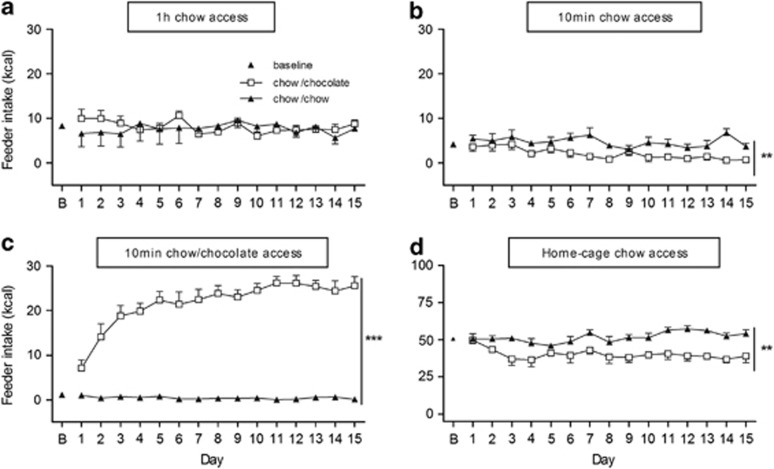
Endogenous opioids, and in particular μ-opioid receptors, have been linked to hedonic and rewarding mechanisms engaged during palatable food intake. The aim of this study was to investigate the effects of GSK1521498, a novel μ-opioid receptor antagonist, on food-seeking behavior and on binge-like eating of a highly preferred chocolate diet. Food seeking was measured in rats trained to respond for chocolate under a second-order schedule of reinforcement, in which prolonged periods of food-seeking behavior were maintained by contingent presentation of a reward-associated conditioned reinforcer. After reaching a stable baseline in both procedures, animals were treated with GSK1521498 (0.1, 1, and 3 mg/kg; IP) or naltrexone (NTX, 0.1, 1, and 3 mg/kg; SC). The binge eating model was characterized by four temporally contiguous phases: 1-h chow access, 2-h food deprivation, 10-min chow access, and 10-min access to either chocolate-flavoured food or standard chow. During training the rats developed binge-like hyperphagia of palatable food and anticipatory chow hypophagia (anticipatory negative contrast). Both compounds reduced binge-like palatable food hyperphagia. However, GSK1521498 reduced the impact of high hedonic value on ingestion more specifically than NTX, abolishing anticipatory chow hypophagia. GSK1521498 also dose-dependently reduced food seeking both before and after food ingestion, whereas NTX reduced food seeking only after food ingestion. Thus, while both drugs affected the hedonic value of the preferred food, GSK1521498 also directly decreased incentive motivation for chocolate. Selective μ-opioid receptor antagonism by GSK1521498 may have utility as a treatment for reducing maladaptive, palatability-driven eating behavior by reducing the motivational properties of stimuli that elicit the binge eating commonly associated with obesity.
内源性阿片类物质,特别是 μ 阿片受体,与美味和奖励机制有关,这些机制参与了美味食物的摄入。本研究的目的是研究新型 μ 阿片受体拮抗剂 GSK1521498 对食物寻求行为和暴饮暴食的影响,暴食是一种对高偏好巧克力饮食的行为。在通过二级强化时间表训练的大鼠中测量了食物寻求行为,在该时间表中,通过 contingent 呈现与奖励相关的条件性增强剂来维持长时间的食物寻求行为。在这两种程序中达到稳定基线后,用 GSK1521498(0.1、1 和 3mg/kg;IP)或纳曲酮(NTX,0.1、1 和 3mg/kg;SC)处理动物。暴食模型的特征是四个时间上连续的阶段:1 小时的普通食物摄入、2 小时的食物剥夺、10 分钟的普通食物摄入和 10 分钟的巧克力味食物或标准食物摄入。在训练过程中,大鼠表现出暴食样美味食物的过度进食和预期的普通食物的摄食减少(预期负对比)。这两种化合物都减少了暴食样美味食物的过度进食。然而,GSK1521498 比 NTX 更具体地减少了高享乐价值对摄入的影响,消除了预期的普通食物的摄食减少。GSK1521498 还剂量依赖性地减少了食物摄入前和摄入后的食物寻求,而 NTX 仅在食物摄入后减少了食物寻求。因此,虽然两种药物都影响了首选食物的享乐价值,但 GSK1521498 还通过减少引发与肥胖相关的暴食的刺激的激励动机,直接降低了对巧克力的动机。GSK1521498 对 μ 阿片受体的选择性拮抗作用可能有助于通过减少引发暴食的刺激的动机特性来减少适应性差的、由美味驱动的进食行为。