Department of Civil and Environmental Engineering, Massachusetts Institute of Technology, Cambridge, Massachusetts, USA.
PLoS One. 2012;7(7):e40961. doi: 10.1371/journal.pone.0040961. Epub 2012 Jul 19.
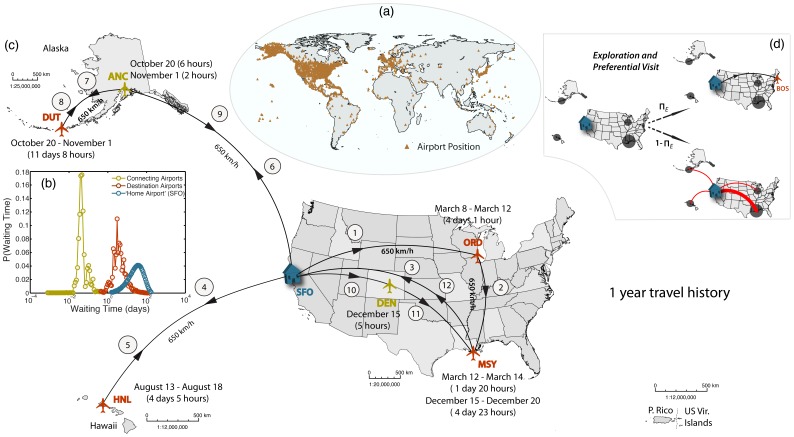
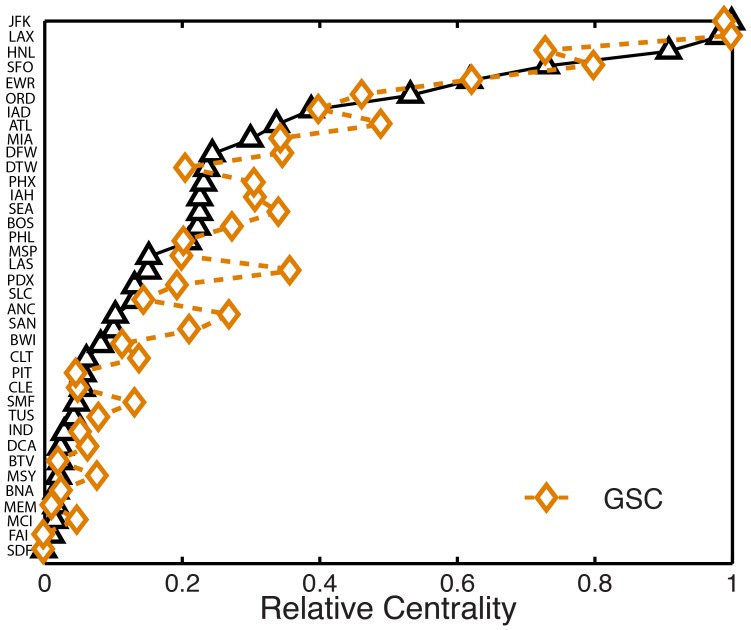
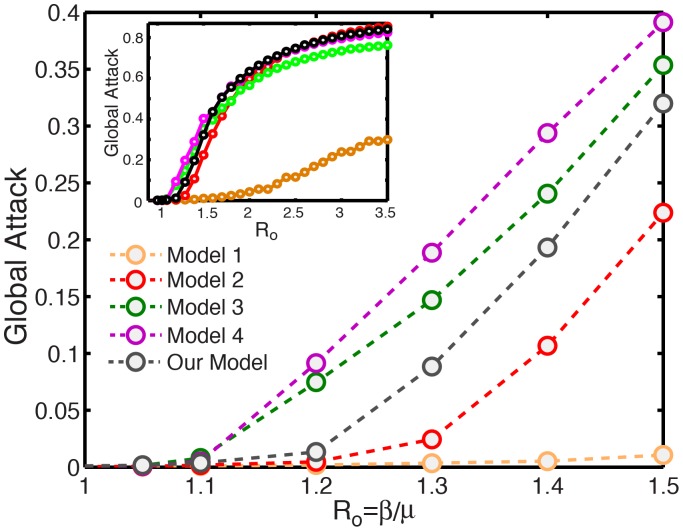
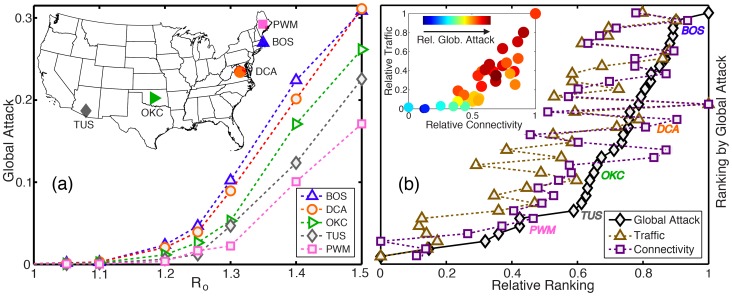
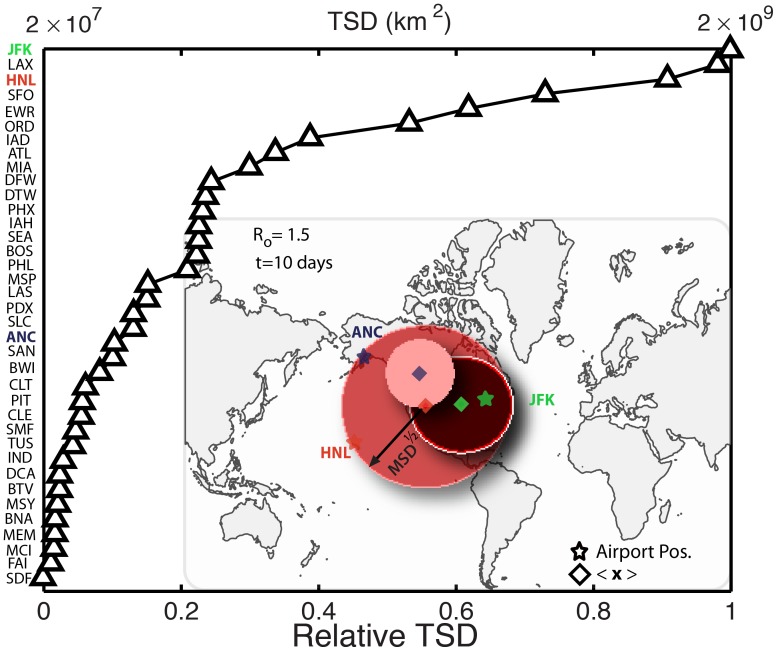
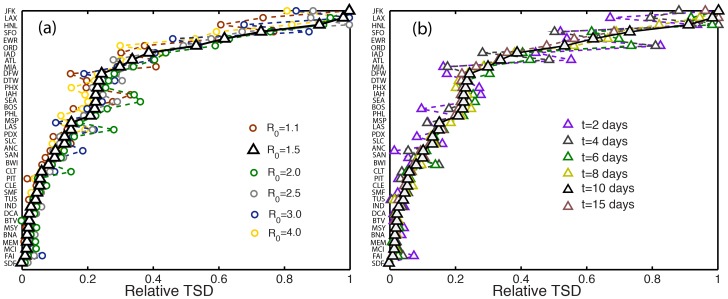
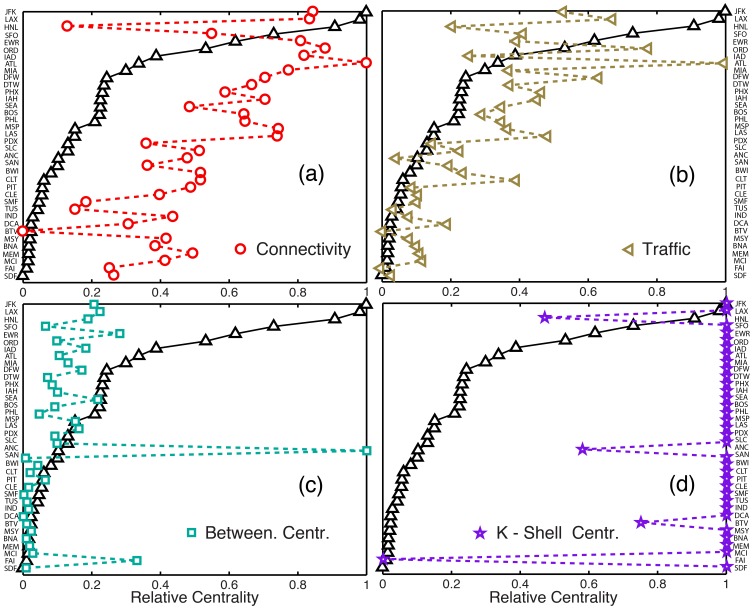
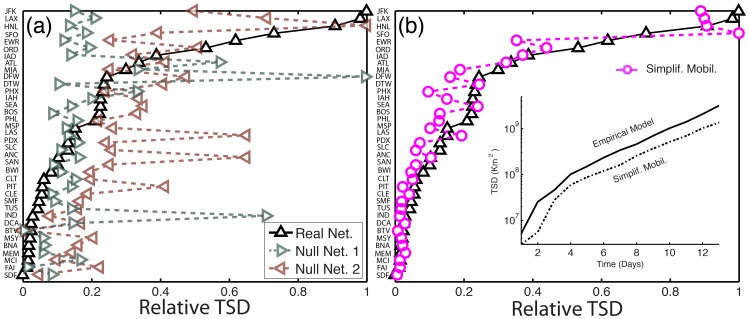
The spread of infectious diseases at the global scale is mediated by long-range human travel. Our ability to predict the impact of an outbreak on human health requires understanding the spatiotemporal signature of early-time spreading from a specific location. Here, we show that network topology, geography, traffic structure and individual mobility patterns are all essential for accurate predictions of disease spreading. Specifically, we study contagion dynamics through the air transportation network by means of a stochastic agent-tracking model that accounts for the spatial distribution of airports, detailed air traffic and the correlated nature of mobility patterns and waiting-time distributions of individual agents. From the simulation results and the empirical air-travel data, we formulate a metric of influential spreading--the geographic spreading centrality--which accounts for spatial organization and the hierarchical structure of the network traffic, and provides an accurate measure of the early-time spreading power of individual nodes.
传染病在全球范围内的传播是由长途人类旅行介导的。我们预测疫情对人类健康影响的能力需要了解从特定地点早期传播的时空特征。在这里,我们表明网络拓扑结构、地理、交通结构和个人移动模式对于准确预测疾病传播都是至关重要的。具体来说,我们通过一个随机代理跟踪模型来研究通过航空运输网络的传染病动力学,该模型考虑了机场的空间分布、详细的空中交通以及个人代理的移动模式和等待时间分布的相关性。从模拟结果和经验性的航空旅行数据中,我们制定了一个有影响力的传播度量标准——地理传播中心性,它考虑了空间组织和网络交通的层次结构,并提供了个体节点早期传播能力的准确度量。