Department of Pediatrics, School of Medicine, University of Colorado Denver, Aurora, CO, USA.
ISME J. 2013 Jan;7(1):50-60. doi: 10.1038/ismej.2012.79. Epub 2012 Jul 26.
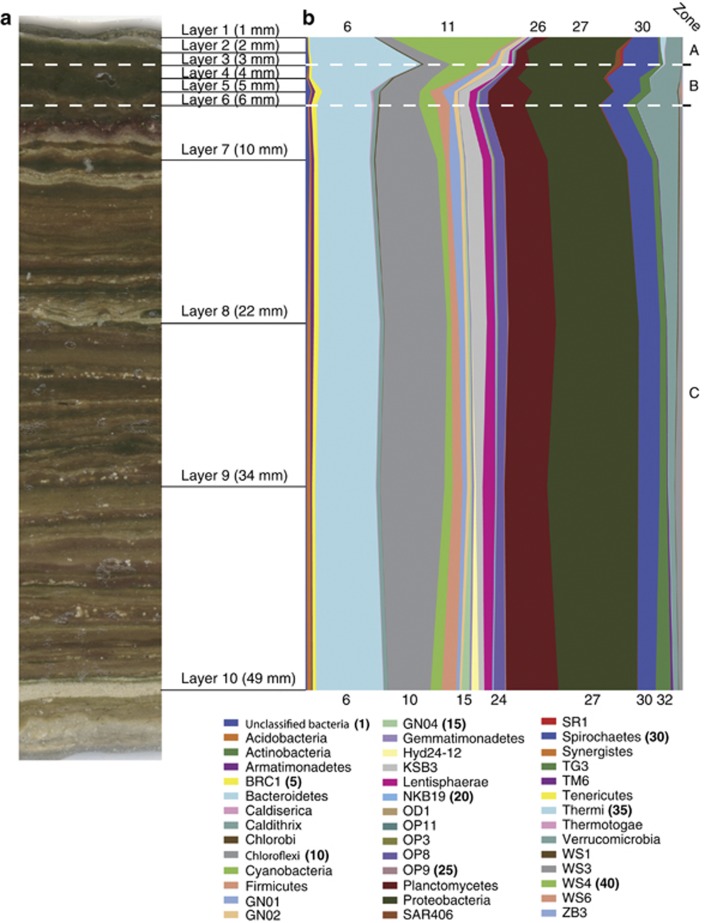
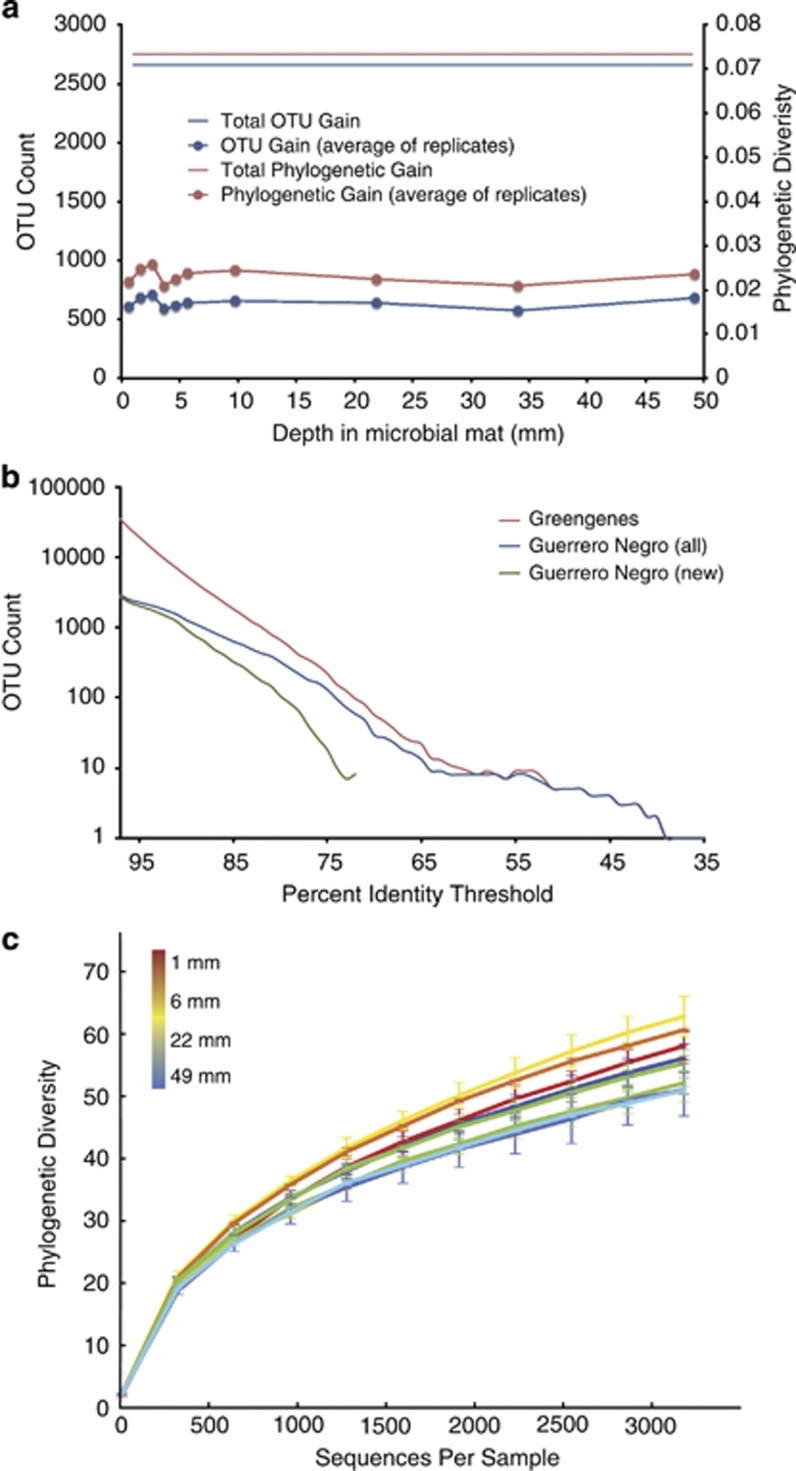
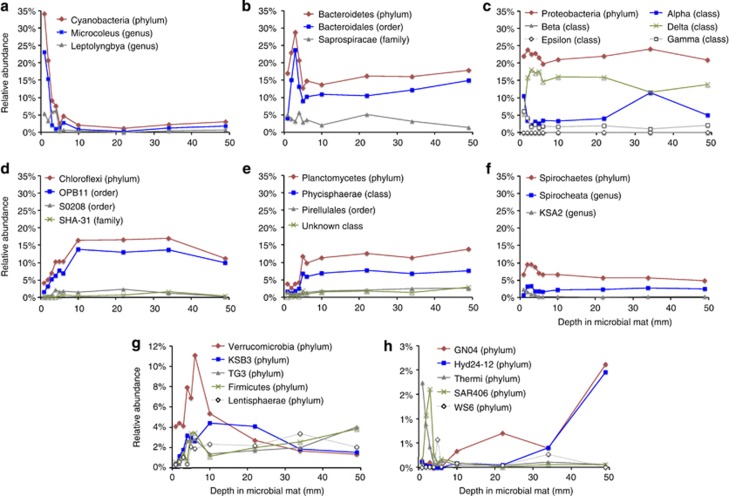
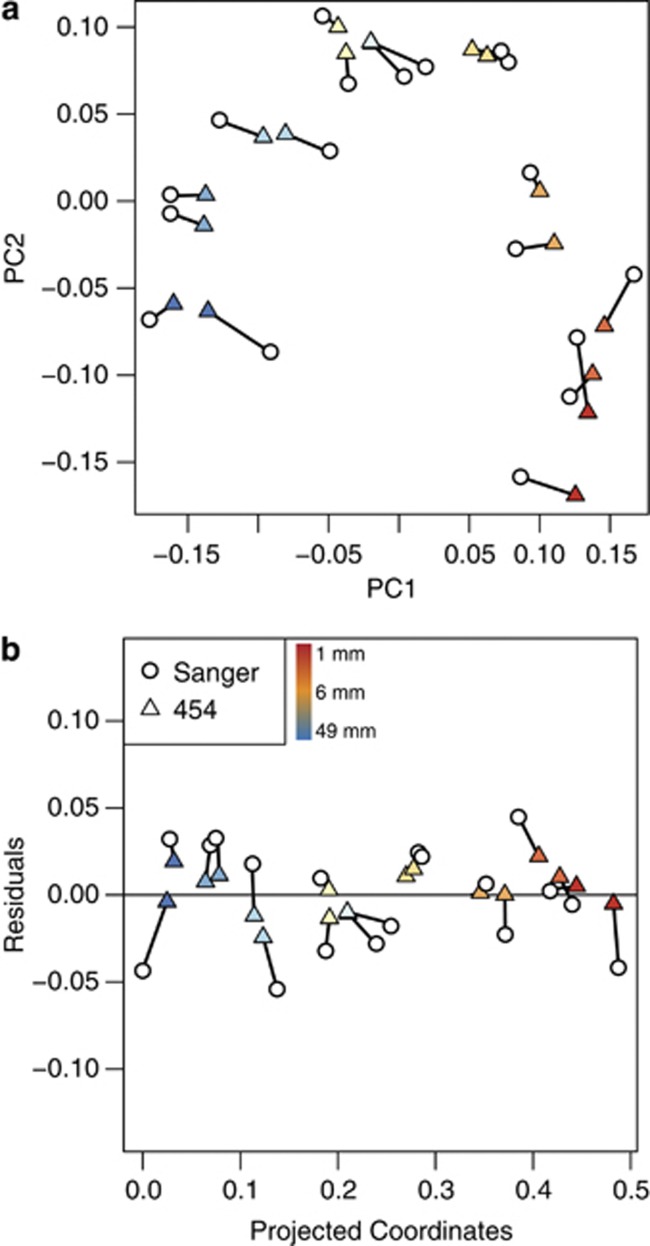
The microbial mats of Guerrero Negro (GN), Baja California Sur, Mexico historically were considered a simple environment, dominated by cyanobacteria and sulfate-reducing bacteria. Culture-independent rRNA community profiling instead revealed these microbial mats as among the most phylogenetically diverse environments known. A preliminary molecular survey of the GN mat based on only ∼1500 small subunit rRNA gene sequences discovered several new phylum-level groups in the bacterial phylogenetic domain and many previously undetected lower-level taxa. We determined an additional ∼119,000 nearly full-length sequences and 28,000 >200 nucleotide 454 reads from a 10-layer depth profile of the GN mat. With this unprecedented coverage of long sequences from one environment, we confirm the mat is phylogenetically stratified, presumably corresponding to light and geochemical gradients throughout the depth of the mat. Previous shotgun metagenomic data from the same depth profile show the same stratified pattern and suggest that metagenome properties may be predictable from rRNA gene sequences. We verify previously identified novel lineages and identify new phylogenetic diversity at lower taxonomic levels, for example, thousands of operational taxonomic units at the family-genus levels differ considerably from known sequences. The new sequences populate parts of the bacterial phylogenetic tree that previously were poorly described, but indicate that any comprehensive survey of GN diversity has only begun. Finally, we show that taxonomic conclusions are generally congruent between Sanger and 454 sequencing technologies, with the taxonomic resolution achieved dependent on the abundance of reference sequences in the relevant region of the rRNA tree of life.
墨西哥下加利福尼亚州巴哈加利福尼亚湾的格雷罗内格罗(GN)微生物垫传统上被认为是一个简单的环境,主要由蓝藻和硫酸盐还原菌组成。然而,基于 rRNA 基因的非培养群落分析结果表明,这些微生物垫是目前已知的在系统发育上最多样化的环境之一。对 GN 微生物垫进行的一项初步分子调查仅基于约 1500 个小亚基 rRNA 基因序列,就在细菌的系统发育域中发现了几个新的门级群,以及许多以前未检测到的低分类群。我们从 GN 微生物垫的 10 层深度剖面中获得了另外约 119000 个近乎全长序列和 28000 个>200 个核苷酸的 454 读取序列。通过对一个环境中如此长序列的前所未有的覆盖,我们确认微生物垫在系统发育上是分层的,可能对应于整个微生物垫深度范围内的光照和地球化学梯度。来自相同深度剖面的以前的鸟枪法宏基因组数据显示出相同的分层模式,并表明宏基因组特性可能可以从 rRNA 基因序列预测。我们验证了以前鉴定的新谱系,并在较低的分类学水平上发现了新的系统发育多样性,例如,在科属水平上的数千个操作分类单位与已知序列有很大的不同。新序列填补了细菌系统发育树中以前描述较少的部分,但表明对 GN 多样性的任何全面调查才刚刚开始。最后,我们表明,分类学结论在 Sanger 和 454 测序技术之间通常是一致的,分类分辨率取决于相关 rRNA 生命之树区域中参考序列的丰度。