Theoretical Biology & Bioinformatics, Utrecht University, Utrecht, the Netherlands.
PLoS Comput Biol. 2012;8(7):e1002593. doi: 10.1371/journal.pcbi.1002593. Epub 2012 Jul 26.
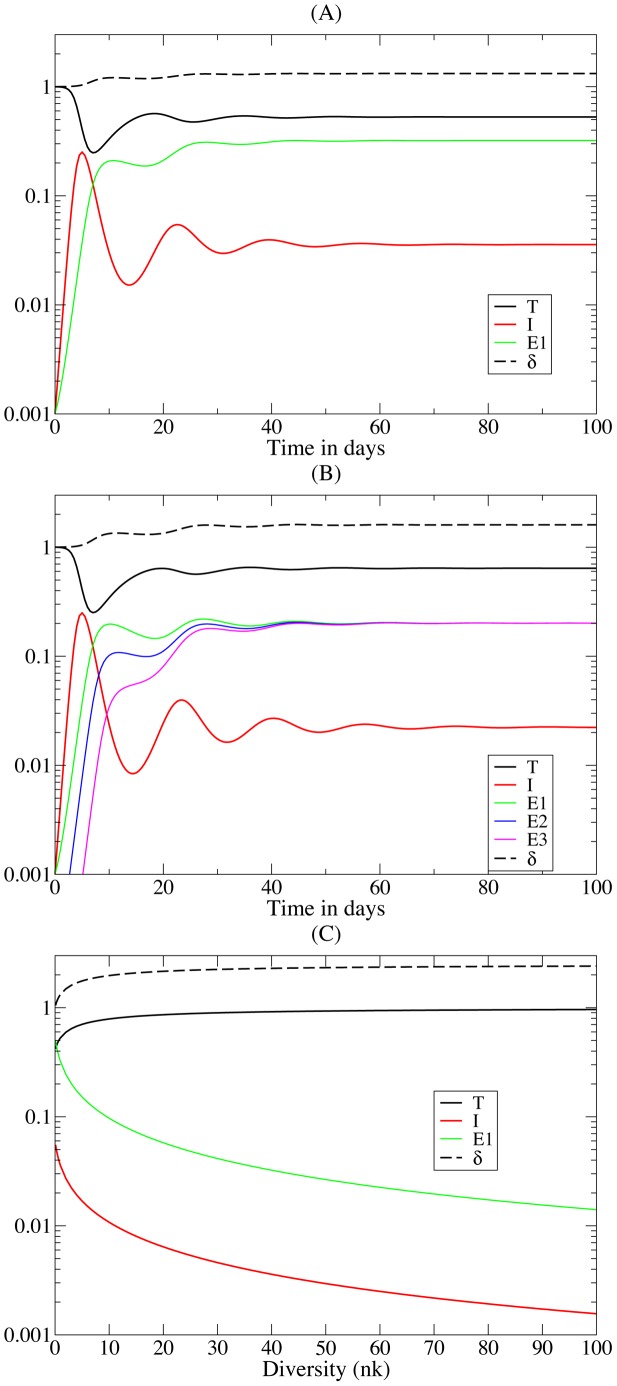
In theoretical ecology it is well known that the steady state expressions of the variables in a food chain crucially depend on the parity of the length of the chain. This poses a major problem for modeling real food webs because it is difficult to establish their true number of trophic levels, with sometimes rare predators and often rampant pathogens. Similar problems arise in the modeling of chronic viral infections. We review examples where seemingly general interpretations strongly depend on the number of levels in a model, and on its specific equations. This Perspective aims to open the discussion on this problem.
在理论生态学中,人们熟知的是,食物链中变量的稳态表达式严重依赖于食物链长度的奇偶性。这给真实食物网的建模带来了一个主要问题,因为很难确定它们真实的营养级数量,有时稀有捕食者和经常猖獗的病原体都会存在。在慢性病毒感染的建模中也会出现类似的问题。我们回顾了一些例子,其中看似普遍的解释强烈依赖于模型中的层次数量及其具体的方程。本观点旨在开启对这一问题的讨论。