Internal Medicine Department, Faculdade de Medicina de Botucatu, Universidade Estadual Paulista (UNESP), Botucatu, São Paulo, Brazil.
PLoS One. 2012;7(7):e41439. doi: 10.1371/journal.pone.0041439. Epub 2012 Jul 23.
Micronutrient deficiency is observed in heart failure patients. Taurine, for example, represents 50% of total free amino acids in the heart, and in vivo studies have linked taurine deficiency with cardiomyopathy.
Thirty-four male Wistar rats (body weight = 100 g) were weighed and randomly assigned to one of two groups: Control (C) or taurine-deficient (T (-)). Beta-alanine at a concentration of 3% was added to the animals' water to induce taurine deficiency in the T (-) group. On day 30, the rats were individually submitted to echocardiography; morphometrical and histopathological evaluation and metalloproteinase activity, oxidative stress and inflammation evaluation were performed. Tissue samples were collected to determine the taurine concentration in the heart.
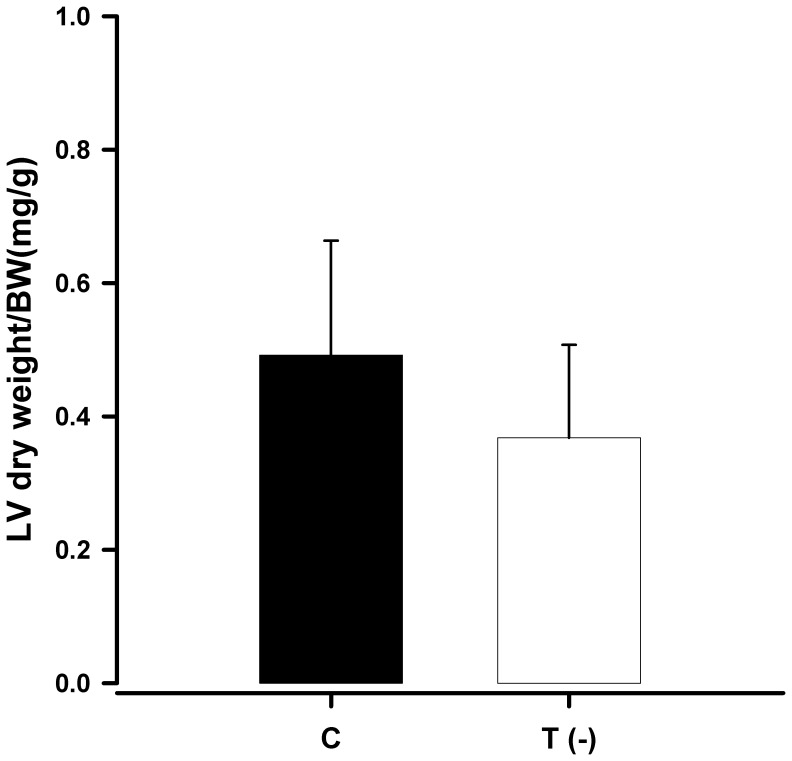
Taurine deficiency led to decreases in: ventricular wall thickness, left ventricle dry weight, myocyte sectional area, left ventricle posterior wall thickness and ventricular geometry. With regard to heart function, the velocity of the A wave, the ratio between the E and A wave, the ejection fraction, fractional shortening and cardiac output values were decreased in T (-) rats, suggesting abnormal diastolic and systolic function. Increased fibrosis, inflammation and increased activation of metalloproteinases were not observed. Oxidative stress was increased in deficient animals.
These data suggest that taurine deficiency promotes structural and functional cardiac alterations with unique characteristics.
心力衰竭患者存在微量营养素缺乏。例如,牛磺酸占心脏中总游离氨基酸的 50%,体内研究表明牛磺酸缺乏与心肌病有关。
将 34 只雄性 Wistar 大鼠(体重= 100 g)称重,并随机分为两组:对照组(C)或牛磺酸缺乏组(T (-))。在 T (-)组的水中添加浓度为 3%的β-丙氨酸以诱导牛磺酸缺乏。第 30 天,对大鼠进行单独的超声心动图检查;进行形态计量学和组织病理学评估以及金属蛋白酶活性、氧化应激和炎症评估。收集组织样本以确定心脏中的牛磺酸浓度。
牛磺酸缺乏导致:室壁厚度、左心室干重、心肌细胞截面积、左心室后壁厚度和心室几何形状减小。就心脏功能而言,T (-)大鼠的 A 波速度、E 波与 A 波的比值、射血分数、缩短分数和心输出量值降低,提示舒张和收缩功能异常。未观察到纤维化、炎症增加和金属蛋白酶活性增加。缺乏牛磺酸的动物的氧化应激增加。
这些数据表明,牛磺酸缺乏会导致心脏结构和功能发生改变,具有独特的特征。