Department of Neuroscience, Karolinska Institutet, Stockholm, Sweden.
PLoS One. 2012;7(7):e42078. doi: 10.1371/journal.pone.0042078. Epub 2012 Jul 31.
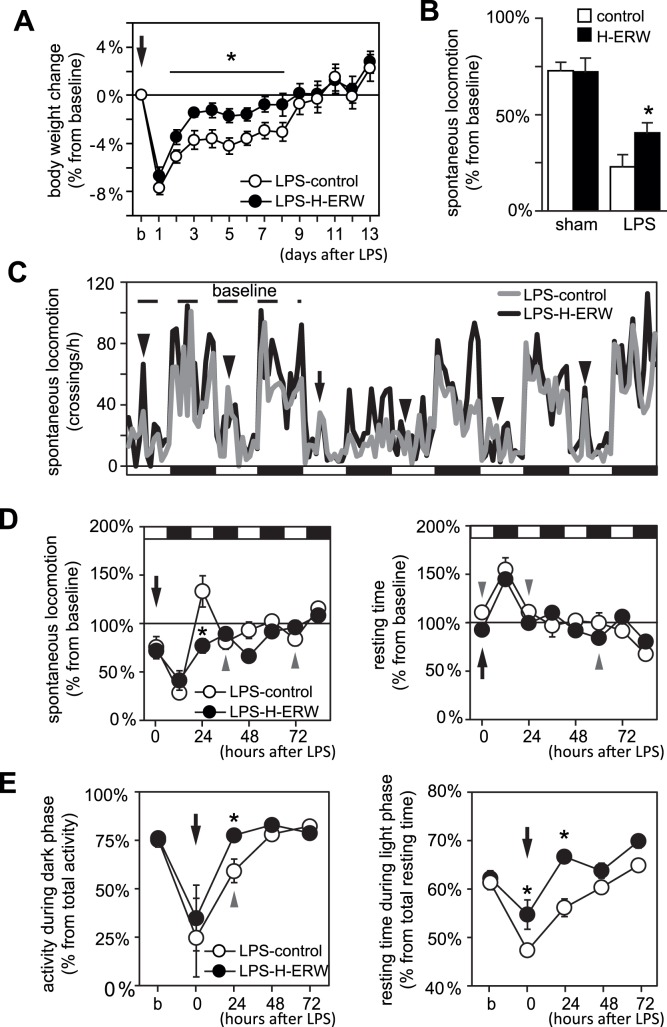
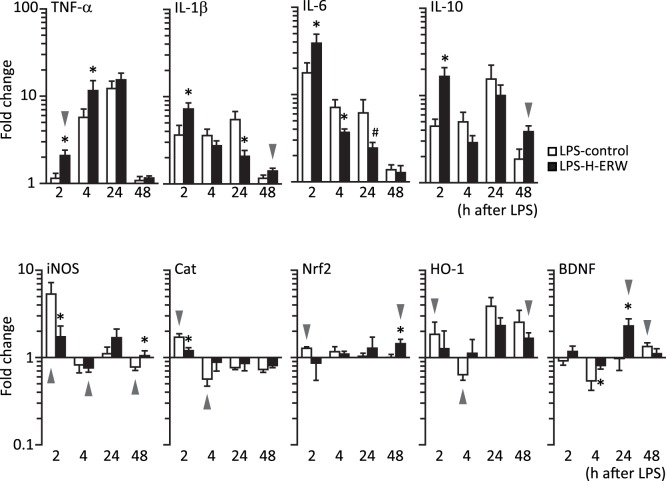
Molecular hydrogen has been shown to have neuroprotective effects in mouse models of acute neurodegeneration. The effect was suggested to be mediated by its free-radical scavenger properties. However, it has been shown recently that molecular hydrogen alters gene expression and protein phosphorylation. The aim of this study was to test whether chronic ad libitum consumption of molecular hydrogen-enriched electrochemically reduced water (H-ERW) improves the outcome of lipopolysaccharide (LPS)-induced neuroinflammation. Seven days after the initiation of H-ERW treatment, C57Bl/6 mice received a single injection of LPS (0.33 mg/kg i.p.) or an equivalent volume of vehicle. The LPS-induced sickness behaviour was assessed 2 h after the injection, and recovery was assessed by monitoring the spontaneous locomotor activity in the homecage for 72 h after the administration of LPS. The mice were killed in the acute or recovery phase, and the expression of pro- and antiinflammatory cytokines in the hippocampus was assessed by real-time PCR. We found that molecular hydrogen reduces the LPS-induced sickness behaviour and promotes recovery. These effects are associated with a shift towards anti-inflammatory gene expression profile at baseline (downregulation of TNF- α and upregulation of IL-10). In addition, molecular hydrogen increases the amplitude, but shortens the duration and promotes the extinction of neuroinflammation. Consistently, molecular hydrogen modulates the activation and gene expression in a similar fashion in immortalized murine microglia (BV-2 cell line), suggesting that the effects observed in vivo may involve the modulation of microglial activation. Taken together, our data point to the regulation of cytokine expression being an additional critical mechanism underlying the beneficial effects of molecular hydrogen.
分子氢已被证明在急性神经退行性变的小鼠模型中具有神经保护作用。这种作用被认为是通过其自由基清除特性介导的。然而,最近已经表明,分子氢会改变基因表达和蛋白质磷酸化。本研究旨在测试慢性随意饮用富含电化学还原水的分子氢(H-ERW)是否能改善脂多糖(LPS)诱导的神经炎症的结果。在开始 H-ERW 治疗 7 天后,C57Bl/6 小鼠接受单次 LPS(0.33 mg/kg ip)或等量载体注射。注射后 2 小时评估 LPS 诱导的病态行为,通过监测 LPS 给药后 72 小时内的自发运动活动来评估恢复情况。在急性或恢复阶段处死小鼠,通过实时 PCR 评估海马中促炎和抗炎细胞因子的表达。我们发现,分子氢可减轻 LPS 诱导的病态行为并促进恢复。这些作用与基线时抗炎基因表达谱的转变有关(TNF-α下调和 IL-10 上调)。此外,分子氢增加了幅度,但缩短了持续时间并促进了神经炎症的消退。一致地,分子氢以相似的方式调节激活和基因表达,在永生化的小鼠小胶质细胞(BV-2 细胞系)中,这表明体内观察到的作用可能涉及小胶质细胞激活的调节。总之,我们的数据表明细胞因子表达的调节是分子氢有益作用的另一个关键机制。