Murphy Kaitlin C, Leach J Kent
Department of Biomedical Engineering, University of California, Davis, Davis, CA 95616, USA.
BMC Res Notes. 2012 Aug 8;5:423. doi: 10.1186/1756-0500-5-423.
Fibrin gels are a promising biomaterial for tissue engineering. However, current fabrication methods are time intensive with inherent variation. There is a pressing need to develop new and consistent approaches for producing fibrin-based hydrogels for examination.
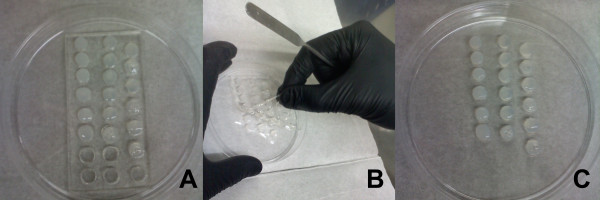
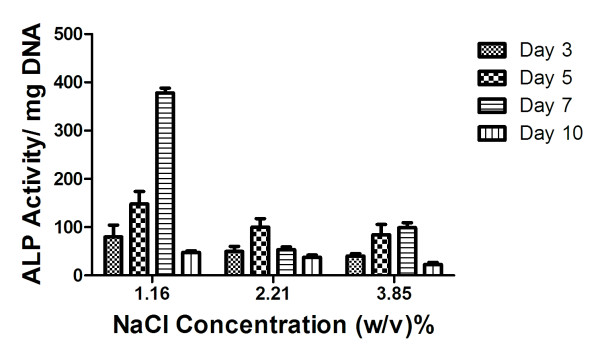
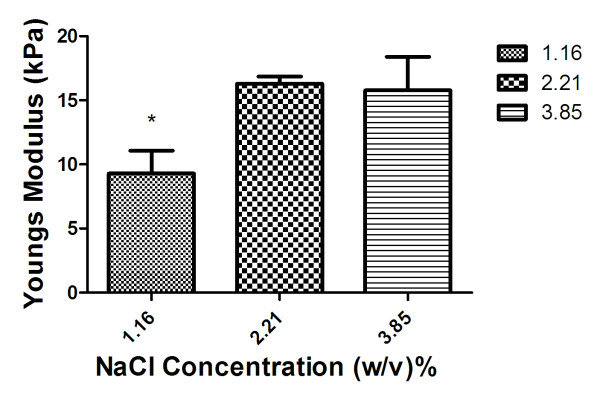
We developed a high throughput method for creating fibrin gels using molds fabricated from polydimethylsiloxane (PDMS). Fibrin gels were produced by adding solutions of fibrinogen and thrombin to cylindrical defects in a PDMS sheet. Undisturbed gels were collected by removing the sheet, and fibrin gels were characterized. The characteristics of resulting gels were compared to published data by measuring compressive stiffness and osteogenic response of entrapped human mesenchymal stem cells (MSCs). Gels exhibited compressive moduli nearly identical to our previously reported fabrication method. Trends in alkaline phosphatase activity, an early marker of osteogenic differentiation in MSCs, were also consistent with previous data.
These findings demonstrate a streamlined approach to fibrin gel production that drastically reduces the time required to make fibrin gels, while also reducing variability between gel batches. This fabrication technique provides a valuable tool for generating large numbers of gels in a cost-effective manner.
纤维蛋白凝胶是一种很有前景的用于组织工程的生物材料。然而,目前的制备方法耗时且存在固有差异。迫切需要开发新的、一致的方法来生产用于研究的基于纤维蛋白的水凝胶。
我们开发了一种高通量方法,使用由聚二甲基硅氧烷(PDMS)制成的模具来制备纤维蛋白凝胶。通过将纤维蛋白原和凝血酶溶液添加到PDMS片材中的圆柱形缺陷中来制备纤维蛋白凝胶。通过移除片材收集未受干扰的凝胶,并对纤维蛋白凝胶进行表征。通过测量包埋的人间充质干细胞(MSCs)的压缩刚度和成骨反应,将所得凝胶的特性与已发表的数据进行比较。凝胶表现出的压缩模量与我们之前报道的制备方法几乎相同。碱性磷酸酶活性(MSCs成骨分化的早期标志物)的趋势也与先前的数据一致。
这些发现证明了一种简化的纤维蛋白凝胶生产方法,该方法大大减少了制备纤维蛋白凝胶所需的时间,同时也降低了凝胶批次之间的变异性。这种制备技术为以经济高效的方式生产大量凝胶提供了一种有价值的工具。