Nutrition Foundation of India, New Delhi, India.
Indian J Med Res. 2012 Jul;136(1):13-21.
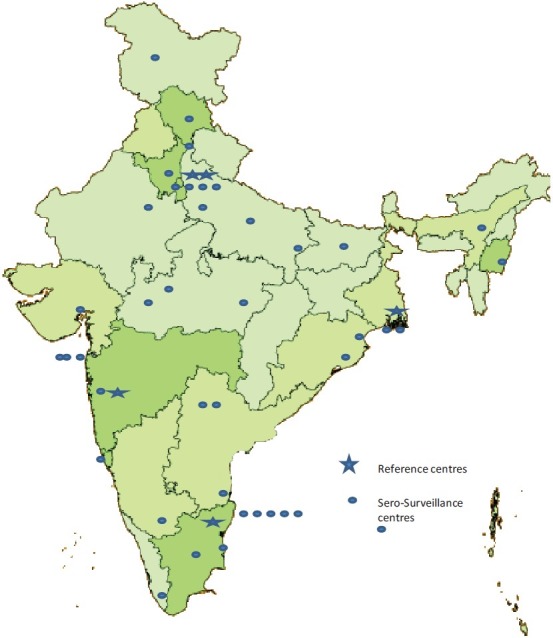
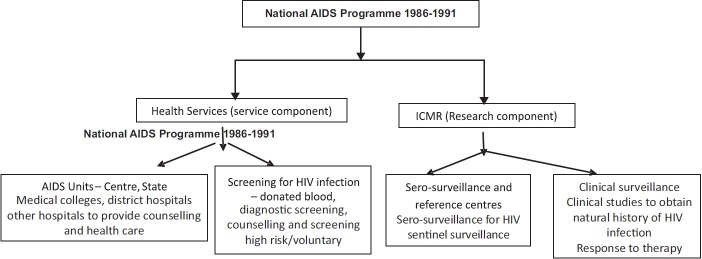
The Indian Council of Medical Research (ICMR) undertook screening of asymptomatic persons from high risk group with the ELISA test for HIV infection in 1986 and found that HIV infection has reached India. ICMR in collaboration with the central and State health services initiated the national sero-surveillance programme for HIV infection in 43 surveillance and five reference centres to determine the major modes of transmission and magnitude of infection. Data from the sero-surveillance showed that HIV infection was present in all the known high risk groups and in the general population in all the States both in urban and rural areas. HIV was getting transmitted through all the known modes of transmission. In most States heterosexual transmission was predominant but in Manipur intravenous (iv) drug use was the most common mode of transmission. Prevalence of HIV infection in high risk groups was not high and that in low risk groups was quite low. ICMR initiated hospital based sentinel surveillance in high risk groups and general population to obtain time trends in seroprevalence. Between 1986 and 1991, National AIDS Programme was carried out as a collaborative effort of ICMR, and central and State health services. As the dimensions of the epidemic unfolded, rational evidence based interventions which could be implemented within the existing health system, were initiated. National AIDS Control Programme (NACP) continued and upscaled all these interventions. Effective implementation of a multi-pronged, rational strategy for HIV infection containment and control right from the initial stages, and dedicated work done by committed professionals belonging to government and voluntary sectors, cultural ethos of the country, responsible behaviour of the population and relatively low iv drug use have resulted in rapid decline in new infection and in prevalence of infection within a quarter of a century after the initial detection of HIV.
印度医学研究理事会(ICMR)于 1986 年对高危人群进行了无症状人群的 HIV 感染 ELISA 检测筛查,发现 HIV 已传入印度。ICMR 与中央和邦卫生服务机构合作,在 43 个监测和 5 个参考中心启动了全国 HIV 感染血清学监测方案,以确定主要传播途径和感染规模。血清学监测数据表明,HIV 感染已存在于所有已知的高危人群以及所有邦的城乡地区的一般人群中。HIV 是通过所有已知的传播途径传播的。在大多数邦,异性传播是主要传播途径,但在曼尼普尔邦,静脉注射吸毒是最常见的传播途径。高危人群中的 HIV 感染率并不高,低危人群中的感染率则相当低。ICMR 启动了高危人群和一般人群的基于医院的哨点监测,以获取血清阳性率的时间趋势。1986 年至 1991 年期间,国家艾滋病规划是由 ICMR、中央和邦卫生服务机构共同开展的。随着疫情的发展,启动了基于合理证据的干预措施,这些措施可以在现有的卫生系统内实施。国家艾滋病控制规划(NACP)继续扩大和加强了所有这些干预措施。从初始阶段开始,实施了多管齐下的、合理的 HIV 感染控制策略,并得到了政府和志愿部门专业人员的坚定努力、国家的文化传统、负责任的人口行为以及相对较低的静脉注射吸毒率的支持,这些都导致新感染病例和感染流行率在 HIV 首次发现后的四分之一个世纪内迅速下降。