Instituto de Agroquímica y Tecnología de Alimentos (IATA-CSIC), Consejo Superior de Investigaciones Científicas, Av. Agustín Escardino, 7, 46980, Paterna-Valencia, Spain.
J Exp Bot. 2012 Aug;63(13):4931-45. doi: 10.1093/jxb/ers168. Epub 2012 Aug 9.
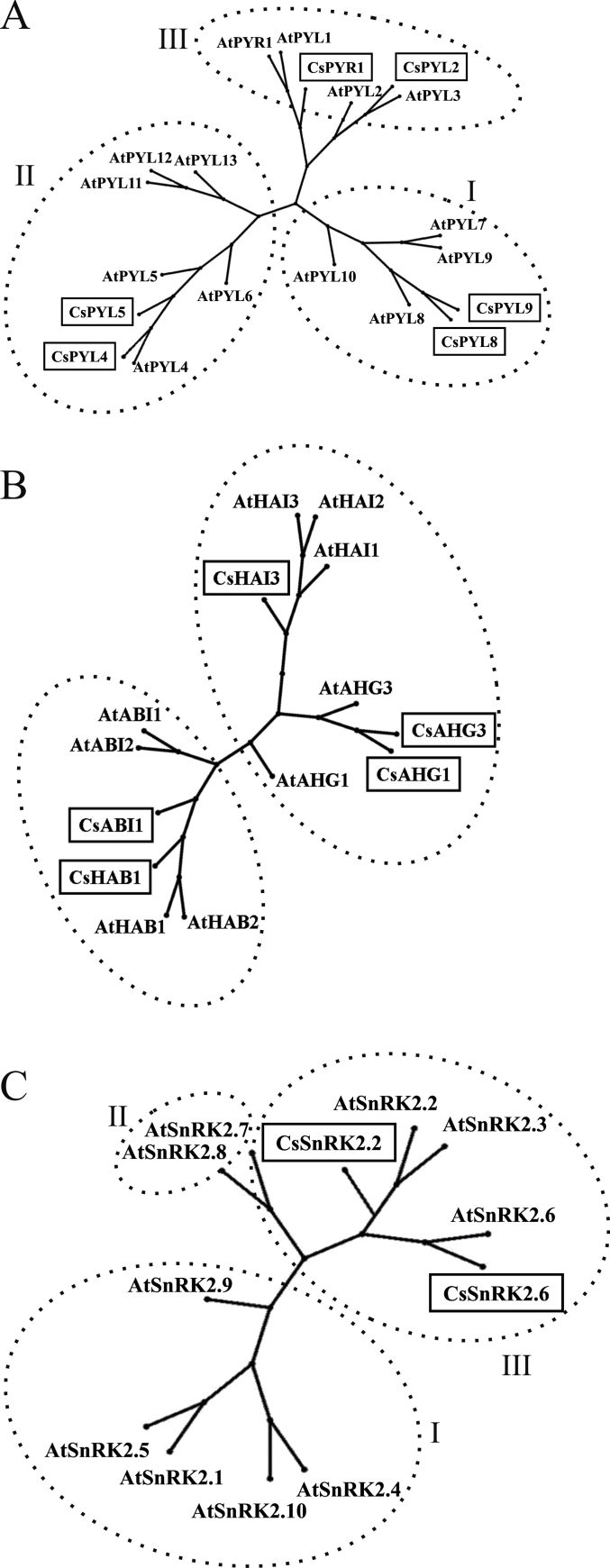
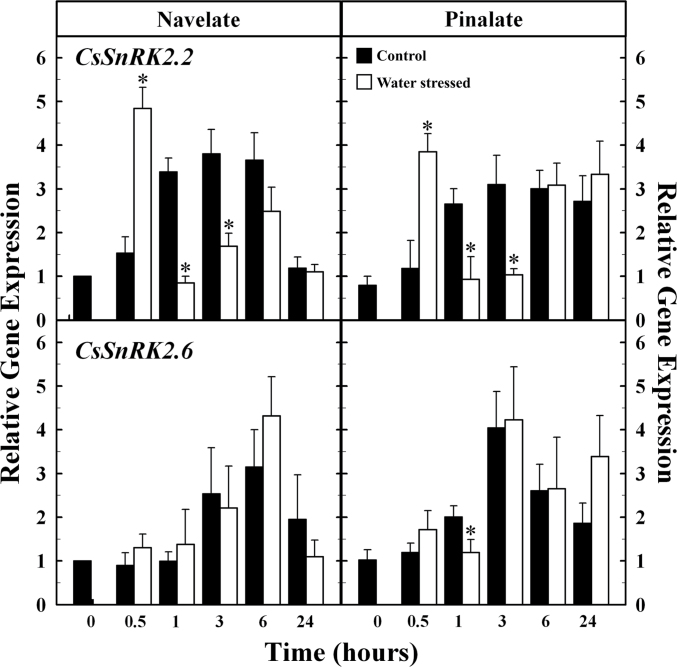
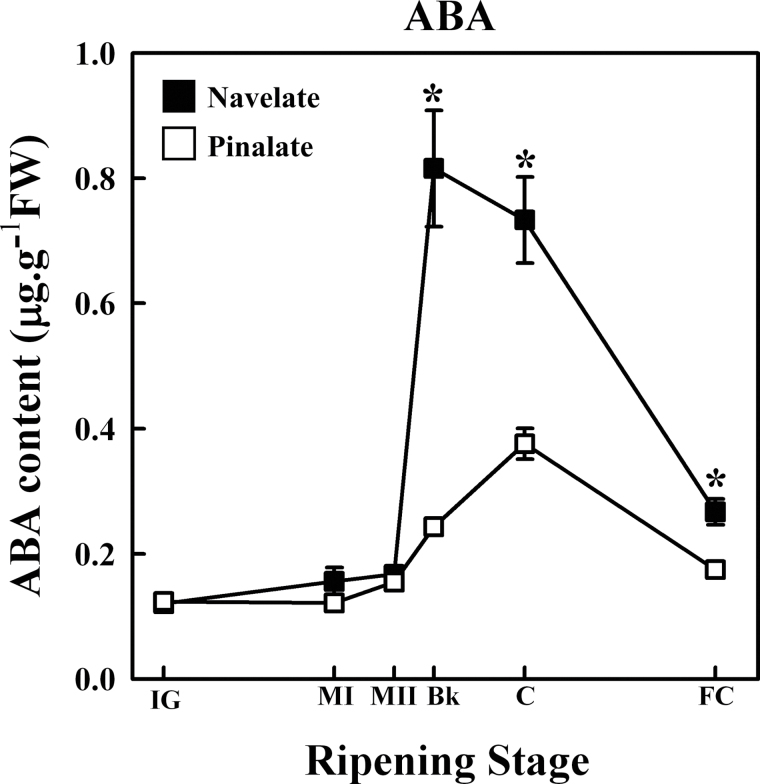
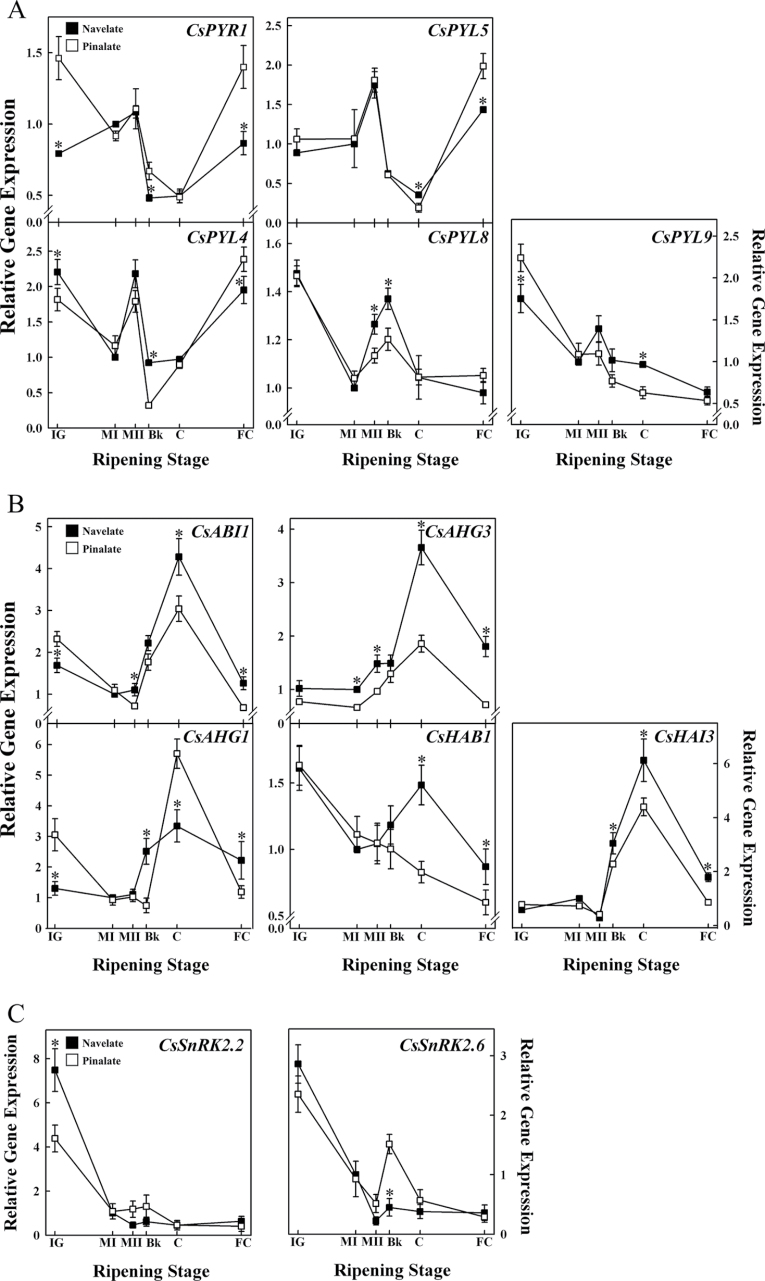
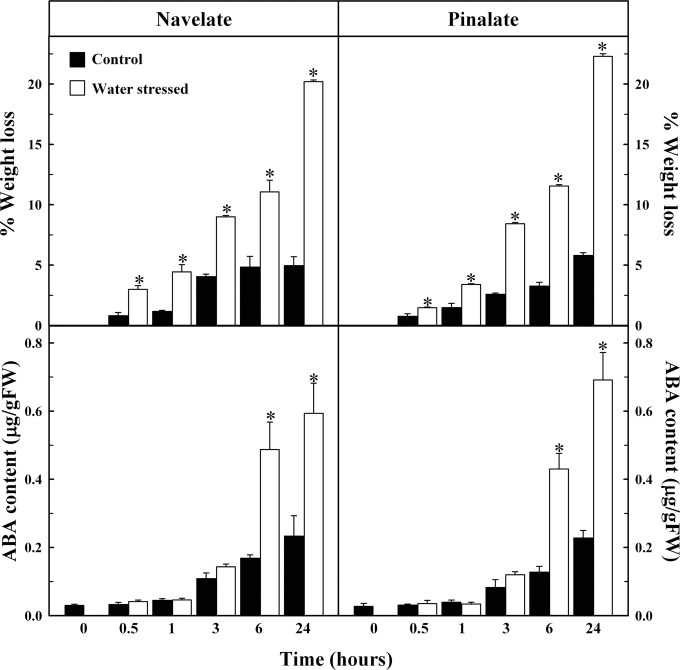
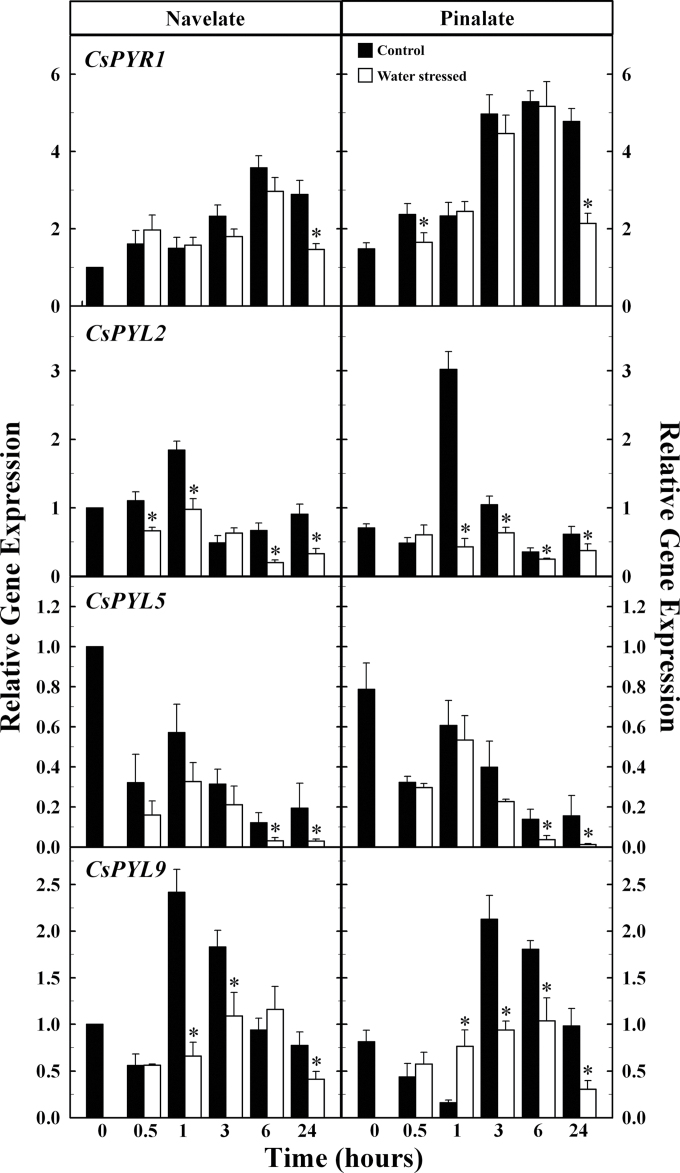
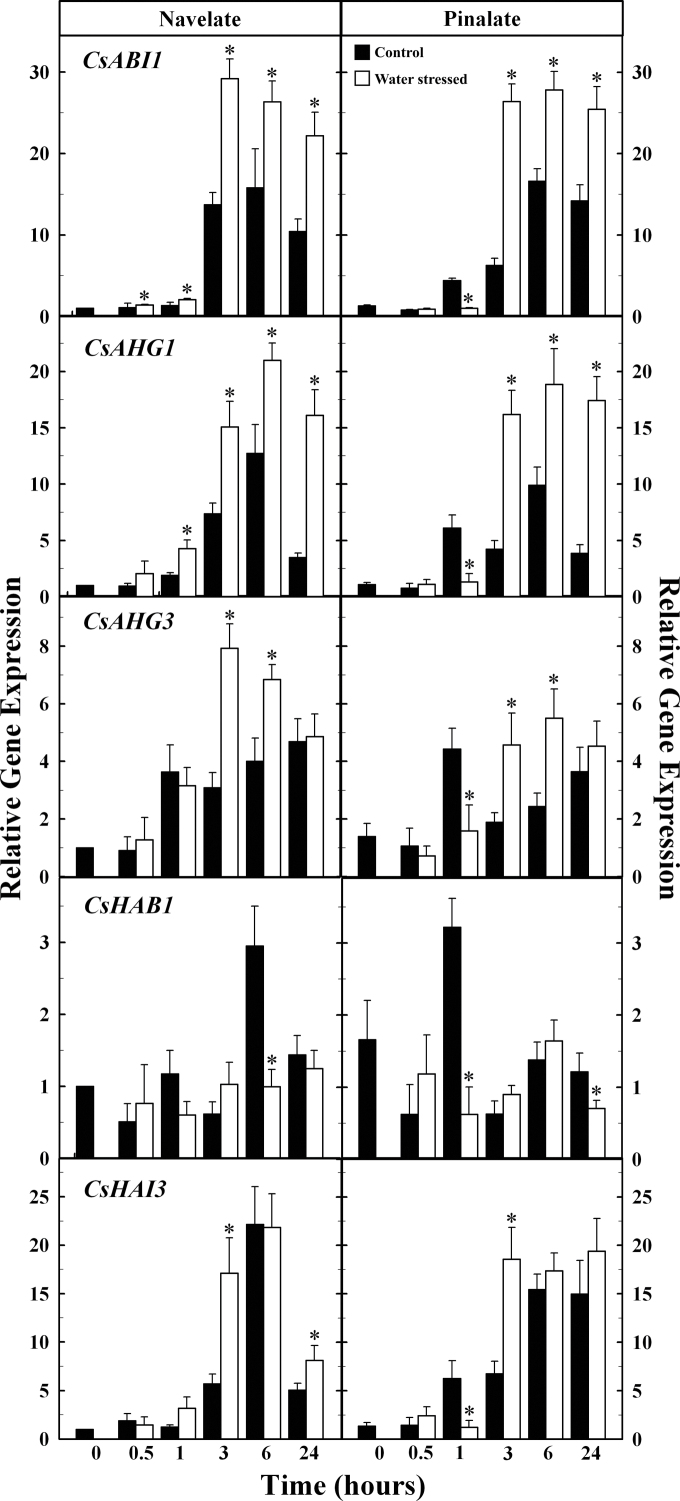
The abscisic acid (ABA) signalling core in plants include the cytosolic ABA receptors (PYR/PYL/RCARs), the clade-A type 2C protein phosphatases (PP2CAs), and the subclass III SNF1-related protein kinases 2 (SnRK2s). The aim of this work was to identify these ABA perception system components in sweet orange and to determine the influence of endogenous ABA on their transcriptional regulation during fruit development and ripening, taking advantage of the comparative analysis between a wild-type and a fruit-specific ABA-deficient mutant. Transcriptional changes in the ABA signalosome during leaf dehydration were also studied. Six PYR/PYL/RCAR, five PP2CA, and two subclass III SnRK2 genes, homologous to those of Arabidopsis, were identified in the Citrus genome. The high degree of homology and conserved motifs for protein folding and for functional activity suggested that these Citrus proteins are bona fide core elements of ABA perception in orange. Opposite expression patterns of CsPYL4 and CsPYL5 and ABA accumulation were found during ripening, although there were few differences between varieties. In contrast, changes in expression of CsPP2CA genes during ripening paralleled those of ABA content and agreeed with the relevant differences between wild-type and mutant fruit transcript accumulation. CsSnRK2 gene expression continuously decreased with ripening and no remarkable differences were found between cultivars. Overall, dehydration had a minor effect on CsPYR/PYL/RCAR and CsSnRK2 expression in vegetative tissue, whereas CsABI1, CsAHG1, and CsAHG3 were highly induced by water stress. The global results suggest that responsiveness to ABA changes during citrus fruit ripening, and leaf dehydration was higher in the CsPP2CA gene negative regulators than in the other ABA signalosome components.
脱落酸(ABA)信号核心在植物中包括细胞质 ABA 受体(PYR/PYL/RCARs)、clade-A 型 2C 蛋白磷酸酶(PP2CAs)和子类 III SNF1 相关蛋白激酶 2(SnRK2s)。本工作的目的是鉴定甜橙中的这些 ABA 感知系统成分,并利用野生型和果实特异性 ABA 缺陷突变体之间的比较分析,确定内源 ABA 对其在果实发育和成熟过程中的转录调控的影响。还研究了叶片脱水过程中 ABA 信号体的转录变化。在柑橘基因组中鉴定了六个 PYR/PYL/RCAR、五个 PP2CA 和两个子类 III SnRK2 基因,与拟南芥的同源。这些柑橘蛋白的高度同源性和保守的折叠和功能活性基序表明,它们是橙中 ABA 感知的真正核心元件。尽管品种间差异很小,但 CsPYL4 和 CsPYL5 以及 ABA 积累在成熟过程中的表达模式相反。相比之下,CsPP2CA 基因在成熟过程中的表达变化与 ABA 含量的变化相似,并且与野生型和突变体果实转录积累之间的相关差异一致。CsSnRK2 基因的表达随成熟而持续下降,品种间无明显差异。总体而言,脱水对营养组织中 CsPYR/PYL/RCAR 和 CsSnRK2 的表达影响较小,而 CsABI1、CsAHG1 和 CsAHG3 对水分胁迫高度诱导。总体结果表明,柑橘果实成熟过程中对 ABA 的反应性发生变化,叶片脱水对 CsPP2CA 基因负调控因子的影响大于其他 ABA 信号体成分。