Department of Immunology, Duke University Medical Center, Durham, NC 27710, USA.
Immunol Rev. 2012 Sep;249(1):195-204. doi: 10.1111/j.1600-065X.2012.01143.x.
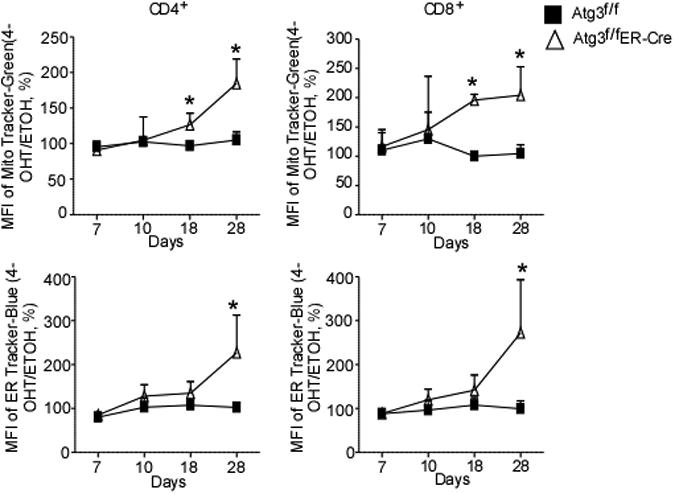
Over the life span of a T lymphocyte, from thymic development to death, it is subjected to a variety of stresses and stimuli. Upon receipt of each stress or stimulus, a potentially life-changing fate decision must be made, namely, whether to commit to a form of programmed cell death or to make the necessary adaptations to effectively deal with the changing environment. In our laboratory, we have identified several stresses that a T lymphocyte will encounter during a normal life span. Our studies have focused on how T cells utilize autophagy to get a grasp on the situation, or in cases in which survival is untenable, how T cells use autophagy to hasten their demise. This review focuses on the functions of T-cell autophagy in maintaining homeostasis, eliminating excess or dangerous levels of mitochondria, trimming levels of endoplasmic reticulum, and promoting a healthy metabolic level to allow cells to perform as productive components of the immune system. In addition, the use of autophagy signaling molecules to perform autophagy-independent tasks involved in the maintenance of immune homeostasis is discussed.
在 T 淋巴细胞的生命周期中,从胸腺发育到死亡,它会受到各种压力和刺激。在收到每一种压力或刺激时,都必须做出一个可能改变命运的决策,即决定是选择程序性细胞死亡,还是做出必要的适应,以有效应对不断变化的环境。在我们的实验室中,我们已经确定了 T 淋巴细胞在正常生命周期中会遇到的几种压力。我们的研究重点关注 T 细胞如何利用自噬来了解情况,或者在生存不可持续的情况下,T 细胞如何利用自噬来加速其死亡。这篇综述重点介绍了 T 细胞自噬在维持体内平衡、清除过多或危险水平的线粒体、修剪内质网水平以及促进健康的代谢水平以允许细胞作为免疫系统的有生产力的组成部分的功能。此外,还讨论了利用自噬信号分子来执行与维持免疫稳态相关的、不依赖于自噬的任务。