Department of Chemistry, University of Warmia and Mazury in Olsztyn, Plac Łódzki 4, Olsztyn 10-727, Poland.
Molecules. 2012 Aug 13;17(8):9668-82. doi: 10.3390/molecules17089668.
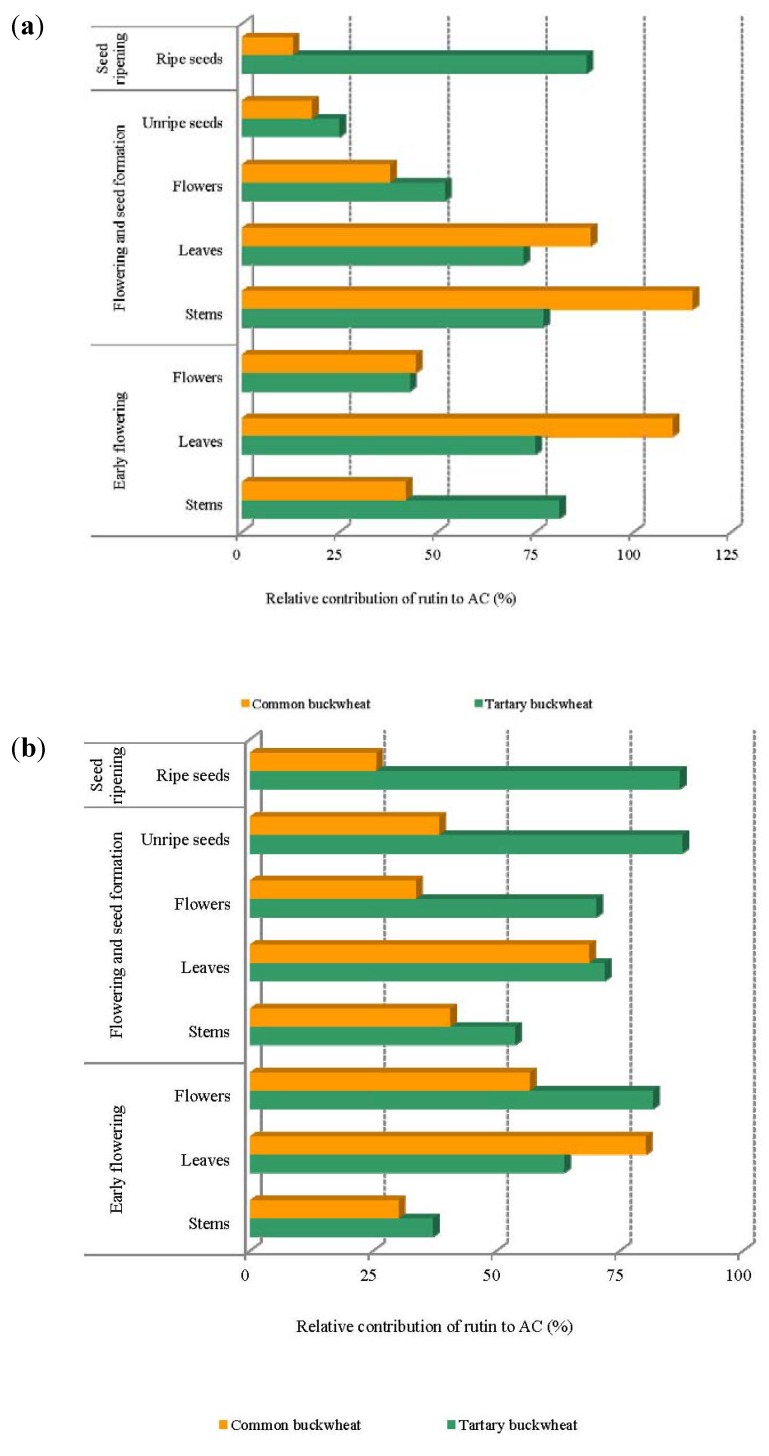
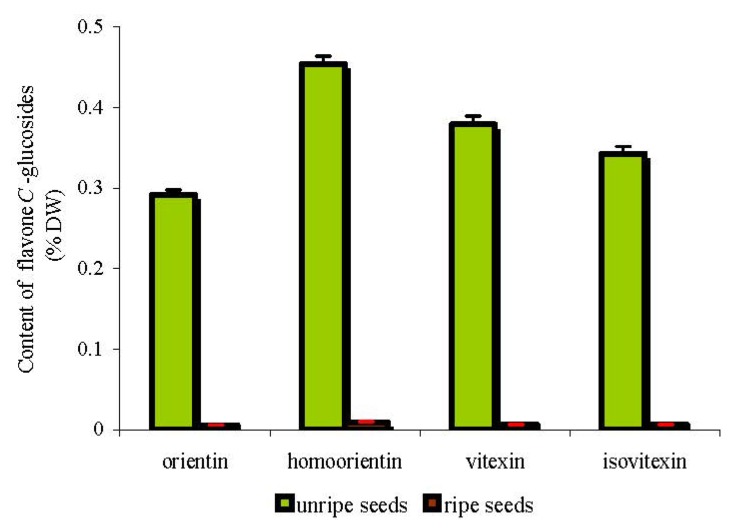
The analysis of major and minor flavonoids, and antioxidant capacity of stems, leaves, flowers, unripe seeds and ripe seeds of common and tartary buckwheat plants collected during different growth periods was addressed in this study. The highest rutin contents were observed in flowers and leaves collected from common and tartary buckwheat at early flowering as well as flowering and seed formation states. A low quercetin contents were found in all studied aerial part of buckwheat plants. Quercitrin (quercetin-3-rhamnoside) was only found in flowers collected at different growth periods while flavone C-glucosides were accumulated preferentially only in unripe seeds collected from common buckwheat at an early flowering state. The rank of antioxidant capacity provided for aerial parts of common and tartary buckwheat at early flowering state was as follows: flowers > leaves > stems. The highest contribution of rutin to the antioxidant capacity of the aerial parts of common and tartary buckwheat was found for stems followed by leaves, flowers and unripe seeds. The results demonstrate that flowers from common and tartary buckwheat collected at early flowering as well as flowering and seed formation states have the future potential to be a useful food ingredient.
本研究分析了不同生长时期采集的普通荞麦和苦荞麦茎、叶、花、未成熟种子和成熟种子中的主要和次要类黄酮以及抗氧化能力。在早期开花以及开花和种子形成阶段采集的普通荞麦和苦荞麦的花和叶中观察到芦丁含量最高。荞麦植株所有地上部分的槲皮素含量都较低。在不同生长时期采集的花中仅发现了槲皮苷(槲皮素-3-鼠李糖苷),而只有在早期开花阶段采集的普通荞麦未成熟种子中才优先积累黄酮 C-葡萄糖苷。在早期开花阶段,普通荞麦和苦荞麦地上部分的抗氧化能力排序为:花>叶>茎。对于普通荞麦和苦荞麦地上部分的抗氧化能力,芦丁对茎的贡献最大,其次是叶、花和未成熟种子。研究结果表明,在早期开花以及开花和种子形成阶段采集的普通荞麦和苦荞麦的花具有作为有用食品成分的潜力。