Laboratory of Oral Pathology and Medicine, Division of Maxillofacial Diagnostic and Surgical Sciences, Faculty of Dental Science, Kyushu University, Fukuoka 812-8582, Japan.
Int J Oncol. 2012 Nov;41(5):1577-86. doi: 10.3892/ijo.2012.1594. Epub 2012 Aug 21.
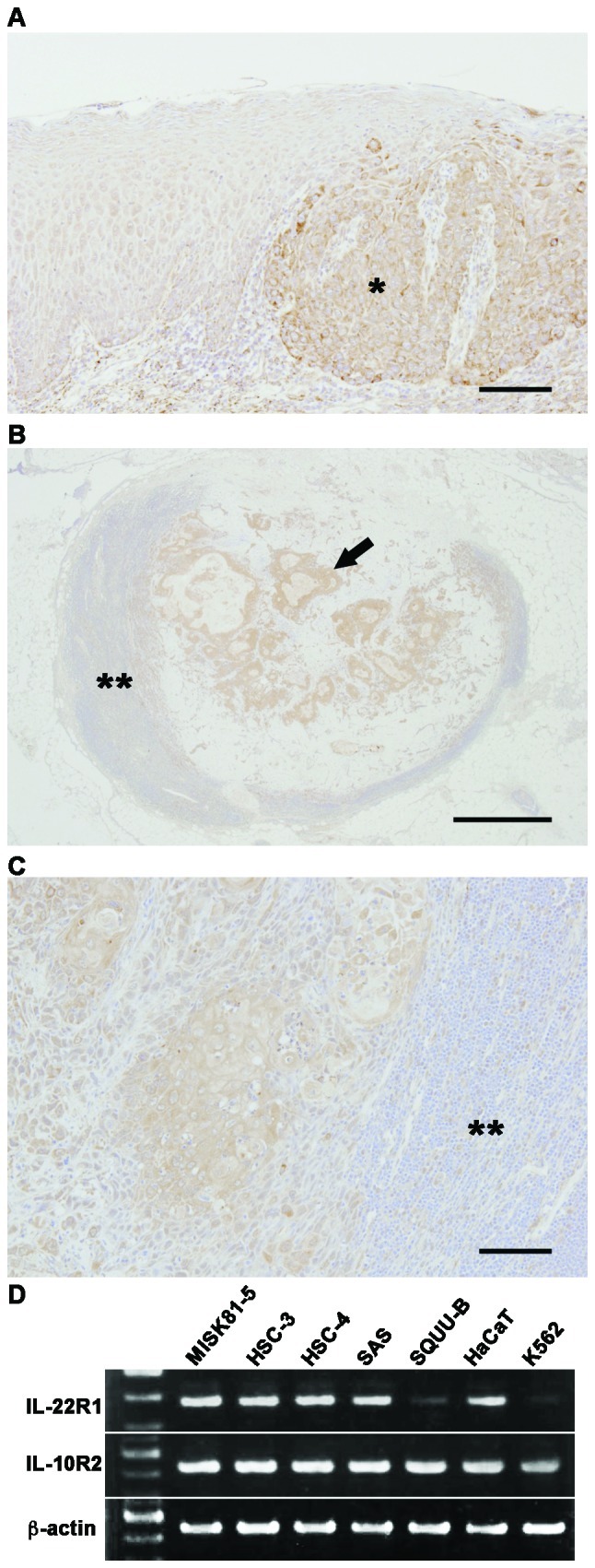
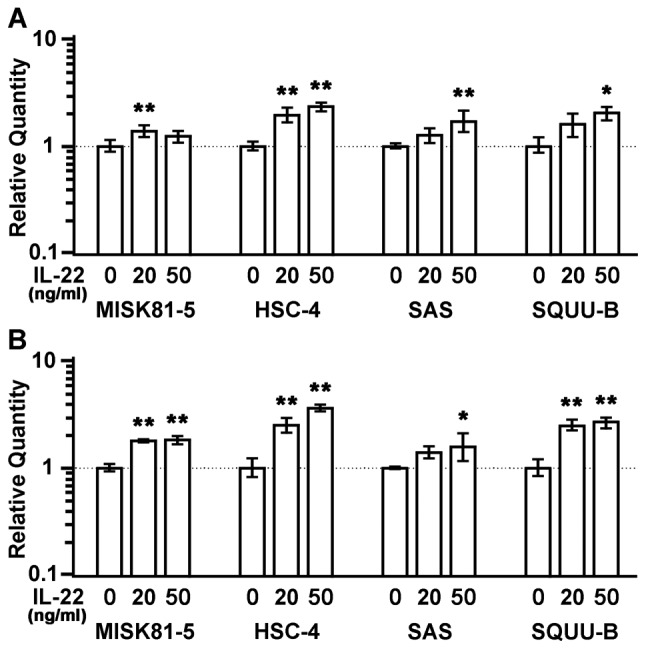
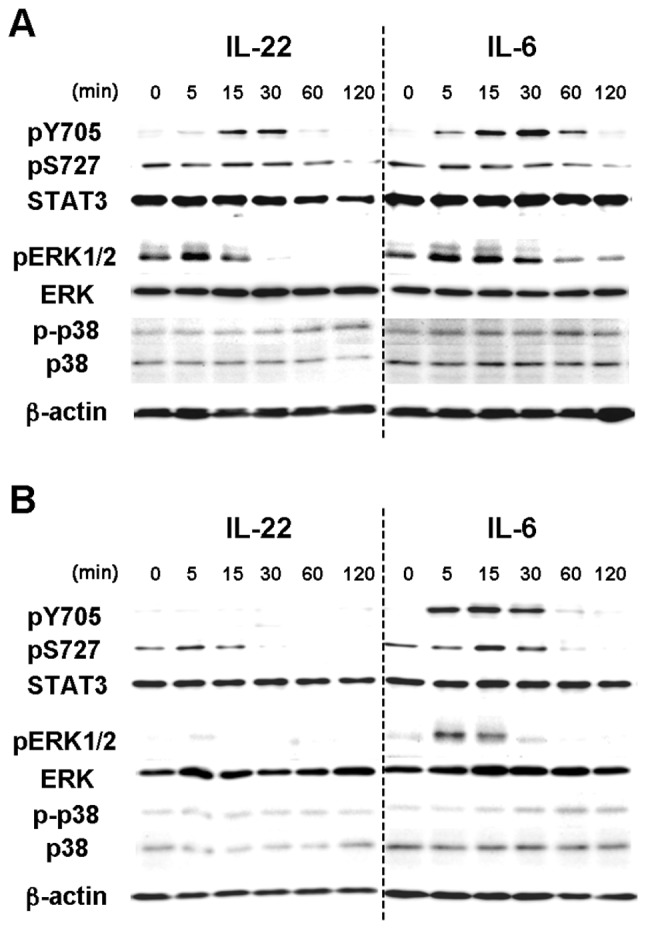
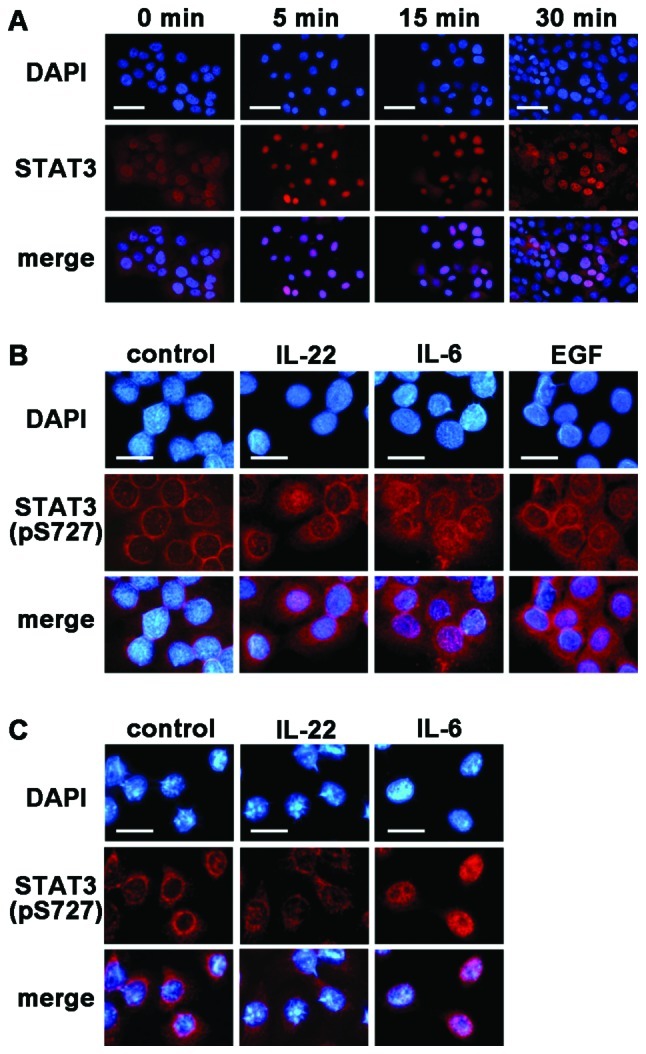
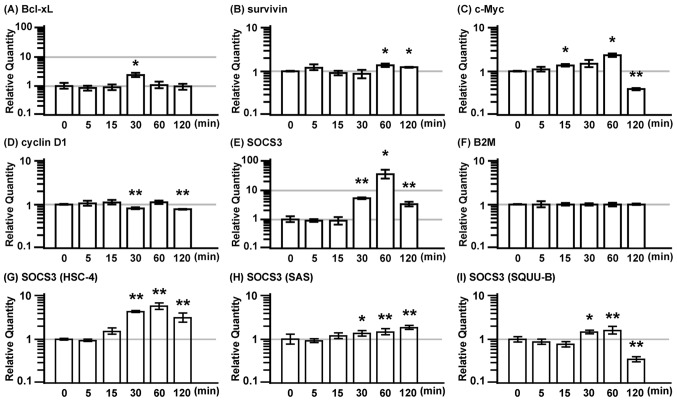
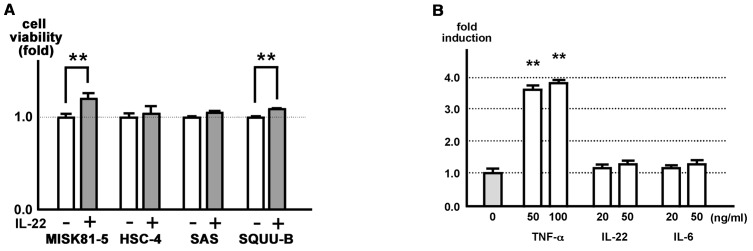
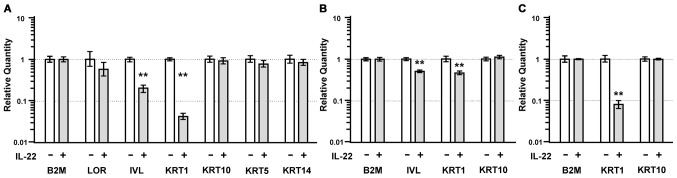
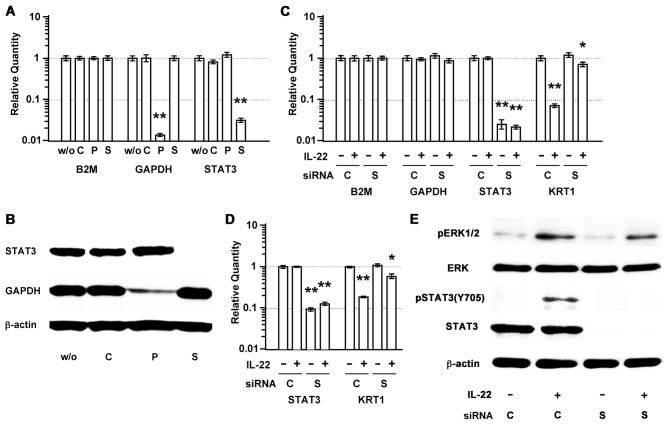
Interleukin (IL)-22 is a member of the IL-10 family. Its main targets are epithelial cells, not immune cells. We examined IL-22 signal transduction in oral squamous cell carcinoma (OSCC) cells. Immunohistochemical staining revealed that IL-22R was expressed more highly in OSCC compared to normal regions. An IL-22R signal was also observed in metastatic OSCC cells in the lymph node. RT-PCR showed that the human OSCC cell lines MISK81-5, HSC-3, HSC-4, SAS and SQUU-B expressed IL-22 receptor chains. Immunoblotting showed that IL-22 induced a transient tyrosine phosphorylation of STAT3 (pY705-STAT3) in MISK81-5 cells. The change in the serine phosphorylation of STAT3 was subtle during the examination periods. Simultaneously, pY705-STAT3 activation in HSC-3 cells was undetectable after IL-22 stimulation. Immunocytochemistry demonstrated that IL-22 induced the translocation of phosphorylated STAT3 into the nucleus of MISK81-5 cells. IL-22 temporarily upregulated the expression of anti-apoptotic and mitogenic genes such as Bcl-x, survivin and c-Myc, as well as SOCS3. IL-22 transiently activated ERK1/2 and induced a delayed phosphorylation of p38 MAP kinase, but negligibly involved the activation of NF-κB in MISK81-5 cells. MISK81-5 and SQUU-B cells treated with IL-22 showed mild cellular proliferation. MISK81-5, HSC-4 and SAS cells treated with IL-22 downregulated the keratinocyte differentiation-related genes compared with unstimulated cells. Conversely, STAT3 suppression by STAT3 siRNA strongly disrupted the downregulation of these genes by IL-22, but it did not significantly affect the activation of ERK1/2 by IL-22. The OSCC cells used in this study upregulated the expression of SERPINB3/4 (SCCA1/2), well-known SCC markers, following treatment with IL-22. These results indicate that IL-22 differentially activates the STAT3 signaling system depending on the type of OSCC. IL-22 may therefore play a role in tumor growth, cell differentiation and progression through STAT3-dependent and -independent pathways.
白细胞介素 (IL)-22 是 IL-10 家族的一员。其主要靶标是上皮细胞,而不是免疫细胞。我们研究了白细胞介素-22 在口腔鳞状细胞癌(OSCC)细胞中的信号转导。免疫组织化学染色显示,与正常区域相比,IL-22R 在 OSCC 中表达更高。在淋巴结中的转移性 OSCC 细胞中也观察到 IL-22R 信号。RT-PCR 显示,人 OSCC 细胞系 MISK81-5、HSC-3、HSC-4、SAS 和 SQUU-B 表达 IL-22 受体链。免疫印迹显示,IL-22 诱导 MISK81-5 细胞中 STAT3(pY705-STAT3)的瞬时酪氨酸磷酸化。在检查期间,STAT3 的丝氨酸磷酸化变化很细微。同时,在 IL-22 刺激后,HSC-3 细胞中 pY705-STAT3 的激活无法检测到。免疫细胞化学显示,IL-22 诱导磷酸化 STAT3 易位到 MISK81-5 细胞的核内。IL-22 暂时上调抗凋亡和有丝分裂基因的表达,如 Bcl-x、survivin 和 c-Myc 以及 SOCS3。IL-22 短暂激活 ERK1/2 并诱导 p38 MAP 激酶的延迟磷酸化,但在 MISK81-5 细胞中对 NF-κB 的激活影响可以忽略不计。用 IL-22 处理的 MISK81-5 和 SQUU-B 细胞表现出轻微的细胞增殖。与未刺激的细胞相比,用 IL-22 处理的 MISK81-5、HSC-4 和 SAS 细胞下调与角质形成细胞分化相关的基因。相反,STAT3 siRNA 抑制 STAT3 强烈破坏了 IL-22 下调这些基因,但对 IL-22 激活 ERK1/2 没有显著影响。本研究中使用的 OSCC 细胞在用 IL-22 处理后上调了 SERPINB3/4(SCCA1/2)的表达,SERPINB3/4 是众所周知的 SCC 标志物。这些结果表明,IL-22 根据 OSCC 的类型,差异激活 STAT3 信号系统。因此,IL-22 可能通过 STAT3 依赖性和非依赖性途径在肿瘤生长、细胞分化和进展中发挥作用。