Department of Pathology, The Ohio State University, 165 Hamilton Hall, 1645 Neil Avenue, Columbus, OH, 43210, USA.
Radiat Oncol. 2012 Aug 29;7:146. doi: 10.1186/1748-717X-7-146.
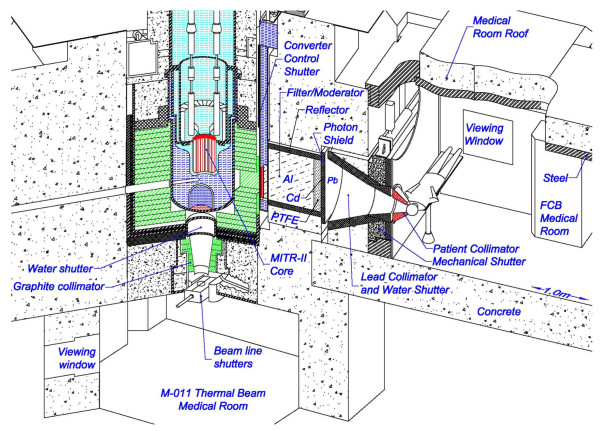
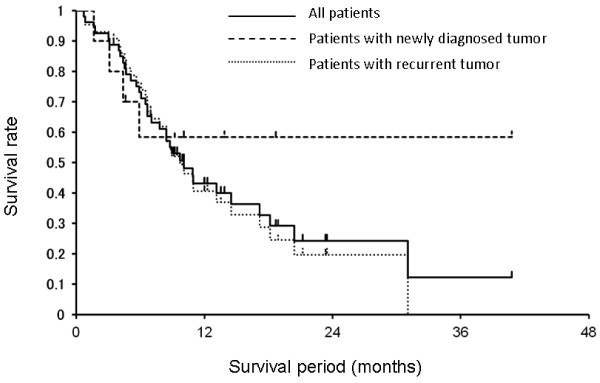
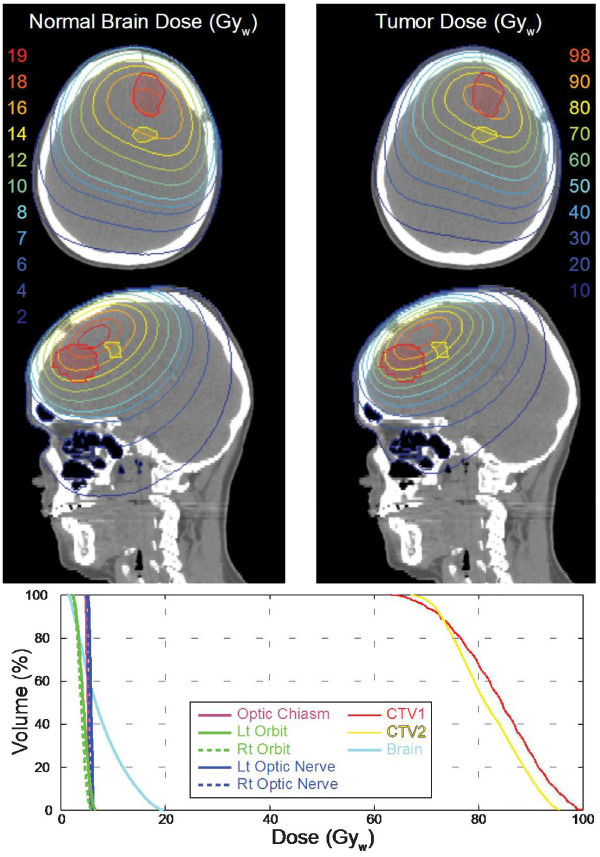
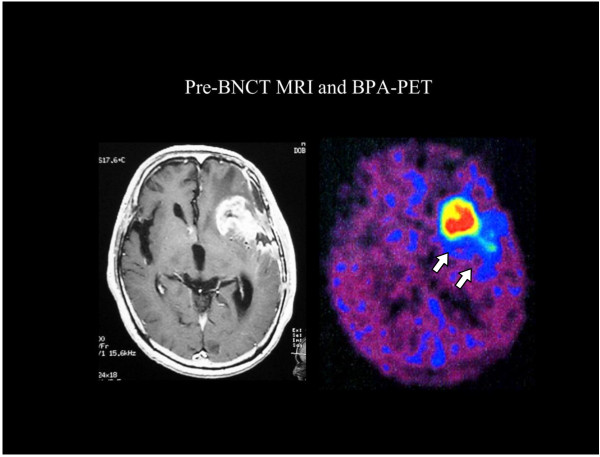
Boron neutron capture therapy (BNCT) is a biochemically targeted radiotherapy based on the nuclear capture and fission reactions that occur when non-radioactive boron-10, which is a constituent of natural elemental boron, is irradiated with low energy thermal neutrons to yield high linear energy transfer alpha particles and recoiling lithium-7 nuclei. Clinical interest in BNCT has focused primarily on the treatment of high grade gliomas, recurrent cancers of the head and neck region and either primary or metastatic melanoma. Neutron sources for BNCT currently have been limited to specially modified nuclear reactors, which are or until the recent Japanese natural disaster, were available in Japan, United States, Finland and several other European countries, Argentina and Taiwan. Accelerators producing epithermal neutron beams also could be used for BNCT and these are being developed in several countries. It is anticipated that the first Japanese accelerator will be available for therapeutic use in 2013. The major hurdle for the design and synthesis of boron delivery agents has been the requirement for selective tumor targeting to achieve boron concentrations in the range of 20 μg/g. This would be sufficient to deliver therapeutic doses of radiation with minimal normal tissue toxicity. Two boron drugs have been used clinically, a dihydroxyboryl derivative of phenylalanine, referred to as boronophenylalanine or "BPA", and sodium borocaptate or "BSH" (Na2B12H11SH). In this report we will provide an overview of other boron delivery agents that currently are under evaluation, neutron sources in use or under development for BNCT, clinical dosimetry, treatment planning, and finally a summary of previous and on-going clinical studies for high grade gliomas and recurrent tumors of the head and neck region. Promising results have been obtained with both groups of patients but these outcomes must be more rigorously evaluated in larger, possibly randomized clinical trials. Finally, we will summarize the critical issues that must be addressed if BNCT is to become a more widely established clinical modality for the treatment of those malignancies for which there currently are no good treatment options.
硼中子俘获治疗(BNCT)是一种基于生化靶向的放射治疗,它基于放射性核素硼-10 的核俘获和裂变反应,硼-10 是天然元素硼的组成部分,当它被低能热中子照射时,会产生高线性转移的阿尔法粒子和反冲的锂-7 核。BNCT 的临床应用主要集中在治疗高级别胶质瘤、头颈部复发性癌症以及原发性或转移性黑色素瘤上。目前,BNCT 的中子源仅限于特殊改造的核反应堆,这些反应堆要么在日本,要么直到最近的日本自然灾害之前,在日本、美国、芬兰和其他几个欧洲国家、阿根廷和台湾都有提供。产生超热中子束的加速器也可用于 BNCT,并且正在几个国家开发中。预计第一台日本加速器将于 2013 年可用于治疗。设计和合成硼载体的主要障碍是需要选择性的肿瘤靶向,以达到 20μg/g 的硼浓度。这足以提供最小的正常组织毒性的治疗剂量的辐射。两种硼药物已在临床上使用,一种是苯丙氨酸的二羟硼基衍生物,称为硼苯丙氨酸或“BPA”,另一种是硼替佐米或“BSH”(Na2B12H11SH)。在本报告中,我们将概述目前正在评估的其他硼载体,用于 BNCT 的中子源,临床剂量学,治疗计划,最后总结高级别胶质瘤和头颈部复发性肿瘤的以往和正在进行的临床研究。这两组患者都取得了有希望的结果,但这些结果必须在更大的、可能是随机的临床试验中进行更严格的评估。最后,如果 BNCT 要成为治疗目前尚无良好治疗选择的恶性肿瘤的更为广泛的临床手段,我们将总结必须解决的关键问题。