Computational Biology Program, Memorial Sloan-Kettering Cancer Center, New York, NY, USA.
Mol Syst Biol. 2012;8:605. doi: 10.1038/msb.2012.37.
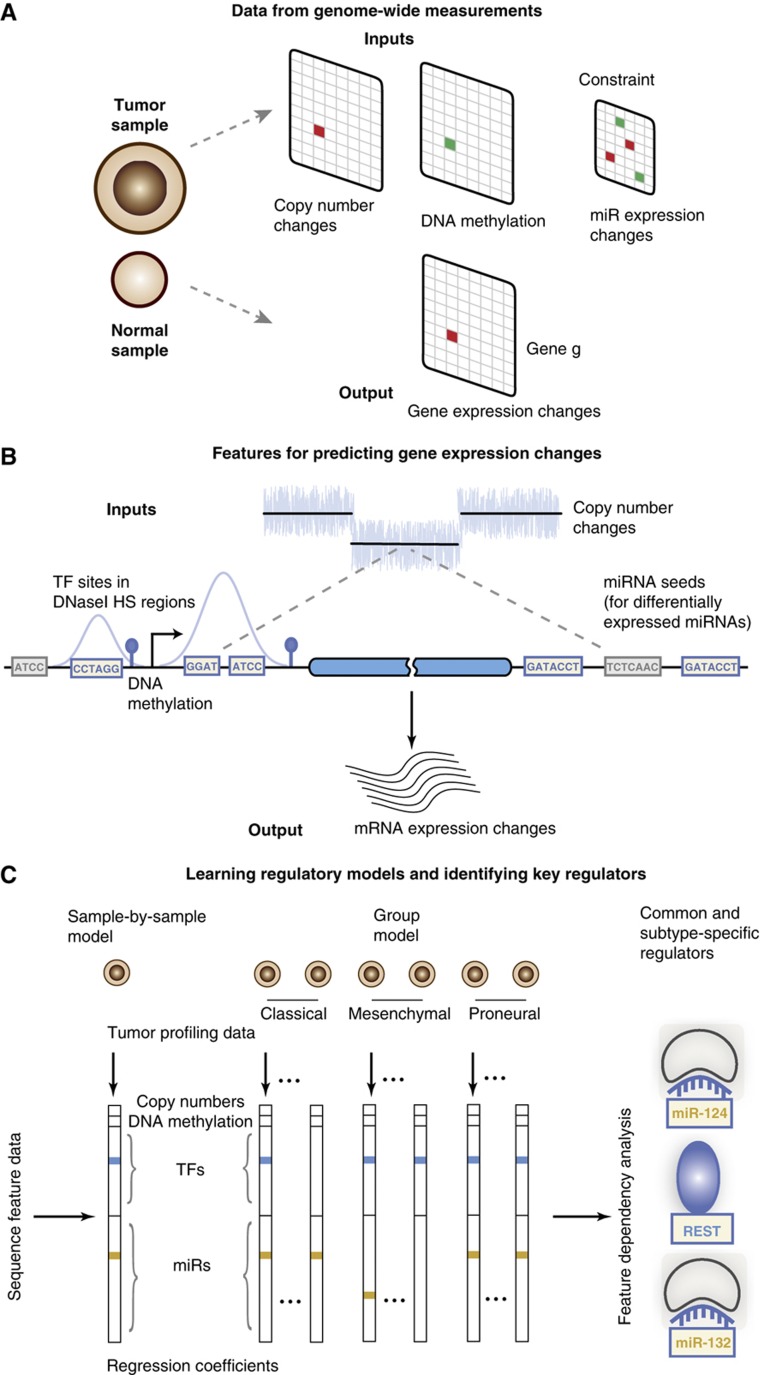
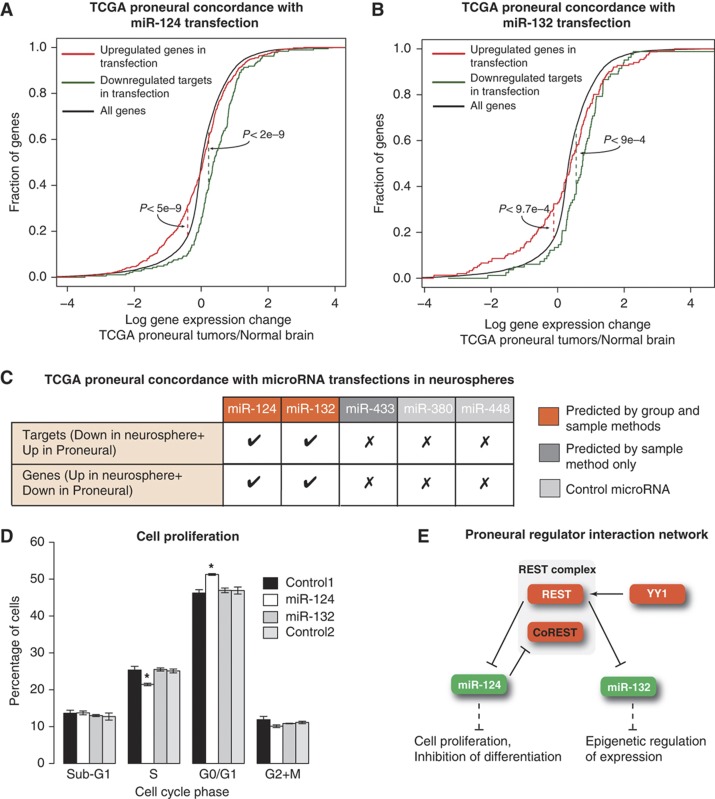
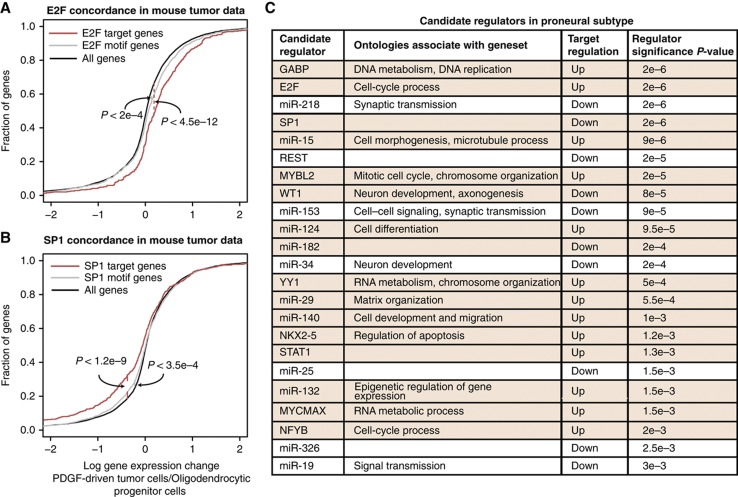
Large-scale cancer genomics projects are profiling hundreds of tumors at multiple molecular layers, including copy number, mRNA and miRNA expression, but the mechanistic relationships between these layers are often excluded from computational models. We developed a supervised learning framework for integrating molecular profiles with regulatory sequence information to reveal regulatory programs in cancer, including miRNA-mediated regulation. We applied our approach to 320 glioblastoma profiles and identified key miRNAs and transcription factors as common or subtype-specific drivers of expression changes. We confirmed that predicted gene expression signatures for proneural subtype regulators were consistent with in vivo expression changes in a PDGF-driven mouse model. We tested two predicted proneural drivers, miR-124 and miR-132, both underexpressed in proneural tumors, by overexpression in neurospheres and observed a partial reversal of corresponding tumor expression changes. Computationally dissecting the role of miRNAs in cancer may ultimately lead to small RNA therapeutics tailored to subtype or individual.
大规模癌症基因组学项目正在对数百个肿瘤进行多层次的分析,包括拷贝数、mRNA 和 miRNA 表达,但这些层面之间的机制关系通常在计算模型中被排除在外。我们开发了一个有监督的学习框架,用于整合分子谱和调节序列信息,以揭示癌症中的调节程序,包括 miRNA 介导的调节。我们将我们的方法应用于 320 个胶质母细胞瘤图谱,并确定关键的 miRNA 和转录因子作为表达变化的常见或亚型特异性驱动因素。我们证实,预测的神经前体亚型调节剂的基因表达特征与 PDGF 驱动的小鼠模型中的体内表达变化一致。我们通过在神经球中过表达两种预测的神经前体驱动因子 miR-124 和 miR-132(在神经前体肿瘤中表达下调),并观察到相应肿瘤表达变化的部分逆转。计算解析 miRNA 在癌症中的作用最终可能导致针对亚型或个体的小 RNA 治疗。