3. Physikalisches Institut, Universität Stuttgart and Stuttgart Research Center of Photonic Engineering (SCoPE), Pfaffenwaldring 57, D-70569 Stuttgart, Germany.
Nat Commun. 2012;3:1029. doi: 10.1038/ncomms2034.
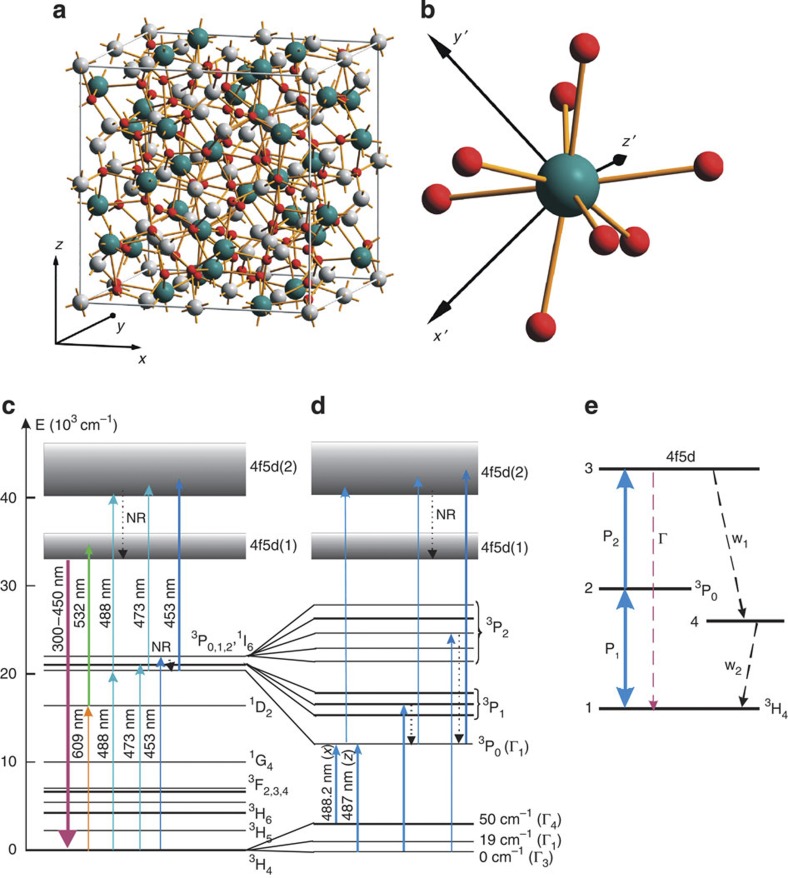
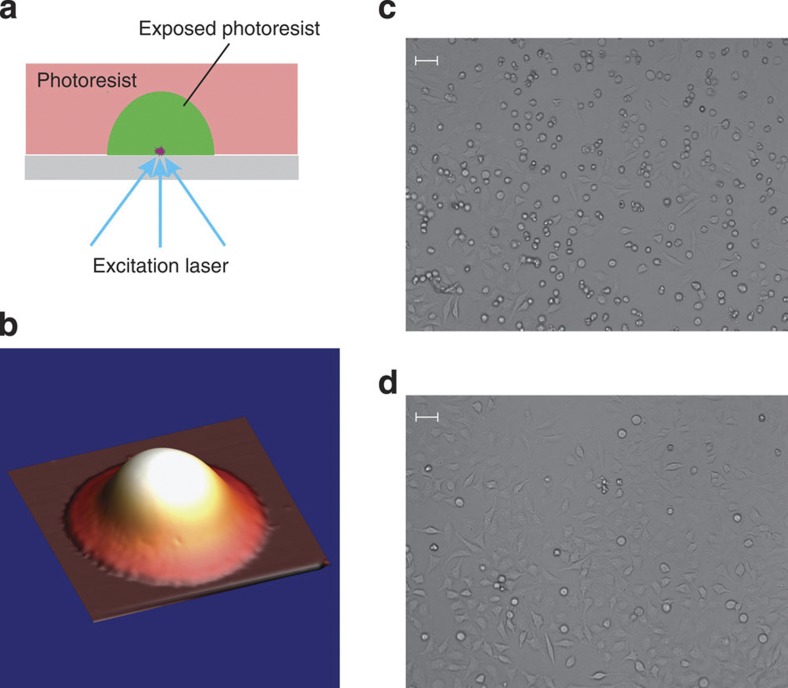
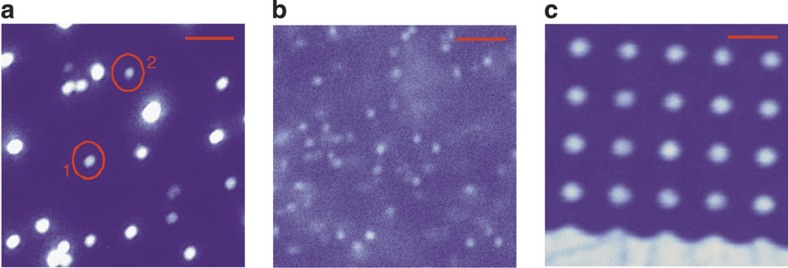
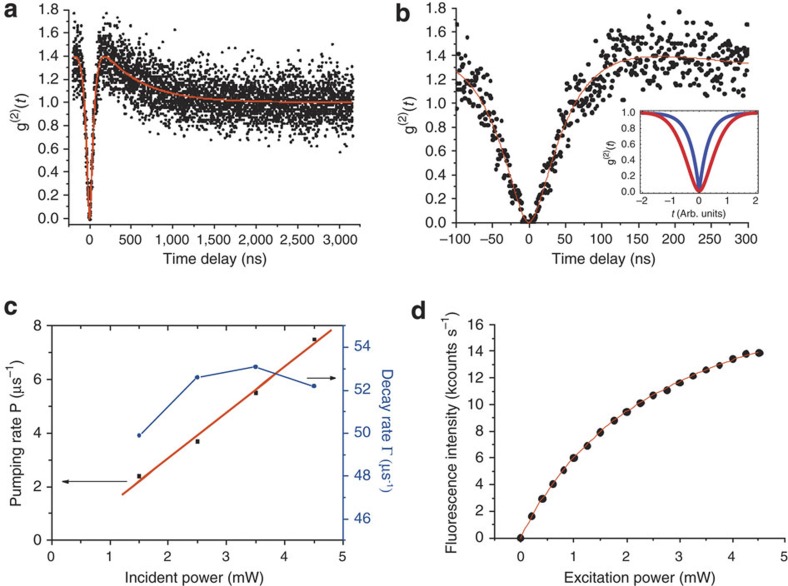
Rare-earth-doped laser materials show strong prospects for quantum information storage and processing, as well as for biological imaging, due to their high-Q 4f↔4f optical transitions. However, the inability to optically detect single rare-earth dopants has prevented these materials from reaching their full potential. Here we detect a single photostable Pr(3+) ion in yttrium aluminium garnet nanocrystals with high contrast photon antibunching by using optical upconversion of the excited state population of the 4f↔4f optical transition into ultraviolet fluorescence. We also demonstrate on-demand creation of Pr(3+) ions in a bulk yttrium aluminium garnet crystal by patterned ion implantation. Finally, we show generation of local nanophotonic structures and cell death due to photochemical effects caused by upconverted ultraviolet fluorescence of praseodymium-doped yttrium aluminium garnet in the surrounding environment. Our study demonstrates versatile use of rare-earth atomic-size ultraviolet emitters for nanoengineering and biotechnological applications.
掺稀土激光材料由于其高 Q 值的 4f↔4f 光学跃迁,在量子信息存储和处理以及生物成像方面显示出很强的应用前景。然而,由于无法对单个稀土掺杂剂进行光学检测,这些材料尚未充分发挥其潜力。在这里,我们通过将 4f↔4f 光学跃迁的激发态种群的光学上转换为紫外荧光,以高对比度的光子反聚束方式,在钇铝石榴石纳米晶体中检测到单个光稳定的 Pr(3+)离子。我们还通过图案化离子注入,在块状钇铝石榴石晶体中按需创建 Pr(3+)离子。最后,我们展示了由于周围环境中掺镨钇铝石榴石的上转换紫外荧光引起的光化学效应,导致局部纳米光子结构的形成和细胞死亡。我们的研究证明了稀土原子尺寸紫外发射器在纳米工程和生物技术应用中的多功能用途。