Department of Paediatrics, Oslo University Hospital, Ullevål, Norway.
PLoS One. 2012;7(8):e43214. doi: 10.1371/journal.pone.0043214. Epub 2012 Aug 29.
To examine the associations between pet keeping in early childhood and asthma and allergies in children aged 6-10 years.
Pooled analysis of individual participant data of 11 prospective European birth cohorts that recruited a total of over 22,000 children in the 1990s. EXPOSURE DEFINITION: Ownership of only cats, dogs, birds, rodents, or cats/dogs combined during the first 2 years of life. OUTCOME DEFINITION: Current asthma (primary outcome), allergic asthma, allergic rhinitis and allergic sensitization during 6-10 years of age.
Three-step approach: (i) Common definition of outcome and exposure variables across cohorts; (ii) calculation of adjusted effect estimates for each cohort; (iii) pooling of effect estimates by using random effects meta-analysis models.
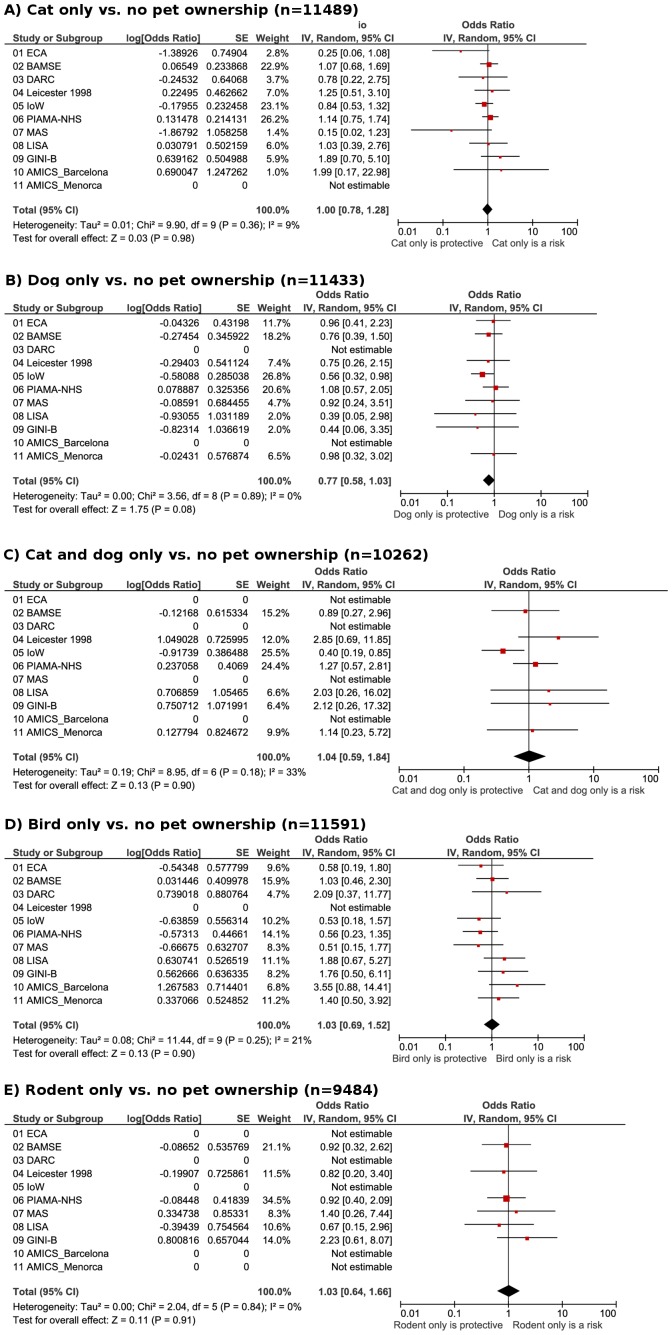
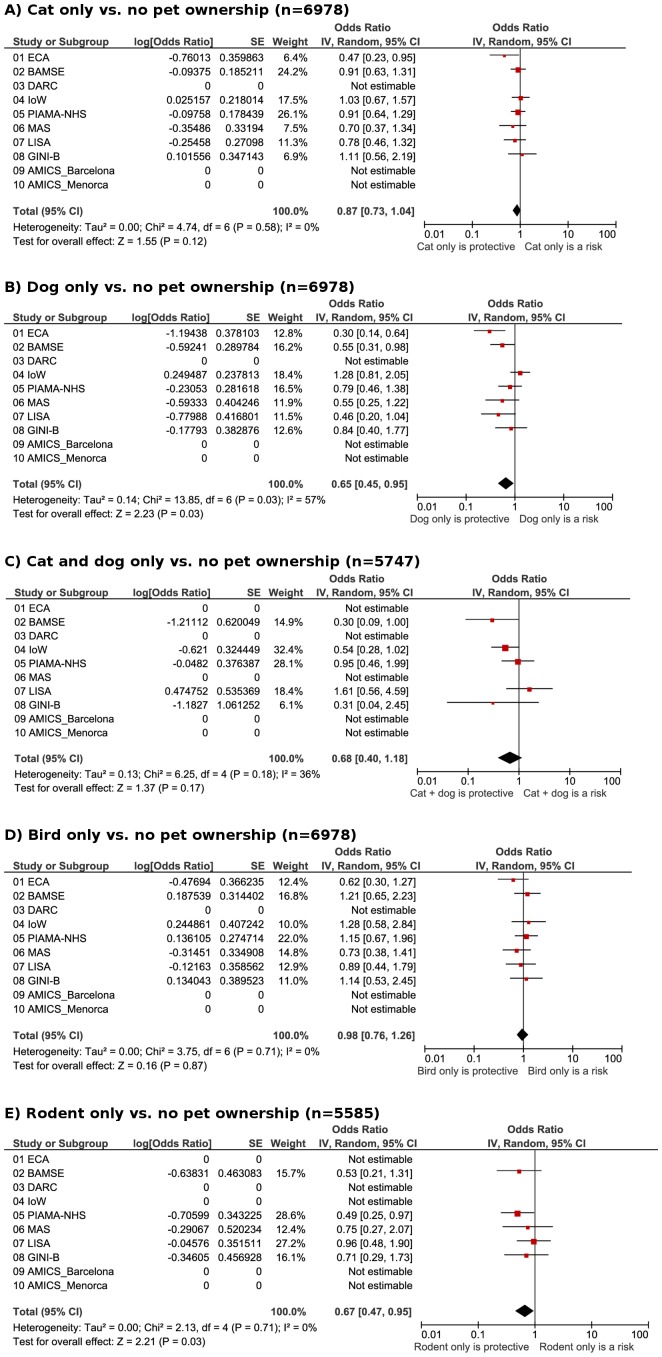
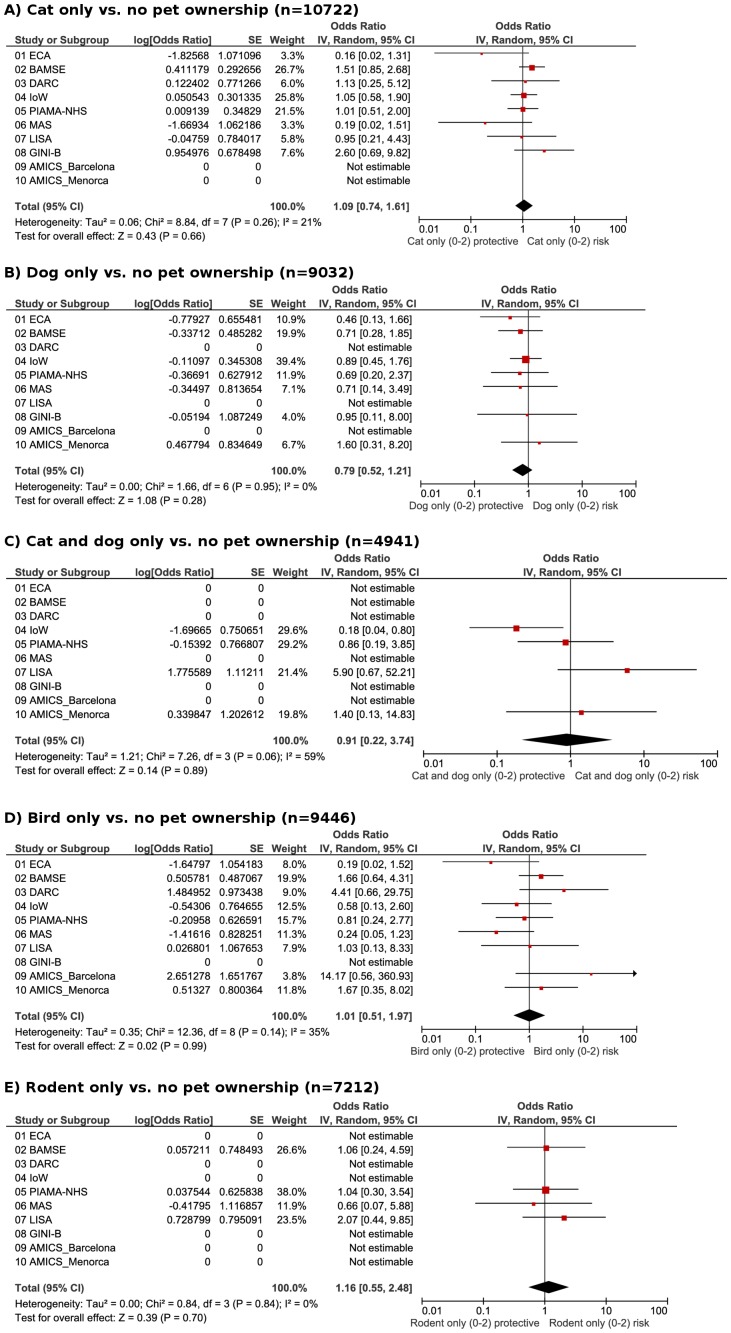
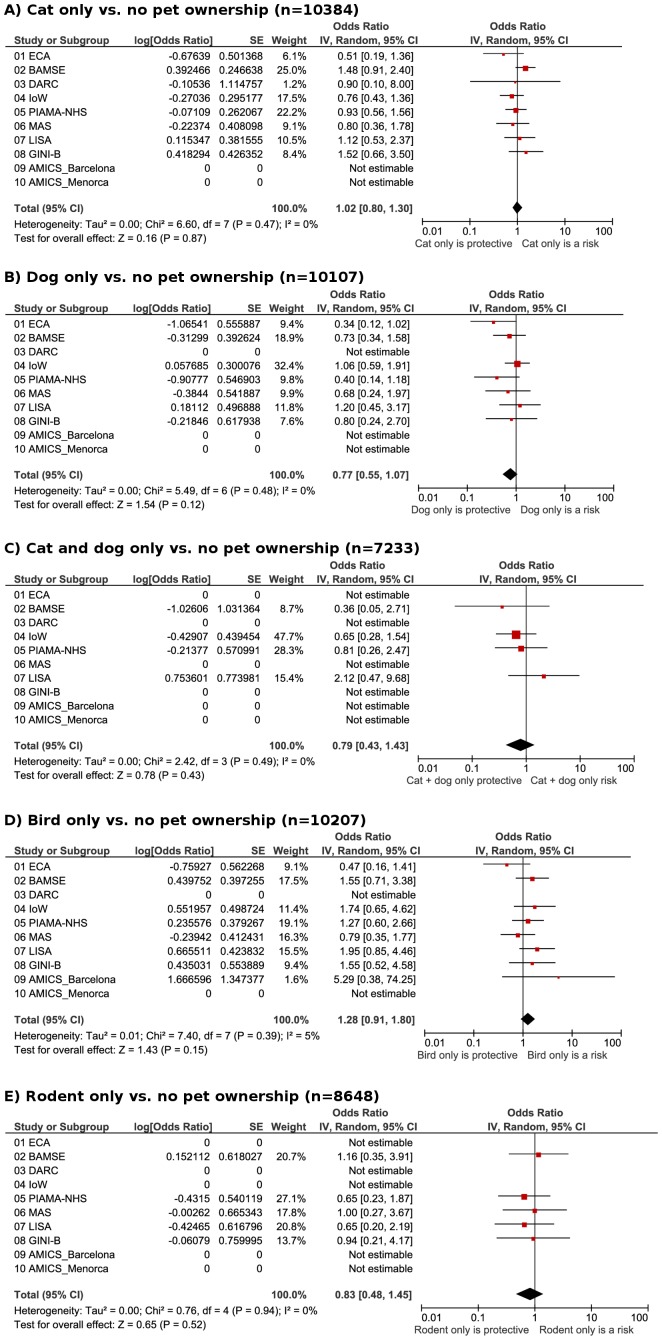
We found no association between furry and feathered pet keeping early in life and asthma in school age. For example, the odds ratio for asthma comparing cat ownership with "no pets" (10 studies, 11489 participants) was 1.00 (95% confidence interval 0.78 to 1.28) (I(2) = 9%; p = 0.36). The odds ratio for asthma comparing dog ownership with "no pets" (9 studies, 11433 participants) was 0.77 (0.58 to 1.03) (I(2) = 0%, p = 0.89). Owning both cat(s) and dog(s) compared to "no pets" resulted in an odds ratio of 1.04 (0.59 to 1.84) (I(2) = 33%, p = 0.18). Similarly, for allergic asthma and for allergic rhinitis we did not find associations regarding any type of pet ownership early in life. However, we found some evidence for an association between ownership of furry pets during the first 2 years of life and reduced likelihood of becoming sensitized to aero-allergens.
Pet ownership in early life did not appear to either increase or reduce the risk of asthma or allergic rhinitis symptoms in children aged 6-10. Advice from health care practitioners to avoid or to specifically acquire pets for primary prevention of asthma or allergic rhinitis in children should not be given.
研究儿童在 6-10 岁时早期养宠物与哮喘和过敏之间的关联。
对 11 项欧洲前瞻性出生队列的个体参与者数据进行汇总分析,这些队列在 20 世纪 90 年代共招募了超过 22000 名儿童。
生命的头 2 年内仅拥有猫、狗、鸟、啮齿动物或猫/狗。
6-10 岁时的当前哮喘(主要结局)、过敏性哮喘、过敏性鼻炎和过敏致敏。
三步法:(i)队列之间结局和暴露变量的共同定义;(ii)为每个队列计算调整后的效应估计值;(iii)使用随机效应荟萃分析模型对效应估计值进行汇总。
我们发现早期生命中的毛茸茸和有羽毛的宠物饲养与学龄期哮喘之间没有关联。例如,与“无宠物”相比,猫饲养的哮喘比值比为 1.00(95%置信区间 0.78 至 1.28)(I²=9%;p=0.36)(10 项研究,11489 名参与者)。与“无宠物”相比,狗饲养的哮喘比值比为 0.77(0.58 至 1.03)(I²=0%,p=0.89)(9 项研究,11433 名参与者)。与“无宠物”相比,同时拥有猫和狗的哮喘比值比为 1.04(0.59 至 1.84)(I²=33%,p=0.18)。同样,对于过敏性哮喘和过敏性鼻炎,我们没有发现任何类型的宠物早期饲养与发病风险之间的关联。然而,我们发现生命的头 2 年内饲养毛茸茸的宠物与降低对空气过敏原致敏的可能性之间存在一些关联。
儿童在 6-10 岁时养宠物似乎不会增加或降低哮喘或过敏性鼻炎症状的风险。不应该向保健医生提供有关避免或专门为预防儿童哮喘或过敏性鼻炎而养宠物的建议。