School of Experimental Psychology, University of Bristol, Bristol, United Kingdom.
PLoS One. 2012;7(8):e43979. doi: 10.1371/journal.pone.0043979. Epub 2012 Aug 29.
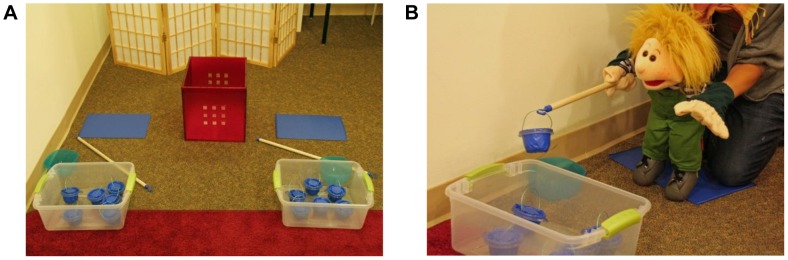
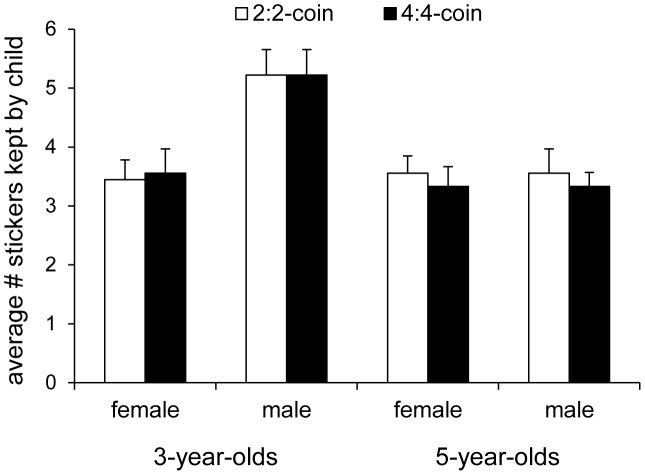
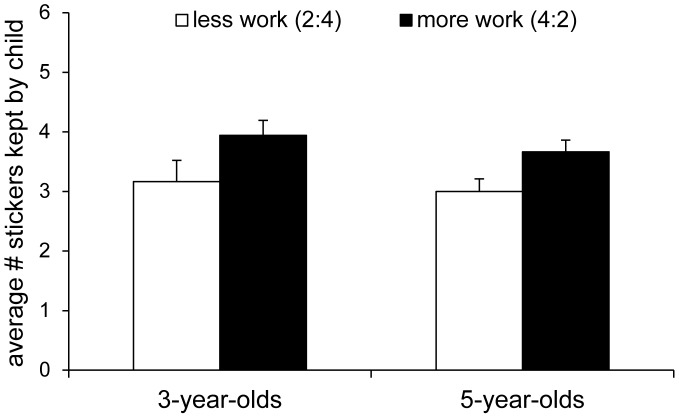
rewards should be distributed according to how much someone contributed to a task. Previous research suggests that children have an early ability to take merit into account in third-party situations but that merit-based sharing in first-party contexts does not emerge until school-age. Here we provide evidence that three- and five-year-old children already use merit to share resources with others, even when sharing is costly for the child. In Study 1, a child and a puppet-partner collected coins that were later exchanged for rewards. We varied the work-contribution of both partners by manipulating how many coins each partner collected. Children kept fewer stickers in trials in which they had contributed less than in trials in which they had contributed more than the partner, showing that they took merit into account. Few children, however, gave away more than half of the stickers when the partner had worked more. Study 2 confirmed that children related their own work-contribution to their partner's, rather than simply focusing on their own contribution. Taken together, these studies show that merit-based sharing is apparent in young children; however it remains constrained by a self-serving bias.
奖励应该根据一个人对任务的贡献程度来分配。先前的研究表明,儿童在第三方情境中具有早期考虑功绩的能力,但在第一方情境中基于功绩的分享直到学龄期才出现。在这里,我们提供的证据表明,三岁和五岁的儿童已经可以利用功绩与他人分享资源,即使分享对儿童来说是有代价的。在研究 1 中,一个孩子和一个木偶伙伴收集硬币,这些硬币后来被用来交换奖励。我们通过操纵每个伙伴收集的硬币数量来改变两个伙伴的工作贡献。与贡献较少的试验相比,孩子们在贡献较多的试验中保留的贴纸较少,这表明他们考虑了功绩。然而,当伙伴的工作量更大时,很少有孩子会放弃超过一半的贴纸。研究 2 证实,孩子们将自己的工作贡献与伙伴的工作贡献联系起来,而不是仅仅关注自己的贡献。总的来说,这些研究表明,基于功绩的分享在年幼的儿童中是明显的;然而,它仍然受到自利偏见的限制。