Department of Arctic and Marine Biology, University of Tromsø, Tromsø, Norway.
ISME J. 2013 Feb;7(2):299-311. doi: 10.1038/ismej.2012.99. Epub 2012 Sep 6.
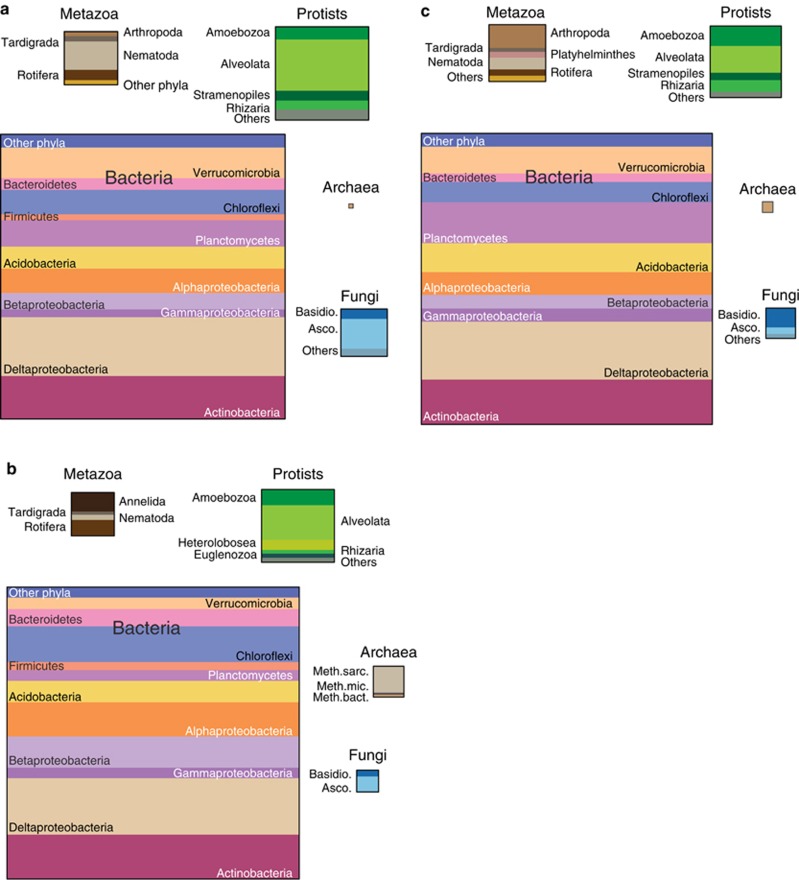
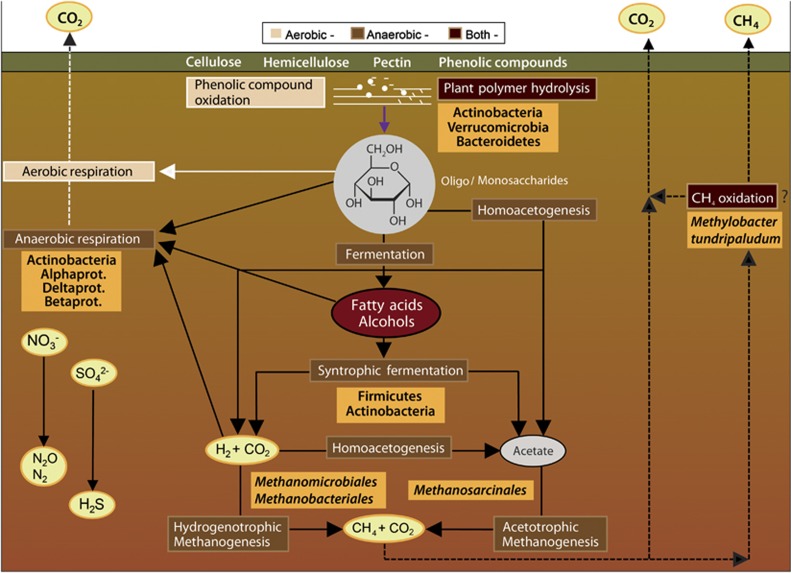
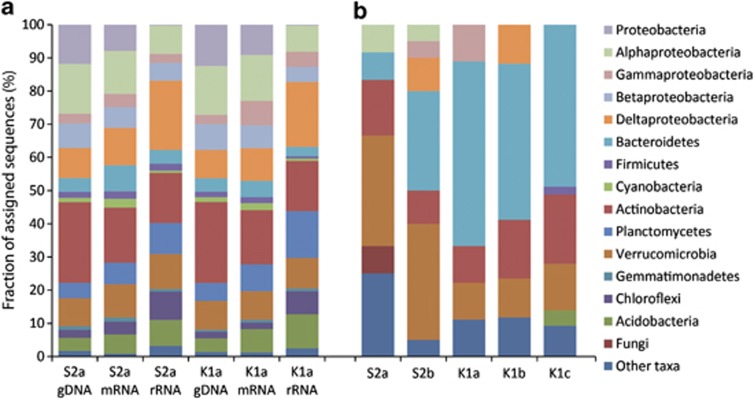
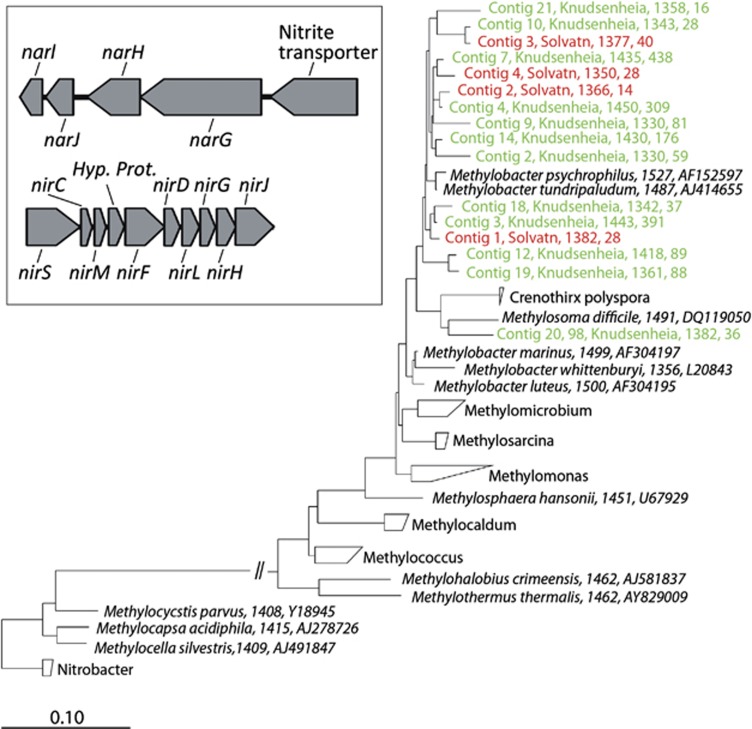
A substantial part of the Earths' soil organic carbon (SOC) is stored in Arctic permafrost peatlands, which represent large potential sources for increased emissions of the greenhouse gases CH(4) and CO(2) in a warming climate. The microbial communities and their genetic repertoire involved in the breakdown and mineralisation of SOC in these soils are, however, poorly understood. In this study, we applied a combined metagenomic and metatranscriptomic approach on two Arctic peat soils to investigate the identity and the gene pool of the microbiota driving the SOC degradation in the seasonally thawed active layers. A large and diverse set of genes encoding plant polymer-degrading enzymes was found, comparable to microbiotas from temperate and subtropical soils. This indicates that the metabolic potential for SOC degradation in Arctic peat is not different from that of other climatic zones. The majority of these genes were assigned to three bacterial phyla, Actinobacteria, Verrucomicrobia and Bacteroidetes. Anaerobic metabolic pathways and the fraction of methanogenic archaea increased with peat depth, evident for a gradual transition from aerobic to anaerobic lifestyles. A population of CH(4)-oxidising bacteria closely related to Methylobacter tundripaludum was the dominating active group of methanotrophs. Based on the in-depth characterisation of the microbes and their genes, we conclude that these Arctic peat soils will turn into CO(2) sources owing to increased active layer depth and prolonged growing season. However, the extent of future CH(4) emissions will critically depend on the response of the methanotrophic bacteria.
大量的地球土壤有机碳 (SOC) 储存在北极永冻泥炭地中,这些泥炭地是在气候变暖的情况下增加温室气体 CH(4) 和 CO(2) 排放的巨大潜在来源。然而,这些土壤中 SOC 分解和矿化所涉及的微生物群落及其遗传组成仍知之甚少。在这项研究中,我们应用了组合宏基因组学和宏转录组学方法,对两种北极泥炭土壤进行了研究,以调查在季节性解冻的活动层中驱动 SOC 降解的微生物群落的身份和基因库。发现了大量多样的编码植物聚合物降解酶的基因,与温带和亚热带土壤的微生物群相当。这表明,北极泥炭中 SOC 降解的代谢潜力与其他气候带没有不同。这些基因中的大多数被分配到三个细菌门,放线菌门、疣微菌门和拟杆菌门。随着泥炭深度的增加,厌氧代谢途径和产甲烷古菌的比例增加,这表明从好氧到厌氧生活方式的逐渐转变。与甲基杆菌 tundripaludum 密切相关的一群 CH(4)氧化细菌是主要的甲烷氧化菌。基于对微生物及其基因的深入描述,我们得出结论,由于活动层深度增加和生长季节延长,这些北极泥炭地将变成 CO(2) 源。然而,未来 CH(4) 排放的程度将取决于甲烷营养细菌的反应。