MRC Laboratory of Molecular Biology, Cambridge CB2 0QH, UK.
Mol Cell. 2012 Oct 26;48(2):242-53. doi: 10.1016/j.molcel.2012.08.003. Epub 2012 Sep 6.
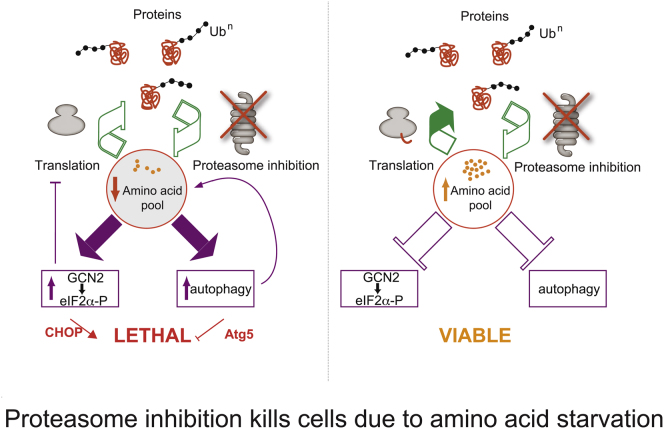
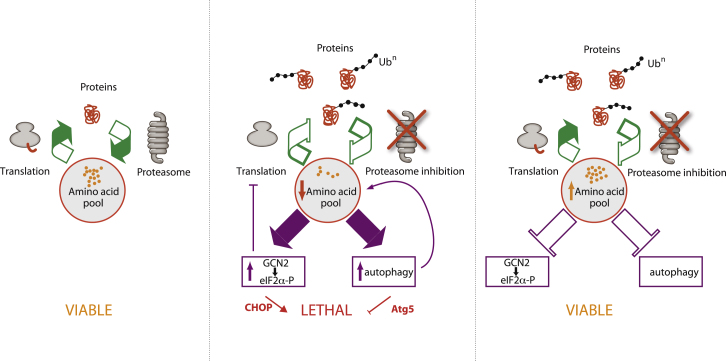
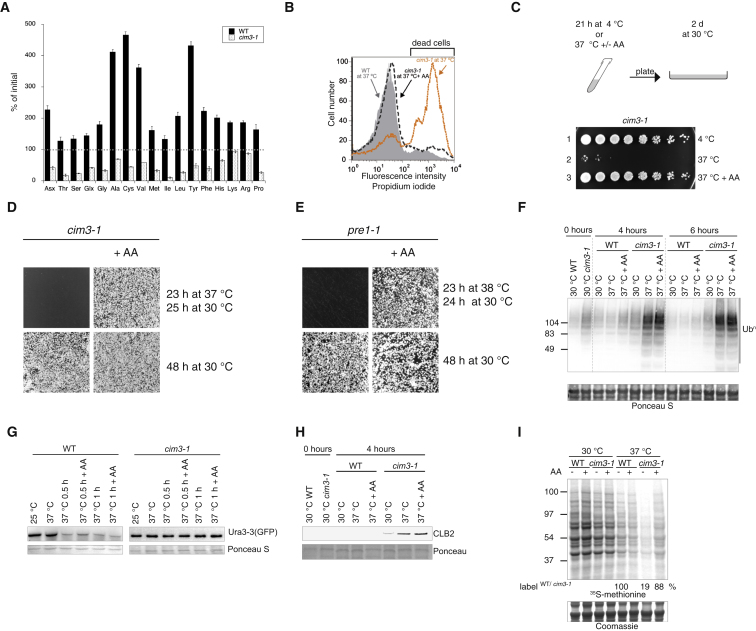
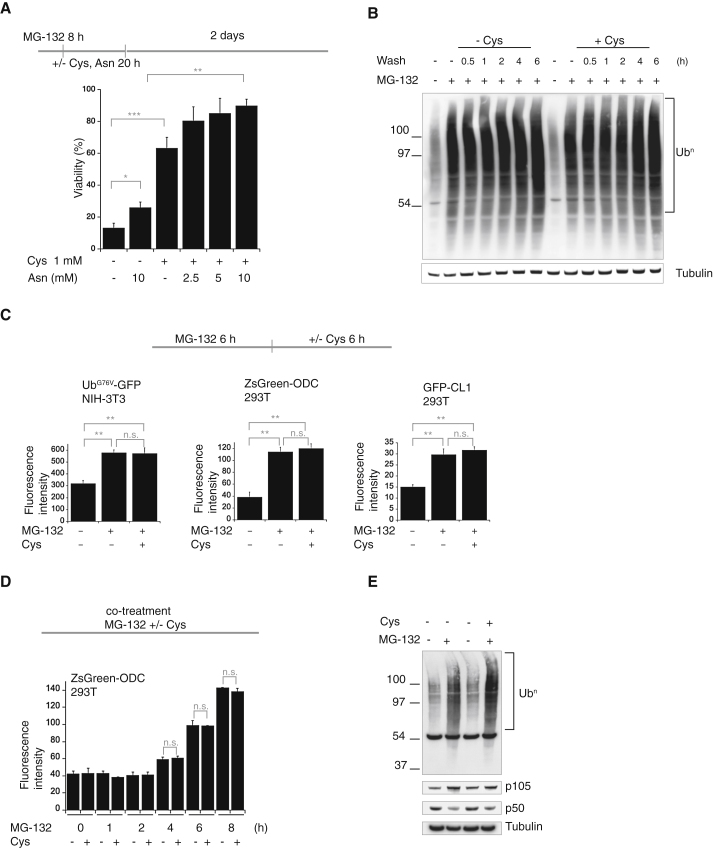
The ubiquitin-proteasome system targets many cellular proteins for degradation and thereby controls most cellular processes. Although it is well established that proteasome inhibition is lethal, the underlying mechanism is unknown. Here, we show that proteasome inhibition results in a lethal amino acid shortage. In yeast, mammalian cells, and flies, the deleterious consequences of proteasome inhibition are rescued by amino acid supplementation. In all three systems, this rescuing effect occurs without noticeable changes in the levels of proteasome substrates. In mammalian cells, the amino acid scarcity resulting from proteasome inhibition is the signal that causes induction of both the integrated stress response and autophagy, in an unsuccessful attempt to replenish the pool of intracellular amino acids. These results reveal that cells can tolerate protein waste, but not the amino acid scarcity resulting from proteasome inhibition.
泛素-蛋白酶体系统将许多细胞蛋白靶向降解,从而控制大多数细胞过程。虽然蛋白酶体抑制是致命的这一点已得到充分证实,但其中的潜在机制尚不清楚。在这里,我们表明蛋白酶体抑制会导致致命的氨基酸短缺。在酵母、哺乳动物细胞和果蝇中,蛋白酶体抑制的有害后果可以通过氨基酸补充来挽救。在所有三种系统中,这种挽救作用都不会导致蛋白酶体底物水平发生明显变化。在哺乳动物细胞中,蛋白酶体抑制导致的氨基酸匮乏是引发整合应激反应和自噬的信号,这是细胞试图补充细胞内氨基酸池的不成功尝试。这些结果表明,细胞可以容忍蛋白质废物,但不能容忍蛋白酶体抑制导致的氨基酸匮乏。