
与第三孕期相比,第一孕期人类胎儿胎盘绒毛膜干细胞的本体论差异。
Ontological differences in first compared to third trimester human fetal placental chorionic stem cells.
机构信息
Institute of Reproductive and Developmental Biology, Imperial College London, London, United Kingdom.
出版信息
PLoS One. 2012;7(9):e43395. doi: 10.1371/journal.pone.0043395. Epub 2012 Sep 4.
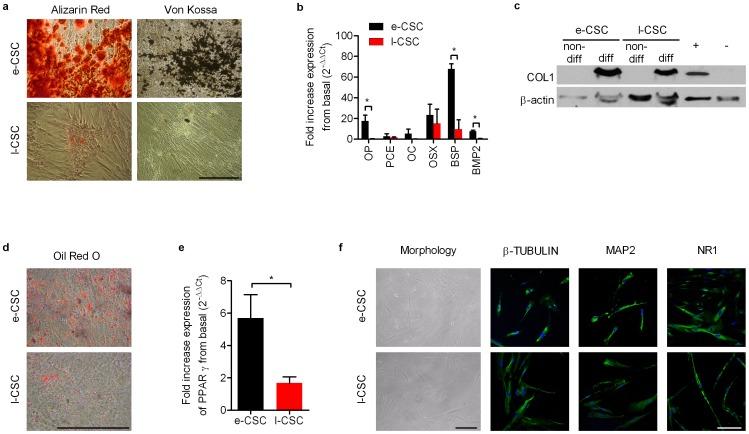
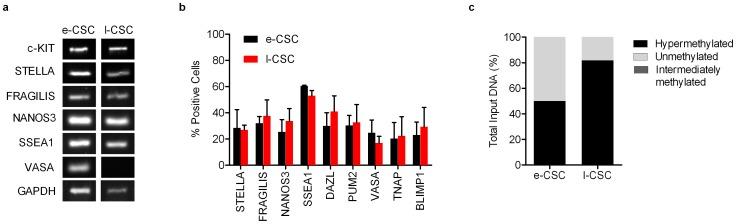
Human mesenchymal stromal/stem cells (MSC) isolated from fetal tissues hold promise for use in tissue engineering applications and cell-based therapies, but their collection is restricted ethically and technically. In contrast, the placenta is a potential source of readily-obtainable stem cells throughout pregnancy. In fetal tissues, early gestational stem cells are known to have advantageous characteristics over neonatal and adult stem cells. Accordingly, we investigated whether early fetal placental chorionic stem cells (e-CSC) were physiologically superior to their late gestation fetal chorionic counterparts (l-CSC). We showed that e-CSC shared a common phenotype with l-CSC, differentiating down the osteogenic, adipogenic and neurogenic pathways, and containing a subset of cells endogenously expressing NANOG, SOX2, c-MYC, and KLF4, as well as an array of genes expressed in pluripotent stem cells and primordial germ cells, including CD24, NANOG, SSEA4, SSEA3, TRA-1-60, TRA-1-81, STELLA, FRAGILIS, NANOS3, DAZL and SSEA1. However, we showed that e-CSC have characteristics of an earlier state of stemness compared to l-CSC, such as smaller size, faster kinetics, uniquely expressing OCT4A variant 1 and showing higher levels of expression of NANOG, SOX2, c-MYC and KLF4 than l-CSC. Furthermore e-CSC, but not l-CSC, formed embryoid bodies containing cells from the three germ layer lineages. Finally, we showed that e-CSC demonstrate higher tissue repair in vivo; when transplanted in the osteogenesis imperfecta mice, e-CSC, but not l-CSC increased bone quality and plasticity; and when applied to a skin wound, e-CSC, but not l-CSC, accelerated healing compared to controls. Our results provide insight into the ontogeny of the stemness phenotype during fetal development and suggest that the more primitive characteristics of early compared to late gestation fetal chorionic stem cells may be translationally advantageous.
人骨髓间充质/干细胞(MSC)从胎儿组织中分离出来,有望用于组织工程应用和基于细胞的治疗,但它们的采集在伦理和技术上受到限制。相比之下,胎盘是整个怀孕期间容易获得的干细胞的潜在来源。在胎儿组织中,早期妊娠干细胞被认为具有比新生儿和成人干细胞更有利的特征。因此,我们研究了早期胎儿胎盘绒毛干细胞(e-CSC)是否在生理上优于其晚期妊娠胎儿绒毛对应物(l-CSC)。我们表明,e-CSC 与 l-CSC 具有共同的表型,可分化为成骨、脂肪和成神经途径,并包含一组内源性表达 NANOG、SOX2、c-MYC 和 KLF4 的细胞,以及一组在多能干细胞和原始生殖细胞中表达的基因,包括 CD24、NANOG、SSEA4、SSEA3、TRA-1-60、TRA-1-81、STELLA、FRAGILIS、NANOS3、DAZL 和 SSEA1。然而,我们表明,与 l-CSC 相比,e-CSC 具有更早的干细胞状态特征,例如更小的大小、更快的动力学、独特表达 OCT4A 变体 1 并表现出更高水平的 NANOG、SOX2、c-MYC 和 KLF4 表达。此外,e-CSC 但不是 l-CSC 形成含有三个胚层谱系细胞的类胚体。最后,我们表明,e-CSC 在体内表现出更高的组织修复能力;当移植到成骨不全症小鼠中时,e-CSC 但不是 l-CSC 增加了骨质量和可塑性;当应用于皮肤伤口时,e-CSC 但不是 l-CSC 与对照组相比加速了愈合。我们的研究结果深入了解了胎儿发育过程中干细胞表型的发生,并表明与晚期妊娠胎儿绒毛干细胞相比,早期妊娠胎儿绒毛干细胞的更原始特征可能具有转化优势。




 Zotero 插件