Departamento de Biologia Marinha, Instituto de Biologia, Universidade Federal do Rio de Janeiro (UFRJ) Av, Carlos Chagas Filho, 373-CCS - IB - BLOCO A (ANEXO) A3- 202, Rio de Janeiro, 21941-599, Brazil.
BMC Genomics. 2012 Sep 17;13:487. doi: 10.1186/1471-2164-13-487.
Seaweeds of the Laurencia genus have a broad geographic distribution and are largely recognized as important sources of secondary metabolites, mainly halogenated compounds exhibiting diverse potential pharmacological activities and relevant ecological role as anti-epibiosis. Host-microbe interaction is a driving force for co-evolution in the marine environment, but molecular studies of seaweed-associated microbial communities are still rare. Despite the large amount of research describing the chemical compositions of Laurencia species, the genetic knowledge regarding this genus is currently restricted to taxonomic markers and general genome features. In this work we analyze the transcriptomic profile of L. dendroidea J. Agardh, unveil the genes involved on the biosynthesis of terpenoid compounds in this seaweed and explore the interactions between this host and its associated microbiome.
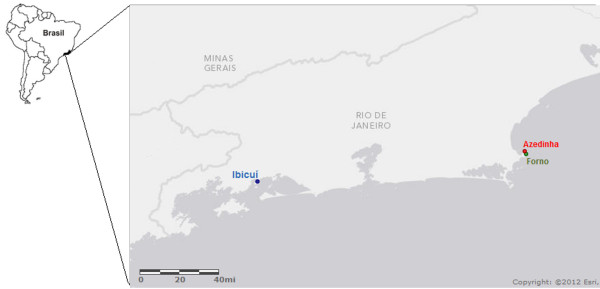
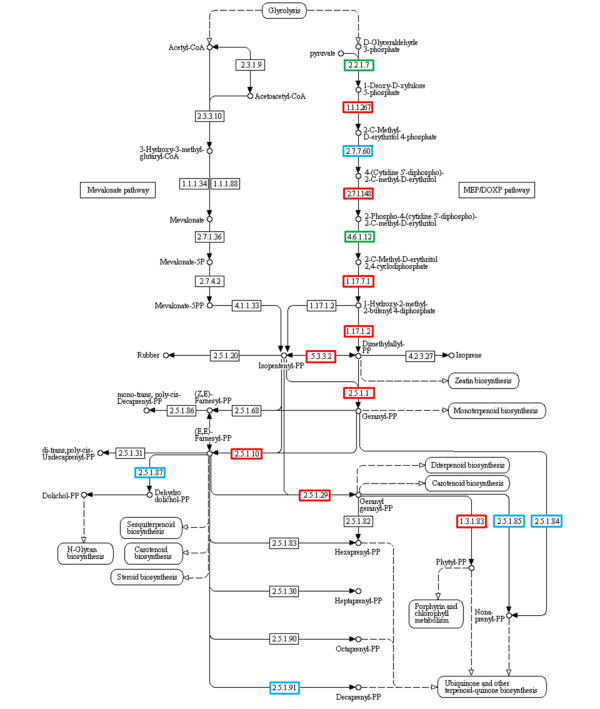
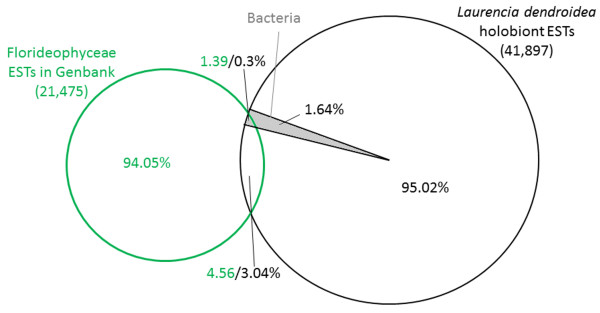
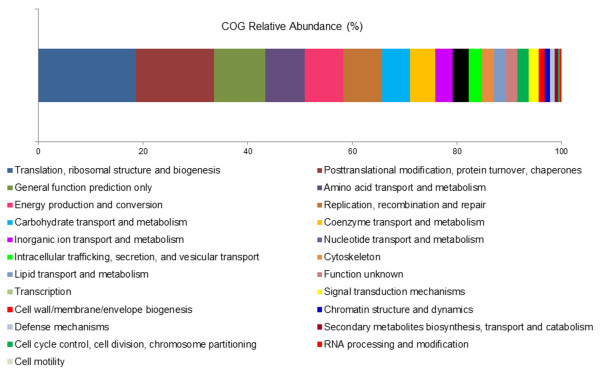
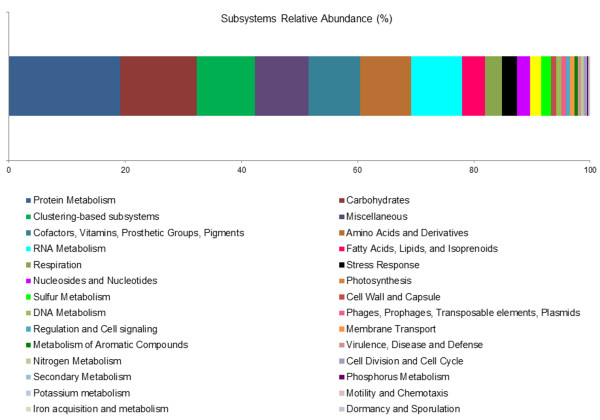
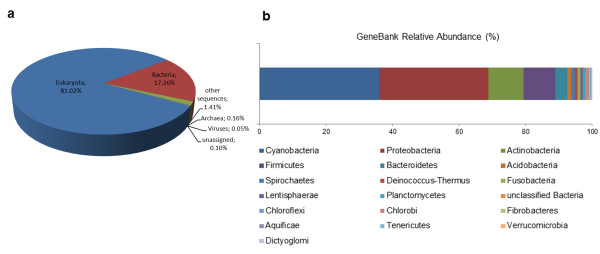
A total of 6 transcriptomes were obtained from specimens of L. dendroidea sampled in three different coastal locations of the Rio de Janeiro state. Functional annotations revealed predominantly basic cellular metabolic pathways. Bacteria was the dominant active group in the microbiome of L. dendroidea, standing out nitrogen fixing Cyanobacteria and aerobic heterotrophic Proteobacteria. The analysis of the relative contribution of each domain highlighted bacterial features related to glycolysis, lipid and polysaccharide breakdown, and also recognition of seaweed surface and establishment of biofilm. Eukaryotic transcripts, on the other hand, were associated with photosynthesis, synthesis of carbohydrate reserves, and defense mechanisms, including the biosynthesis of terpenoids through the mevalonate-independent pathway.
This work describes the first transcriptomic profile of the red seaweed L. dendroidea, increasing the knowledge about ESTs from the Florideophyceae algal class. Our data suggest an important role for L. dendroidea in the primary production of the holobiont and the role of Bacteria as consumers of organic matter and possibly also as nitrogen source. Furthermore, this seaweed expressed sequences related to terpene biosynthesis, including the complete mevalonate-independent pathway, which offers new possibilities for biotechnological applications using secondary metabolites from L. dendroidea.
角叉菜属海藻广泛分布,被广泛认为是次生代谢产物的重要来源,主要是卤代化合物,具有多种潜在的药理活性,在抗附生方面具有相关的生态作用。宿主-微生物相互作用是海洋环境中协同进化的驱动力,但对海藻相关微生物群落的分子研究仍然很少。尽管有大量研究描述了角叉菜属物种的化学成分,但关于该属的遗传知识目前仅限于分类标记和一般基因组特征。在这项工作中,我们分析了 J. Agardh 角叉菜属 L. dendroidea 的转录组谱,揭示了该海藻萜类化合物生物合成中涉及的基因,并探索了该宿主与其相关微生物组之间的相互作用。
从里约热内卢州三个不同沿海地区采集的 L. dendroidea 标本中获得了总共 6 个转录组。功能注释显示主要是基础细胞代谢途径。细菌是 L. dendroidea 微生物组中的主要活性群体,突出了固氮蓝细菌和需氧异养变形菌。每个域相对贡献的分析突出了与糖酵解、脂质和多糖分解以及识别海藻表面和建立生物膜有关的细菌特征。另一方面,真核转录物与光合作用、碳水化合物储备的合成以及防御机制有关,包括通过非甲羟戊酸途径合成萜类化合物。
这项工作描述了红色海藻 L. dendroidea 的第一个转录组谱,增加了对 Florideophyceae 藻类类别的 ESTs 的了解。我们的数据表明,L. dendroidea 在整个生物群的初级生产中起着重要作用,细菌作为有机物的消费者,可能也是氮源。此外,这种海藻表达了与萜类化合物生物合成相关的序列,包括完整的非甲羟戊酸途径,这为利用 L. dendroidea 的次生代谢产物进行生物技术应用提供了新的可能性。