Centre for Psychosocial Medicine; German Centre for Addiction Research in Childhood and Adolescence, University Medical Centre Hamburg-Eppendorf, Martinistraβe 52, Hamburg, D-20246, Germany.
BMC Public Health. 2012 Sep 26;12:826. doi: 10.1186/1471-2458-12-826.
Mid to late adolescence is characterised by a vulnerability to problematic substance use since the consumption of alcohol and illicit drugs is frequently initiated and increased in this life period. While the detrimental long- and short-term effects of problematic consumption patterns in adolescence pose a major public health concern, current prevention programs targeting alcohol- and other substance-using adolescents are scarce. The study described in this protocol will test the effectiveness of a web-based brief intervention aimed at reducing problematic alcohol use and promoting abstinence from illegal drugs in adolescents with risky substance use aged 16 to 18 years old in four EU-countries.
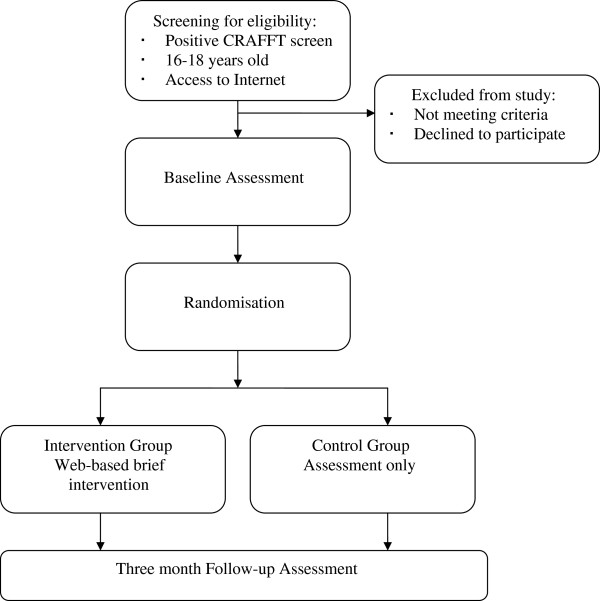
METHODS/DESIGN: To determine the effectiveness of our web-BI, we apply a two-arm randomized controlled trial (RCT) study design, with baseline assessment at study entry and a three month follow-up assessment. Adolescents aged 16 to 18 years from Belgium, the Czech Republic, Germany, and Sweden will be randomly assigned to either the fully electronically delivered brief intervention group (N = 400) or an assessment only control group (N = 400) depending on their screening for risky substance use (using the CRAFFT). Recruitment, informed consent, randomization, intervention and follow-up will be implemented online. Primary outcomes are reductions in frequency and quantity of use of alcohol and drugs other than alcohol over a 30 day period, as well as consumption per typical occasion. Secondary outcomes concern changes in substance use related cognitions including the constructs of the Theory of Planned Behaviour, implementation intentions, and stages of change. Moreover the study addresses a number of moderator variables, including age of first use, general psychopathology and quality of parent-child relationship.
The trial is expected to contribute to the growing literature on theory- and web-based brief interventions for adolescents. We will explore the potential of using web-based technologies as means of delivering preventive interventions. In doing so we are among the first to target the relevant group of young poly-drug users in Europe.
Current Controlled Trials ISRCTN95538913.
从中期到后期青春期,由于在此生命阶段经常开始和增加饮酒和非法药物的消费,因此存在出现问题的物质使用的脆弱性。虽然青春期中出现问题的消费模式的有害长期和短期影响构成了主要的公共卫生关注点,但针对饮酒和其他物质使用青少年的当前预防计划却很少。本研究方案中描述的研究将测试一种基于网络的简短干预措施的有效性,该措施旨在减少 16 至 18 岁有风险物质使用的青少年的酗酒问题并促进其戒除非法药物。
方法/设计:为了确定我们的网络 BI 的有效性,我们采用了一项两臂随机对照试验(RCT)研究设计,在研究开始时进行基线评估,并进行三个月的随访评估。来自比利时、捷克共和国、德国和瑞典的 16 至 18 岁的青少年将根据其对危险物质使用的筛查(使用 CRAFFT)随机分配到完全电子交付的简短干预组(N=400)或仅评估对照组(N=400)。招募、知情同意、随机化、干预和随访将在线进行。主要结局是在 30 天内减少酒精和除酒精以外的药物的使用频率和数量,以及每次典型情况下的使用量。次要结局包括与物质使用相关的认知变化,包括计划行为理论的结构、实施意图和变化阶段。此外,该研究还涉及许多调节变量,包括首次使用年龄、一般心理病理学和亲子关系质量。
该试验有望为针对青少年的基于理论和基于网络的简短干预措施的不断增长的文献做出贡献。我们将探索使用基于网络的技术作为提供预防干预措施的手段的潜力。这样,我们将成为首批针对欧洲相关的年轻多药使用者群体的人之一。
当前对照试验 ISRCTN95538913。