Flint Melanie S, Bovbjerg Dana H
Breast Cancer Res. 2012 Sep 21;14(5):320. doi: 10.1186/bcr3189.
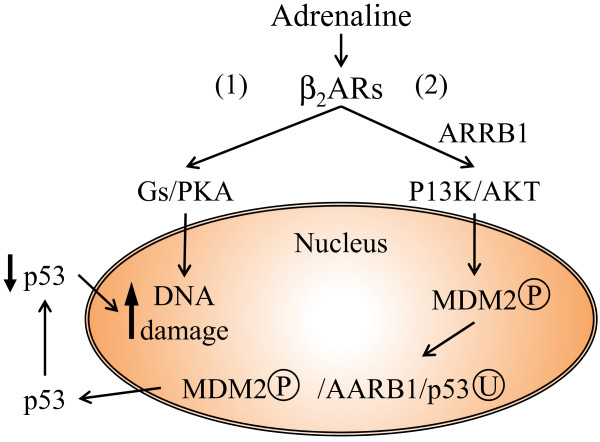
Accumulating evidence indicates that psychological stress can have deleterious influences on cancer development and progression, but the mechanisms responsible remain unclear. One possible mechanism is suggested by emerging evidence that DNA damage is increased by exposure to stress and stress hormones (for example, cortisol, catecholamines). Possible molecular mechanisms for such effects were the subject of a recent paper by Hara and colleagues, which suggests that chronic stress, through β-adrenergic stimulation, can induce two synergistic pathways that result in accumulation of DNA damage. Herein, we discuss the potential implications of these findings for breast cancer etiology, progression, and treatment response.
越来越多的证据表明,心理压力会对癌症的发生和发展产生有害影响,但其背后的机制仍不清楚。新出现的证据提出了一种可能的机制,即暴露于压力和应激激素(如皮质醇、儿茶酚胺)会增加DNA损伤。Hara及其同事最近发表的一篇论文探讨了这种效应可能的分子机制,该论文指出,慢性压力通过β-肾上腺素能刺激,可诱导两条协同途径,导致DNA损伤的积累。在此,我们讨论这些发现对乳腺癌病因、进展和治疗反应的潜在影响。