Faculty of Physical Culture and Health, University of Szczecin, Piastów 40b/6, 71-004 Szczecin, Poland.
Faculty of Public Health & Policy, London School of Hygiene & Tropical Medicine, 15-17 Tavistock Place, London WC1H 9SH, UK.
Oxid Med Cell Longev. 2019 Nov 13;2019:1270397. doi: 10.1155/2019/1270397. eCollection 2019.
Epidemiological evidence continues to accumulate on the effect of psychosocial and behavioral factors in relation to cancer risk, progression, and mortality.
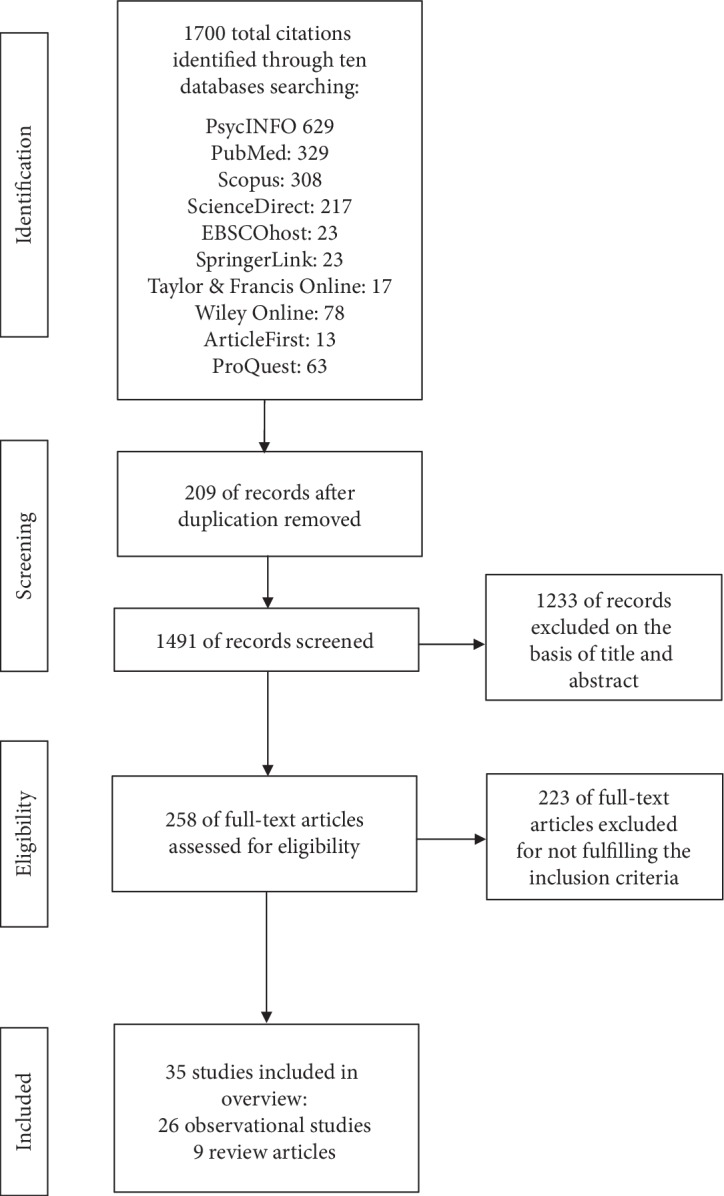
This article presents the current evidence on the relationship between psychological stress and the risk of cancer and cellular aging process. Ten databases were searched to identify publications up to September 2019. References from retrieved articles were also reviewed. We included nine review papers and 26 cohort or case-control studies based on inclusion/exclusion criteria.
Results of previously published review articles did not show consistent evidence for the association between cancer risk and psychological stress, while previous evidence is stronger regarding the role of chronic psychological stress on cancer growth and metastasis and aging. In seven observational studies, severe life events, anxiety, depression, insufficient social support perception, or avoiding coping strategy were significantly associated with breast cancer risk. For other specific types of cancer, 11 studies reported increased risk factors for stressful life events, and two others found increased mortality or a decline in treatment adherence.
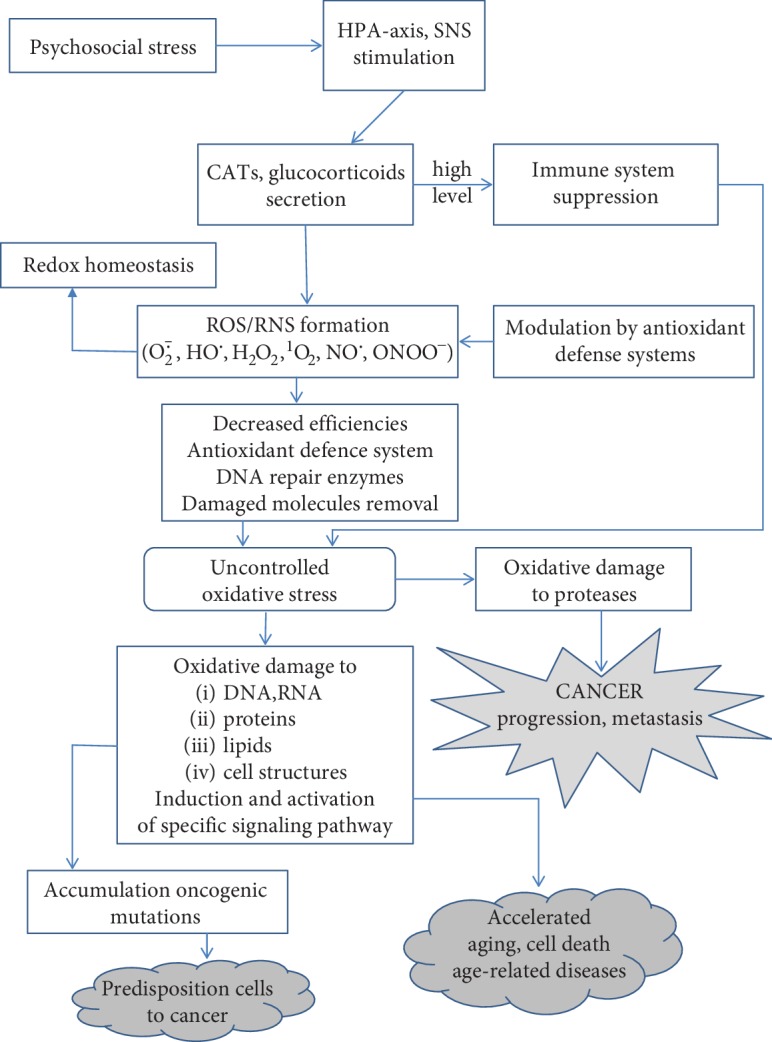
Recent epidemiological evidence generally suggests psychosocial factors may be considered risk factors for specific types of cancer and play a key role in the cellular aging process. Understanding molecular mechanisms of the stress interaction is important in cancer management and prevention. The psychological stressors should be considered when developing or evaluating change in psychosocial practice.
越来越多的流行病学证据表明,心理社会和行为因素与癌症风险、进展和死亡率有关。
本文介绍了心理压力与癌症风险和细胞衰老过程之间关系的现有证据。为了识别截至 2019 年 9 月的出版物,我们检索了 10 个数据库。还查阅了检索文章的参考文献。我们纳入了 9 篇综述文章和 26 项队列或病例对照研究,这些研究是基于纳入/排除标准进行的。
先前发表的综述文章的结果并没有显示出癌症风险与心理压力之间存在一致性的证据,而之前的证据更加强调慢性心理压力在癌症生长和转移以及衰老中的作用。在 7 项观察性研究中,严重的生活事件、焦虑、抑郁、缺乏社会支持感或回避应对策略与乳腺癌风险显著相关。对于其他特定类型的癌症,有 11 项研究报告了应激性生活事件的风险因素增加,另外两项研究发现死亡率增加或治疗依从性下降。
最近的流行病学证据通常表明,心理社会因素可能被视为某些类型癌症的危险因素,并在细胞衰老过程中发挥关键作用。了解应激相互作用的分子机制对癌症的管理和预防很重要。在制定或评估心理社会实践的改变时,应考虑心理压力源。