Information & Electronics Research Division, Toyota Central Research and Development Laboratories, Inc., Nagakute, Aichi, Japan.
PLoS One. 2012;7(9):e45920. doi: 10.1371/journal.pone.0045920. Epub 2012 Sep 19.
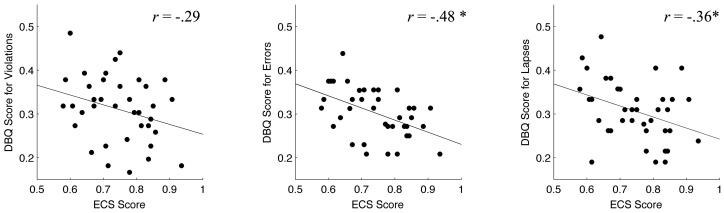
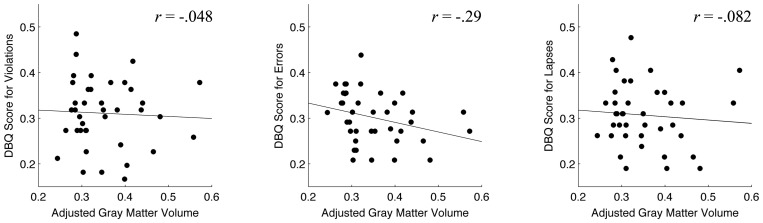
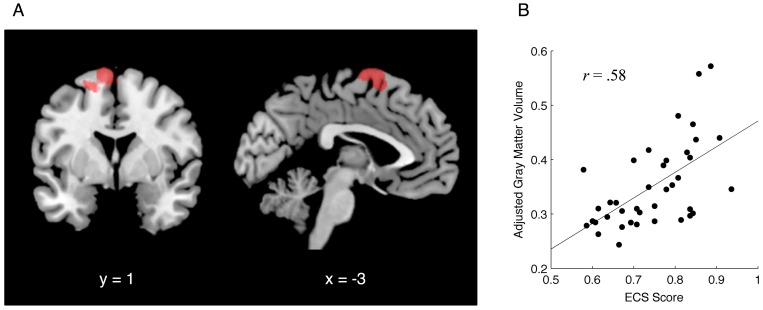
Although low executive functioning is a risk factor for vehicle crashes among elderly drivers, the neural basis of individual differences in this cognitive ability remains largely unknown. Here we aimed to examine regional frontal gray matter volume associated with executive functioning in normal aging individuals, using voxel-based morphometry (VBM). To this end, 39 community-dwelling elderly volunteers who drove a car on a daily basis participated in structural magnetic resonance imaging, and completed two questionnaires concerning executive functioning and risky driving tendencies in daily living. Consequently, we found that participants with low executive function capacity were prone to risky driving. Furthermore, VBM analysis revealed that lower executive function capacity was associated with smaller gray matter volume in the supplementary motor area (SMA). Thus, the current data suggest that SMA volume is a reliable predictor of individual differences in executive function capacity as a risk factor for vehicle crashes among elderly persons. The implication of our results is that regional frontal gray matter volume might underlie the variation in driving tendencies among elderly drivers. Therefore, detailed driving behavior assessments might be able to detect early neurodegenerative changes in the frontal lobe in normal aging adults.
尽管低执行功能是老年驾驶员发生车辆碰撞的危险因素,但个体在这种认知能力上的差异的神经基础在很大程度上仍不清楚。在这里,我们旨在使用基于体素的形态计量学(VBM)检查与正常老化个体的执行功能相关的额状面额皮质体积。为此,39 名日常驾驶汽车的社区居住的老年志愿者参与了结构磁共振成像,并完成了两份关于日常执行功能和危险驾驶倾向的问卷。结果,我们发现执行功能能力较低的参与者更容易出现危险驾驶。此外,VBM 分析显示,较低的执行功能能力与补充运动区(SMA)的灰质体积较小有关。因此,目前的数据表明,SMA 体积是个体执行功能能力差异作为老年人车辆碰撞危险因素的可靠预测指标。我们研究结果的意义在于,额状面额皮质体积可能是老年驾驶员驾驶倾向变化的基础。因此,详细的驾驶行为评估可能能够检测到正常衰老成人额叶的早期神经退行性变化。