• 文献检索
  • 文档翻译
  • 深度研究
  • 学术资讯
  • Suppr Zotero 插件Zotero 插件
  • 邀请有礼
  • 套餐&价格
  • 历史记录
应用&插件
Suppr Zotero 插件Zotero 插件浏览器插件Mac 客户端Windows 客户端微信小程序
定价
高级版会员购买积分包购买API积分包
服务
文献检索文档翻译深度研究API 文档MCP 服务
关于我们
关于 Suppr公司介绍联系我们用户协议隐私条款
关注我们

Suppr 超能文献

核心技术专利:CN118964589B侵权必究
粤ICP备2023148730 号-1Suppr @ 2026

文献检索

告别复杂PubMed语法,用中文像聊天一样搜索,搜遍4000万医学文献。AI智能推荐,让科研检索更轻松。

立即免费搜索

文件翻译

保留排版,准确专业,支持PDF/Word/PPT等文件格式,支持 12+语言互译。

免费翻译文档

深度研究

AI帮你快速写综述,25分钟生成高质量综述,智能提取关键信息,辅助科研写作。

立即免费体验

重新审视危重症患者中的肌松剂:真正的希望和真正的担忧。

A fresh look at paralytics in the critically ill: real promise and real concern.

机构信息

Division of Pulmonary, Critical Care and Sleep Medicine, Univ, of California, Davis, 4150V, Street, Suite 3400, Sacramento, CA 95817, USA.

出版信息

Ann Intensive Care. 2012 Oct 12;2(1):43. doi: 10.1186/2110-5820-2-43.

DOI:10.1186/2110-5820-2-43
PMID:23062076
原文链接:https://pmc.ncbi.nlm.nih.gov/articles/PMC3519794/
Abstract

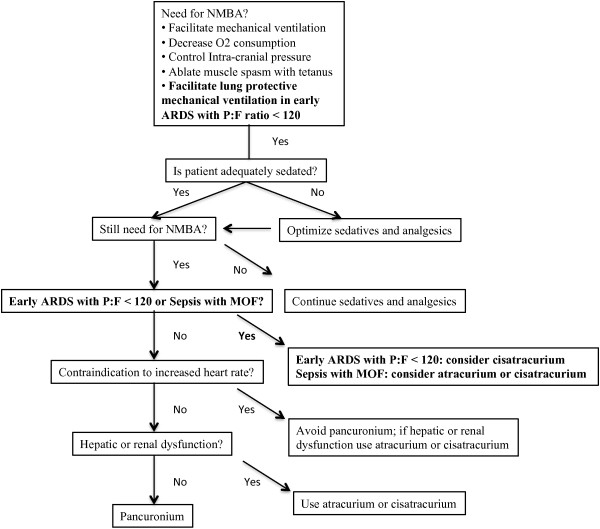
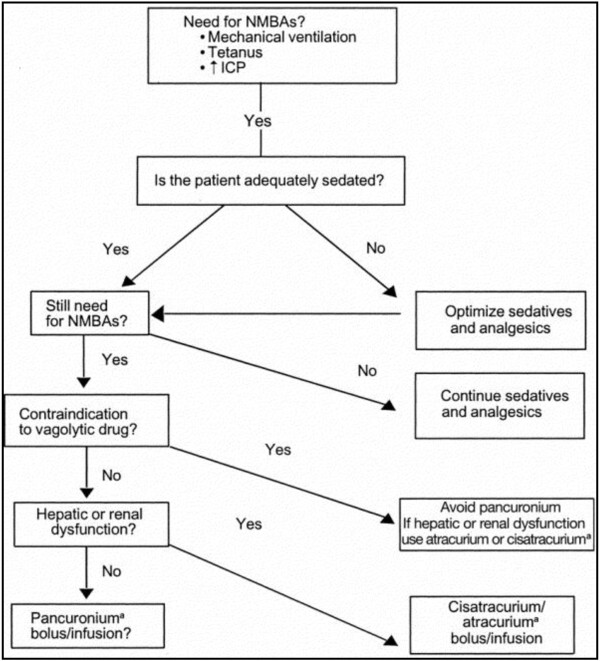
Neuromuscular blocking agents (NMBAs), or "paralytics," often are deployed in the sickest patients in the intensive care unit (ICU) when usual care fails. Despite the publication of guidelines on the use of NMBAs in the ICU in 2002, clinicians have needed more direction to determine which patients would benefit from NMBAs and which patients would be harmed. Recently, new evidence has shown that paralytics hold more promise when used in carefully selected lung injury patients for brief periods of time. When used in early acute respiratory distress syndrome (ARDS), NMBAs assist to establish a lung protective strategy, which leads to improved oxygenation, decreased pulmonary and systemic inflammation, and potentially improved mortality. It also is increasingly recognized that NMBAs can cause harm, particularly critical illness polyneuromyopathy (CIPM), when used for prolonged periods or in septic shock. In this review, we address several practical considerations for clinicians who use NMBAs in their practice. Ultimately, we conclude that NMBAs should be considered a lung protective adjuvant in early ARDS and that clinicians should consider using an alternative NMBA to the aminosteroids in septic shock with less severe lung injury pending further studies.

摘要

神经肌肉阻滞剂(NMBA),也被称为“瘫痪剂”,通常在重症监护病房(ICU)中最病重的患者常规治疗失败时使用。尽管 2002 年就已经发布了关于 ICU 中 NMBA 使用的指南,但临床医生仍需要更多的指导,以确定哪些患者可以从 NMBA 中受益,哪些患者会受到伤害。最近,新的证据表明,在经过精心选择的肺损伤患者中,短期使用瘫痪剂有更大的希望。在早期急性呼吸窘迫综合征(ARDS)中,NMBA 有助于建立肺保护策略,从而改善氧合,减少肺和全身炎症,并可能降低死亡率。人们也越来越认识到,NMBA 会造成伤害,尤其是在长时间使用或脓毒性休克时会导致严重的危重病多发性神经病(CIPM)。在这篇综述中,我们讨论了临床医生在实践中使用 NMBA 时需要考虑的几个实际问题。最终,我们得出结论,NMBA 应被视为早期 ARDS 的肺保护辅助剂,并且在进一步研究之前,对于肺损伤程度较轻的脓毒性休克患者,临床医生应考虑使用非氨基甾体类 NMBA 替代物。
https://cdn.ncbi.nlm.nih.gov/pmc/blobs/e712/3519794/1a8b719a2614/2110-5820-2-43-2.jpg
https://cdn.ncbi.nlm.nih.gov/pmc/blobs/e712/3519794/7694bb45934b/2110-5820-2-43-1.jpg
https://cdn.ncbi.nlm.nih.gov/pmc/blobs/e712/3519794/1a8b719a2614/2110-5820-2-43-2.jpg
https://cdn.ncbi.nlm.nih.gov/pmc/blobs/e712/3519794/7694bb45934b/2110-5820-2-43-1.jpg
https://cdn.ncbi.nlm.nih.gov/pmc/blobs/e712/3519794/1a8b719a2614/2110-5820-2-43-2.jpg

相似文献

1
A fresh look at paralytics in the critically ill: real promise and real concern.重新审视危重症患者中的肌松剂:真正的希望和真正的担忧。
Ann Intensive Care. 2012 Oct 12;2(1):43. doi: 10.1186/2110-5820-2-43.
2
Paralytics in critical care: not always the bad guy.重症监护中的麻痹剂:并不总是“坏人”。
Curr Opin Crit Care. 2009 Feb;15(1):59-66. doi: 10.1097/mcc.0b013e3283220e60.
3
To Block or Not: Updates in Neuromuscular Blockade in Acute Respiratory Distress Syndrome.是否阻断:急性呼吸窘迫综合征中神经肌肉阻滞的新进展。
Ann Pharmacother. 2020 Sep;54(9):899-906. doi: 10.1177/1060028020910132. Epub 2020 Feb 28.
4
The effect of neuromuscular blocking agents uses in acute respiratory distress syndrome: a systematic review and meta-analysis of randomized controlled trials.神经肌肉阻滞剂在急性呼吸窘迫综合征中的应用效果:一项随机对照试验的系统评价和荟萃分析。
Minerva Anestesiol. 2021 Mar;87(3):341-350. doi: 10.23736/S0375-9393.20.14783-7. Epub 2020 Dec 10.
5
Sedation and neuromuscular blocking agents in acute respiratory distress syndrome.急性呼吸窘迫综合征中的镇静和神经肌肉阻滞剂
Ann Transl Med. 2017 Jul;5(14):291. doi: 10.21037/atm.2017.07.19.
6
Management of Neuromuscular Blocking Agents in Critically Ill Patients with Lung Diseases.肺部疾病重症患者神经肌肉阻滞剂的管理
J Clin Med. 2024 Feb 19;13(4):1182. doi: 10.3390/jcm13041182.
7
Early neuromuscular blocking agents for adults with acute respiratory distress syndrome: a systematic review, meta-analysis and meta-regression.急性呼吸窘迫综合征成人患者早期应用神经肌肉阻滞剂:系统评价、荟萃分析和荟萃回归。
BMJ Open. 2020 Nov 19;10(11):e037737. doi: 10.1136/bmjopen-2020-037737.
8
Current therapeutic uses, pharmacology, and clinical considerations of neuromuscular blocking agents for critically ill adults.目前在危重症成人中应用神经肌肉阻滞剂的治疗用途、药理学和临床注意事项。
Ann Pharmacother. 2011 Sep;45(9):1116-26. doi: 10.1345/aph.1Q004. Epub 2011 Aug 9.
9
The use of paralytics in patients with acute respiratory distress syndrome.急性呼吸窘迫综合征患者使用麻痹剂的情况。
Clin Chest Med. 2014 Dec;35(4):753-63. doi: 10.1016/j.ccm.2014.08.012. Epub 2014 Nov 12.
10
Best evidence in critical care medicine: The role of neuromuscular blocking drugs in early severe acute respiratory distress syndrome.重症监护医学中的最佳证据:神经肌肉阻滞剂在早期严重急性呼吸窘迫综合征中的作用。
Can J Anaesth. 2012 Jan;59(1):105-8. doi: 10.1007/s12630-011-9615-2. Epub 2011 Nov 1.

引用本文的文献

1
Neuromuscular Blockade for Cardiac Arrest Patients Treated With Targeted Temperature Management: A Systematic Review and Meta-Analysis.目标温度管理治疗心脏骤停患者时的神经肌肉阻滞:一项系统评价和荟萃分析。
Front Pharmacol. 2022 May 24;13:780370. doi: 10.3389/fphar.2022.780370. eCollection 2022.
2
Patient and Care Delivery Characteristics Associated With Harm From Neuromuscular Blockade.与神经肌肉阻滞所致伤害相关的患者及护理交付特征
Crit Care Explor. 2020 Jun 18;2(6):e0147. doi: 10.1097/CCE.0000000000000147. eCollection 2020 Jun.
3
Neuromuscular blockade management in the critically Ill patient.

本文引用的文献

1
High dose methylprednisolone counteracts the negative effects of rocuronium on diaphragm function.大剂量甲泼尼龙可拮抗罗库溴铵对膈肌功能的负面作用。
Intensive Care Med. 2011 Nov;37(11):1865-72. doi: 10.1007/s00134-011-2337-7. Epub 2011 Aug 18.
2
Factors underlying the early limb muscle weakness in acute quadriplegic myopathy using an experimental ICU porcine model.急性四肢瘫痪性肌病中实验性 ICU 猪模型中早期肢体肌无力的潜在因素。
PLoS One. 2011;6(6):e20876. doi: 10.1371/journal.pone.0020876. Epub 2011 Jun 14.
3
Neuromuscular blockers in early acute respiratory distress syndrome.
危重症患者的神经肌肉阻滞管理
J Intensive Care. 2020 May 24;8:37. doi: 10.1186/s40560-020-00455-2. eCollection 2020.
4
Airway Pressure Release Ventilation: A Review of the Evidence, Theoretical Benefits, and Alternative Titration Strategies.气道压力释放通气:证据、理论益处及替代滴定策略综述
Clin Med Insights Circ Respir Pulm Med. 2020 Feb 5;14:1179548420903297. doi: 10.1177/1179548420903297. eCollection 2020.
5
Neuromuscular blocking agents for acute respiratory distress syndrome: an updated meta-analysis of randomized controlled trials.神经肌肉阻滞剂在急性呼吸窘迫综合征中的应用:一项更新的随机对照试验荟萃分析。
Respir Res. 2020 Jan 13;21(1):23. doi: 10.1186/s12931-020-1287-4.
6
Assessment of Neuromuscular Function in Patients With Prior Cosmetic Procedures: A Case Report.既往接受美容手术患者的神经肌肉功能评估:一例报告
Eplasty. 2019 Dec 3;19:e20. eCollection 2019.
7
The Current State of Pediatric Acute Respiratory Distress Syndrome.小儿急性呼吸窘迫综合征的现状
Pediatr Allergy Immunol Pulmonol. 2019 Jun 1;32(2):35-44. doi: 10.1089/ped.2019.0999. Epub 2019 Jun 17.
8
Continuous neuromuscular blockade infusion for out-of-hospital cardiac arrest patients treated with targeted temperature management: A multicenter randomized controlled trial.持续神经肌肉阻滞输注在目标温度管理治疗院外心脏骤停患者中的应用:一项多中心随机对照试验。
PLoS One. 2018 Dec 17;13(12):e0209327. doi: 10.1371/journal.pone.0209327. eCollection 2018.
9
Neuromuscular blocking agents for acute respiratory distress syndrome.神经肌肉阻滞剂在急性呼吸窘迫综合征中的应用。
J Crit Care. 2019 Feb;49:179-184. doi: 10.1016/j.jcrc.2018.10.019. Epub 2018 Oct 28.
10
The prognostic value of bispectral index and suppression ratio monitoring after out-of-hospital cardiac arrest: a prospective observational study.院外心脏骤停后双谱指数和抑制率监测的预后价值:一项前瞻性观察研究。
Ann Intensive Care. 2018 Mar 2;8(1):34. doi: 10.1186/s13613-018-0380-z.
早期急性呼吸窘迫综合征中的神经肌肉阻滞剂。
N Engl J Med. 2010 Sep 16;363(12):1107-16. doi: 10.1056/NEJMoa1005372.
4
Effects of chronic sepsis on contractile properties of fast twitch muscle in an experimental model of critical illness neuromyopathy in the rat.慢性脓毒症对大鼠危重病性神经肌肉病实验模型中快肌收缩特性的影响。
Crit Care Med. 2008 Jun;36(6):1855-63. doi: 10.1097/CCM.0b013e318176106b.
5
Use of sedatives, opioids, and neuromuscular blocking agents in patients with acute lung injury and acute respiratory distress syndrome.急性肺损伤和急性呼吸窘迫综合征患者使用镇静剂、阿片类药物及神经肌肉阻滞剂的情况。
Crit Care Med. 2008 Apr;36(4):1083-8. doi: 10.1097/CCM.0B013E3181653895.
6
Long-term outcome in patients with critical illness myopathy or neuropathy: the Italian multicentre CRIMYNE study.危重病性肌病或神经病患者的长期预后:意大利多中心CRIMYNE研究
J Neurol Neurosurg Psychiatry. 2008 Jul;79(7):838-41. doi: 10.1136/jnnp.2007.142430. Epub 2008 Mar 13.
7
Infusions of rocuronium and cisatracurium exert different effects on rat diaphragm function.罗库溴铵和顺式阿曲库铵输注对大鼠膈肌功能产生不同影响。
Intensive Care Med. 2007 May;33(5):872-879. doi: 10.1007/s00134-007-0584-4. Epub 2007 Mar 15.
8
Rocuronium exacerbates mechanical ventilation-induced diaphragm dysfunction in rats.罗库溴铵会加重大鼠机械通气诱导的膈肌功能障碍。
Crit Care Med. 2006 Dec;34(12):3018-23. doi: 10.1097/01.CCM.0000245783.28478.AD.
9
Neuromuscular blocking agents decrease inflammatory response in patients presenting with acute respiratory distress syndrome.神经肌肉阻滞剂可降低急性呼吸窘迫综合征患者的炎症反应。
Crit Care Med. 2006 Nov;34(11):2749-57. doi: 10.1097/01.CCM.0000239435.87433.0D.
10
Canadian survey of the use of sedatives, analgesics, and neuromuscular blocking agents in critically ill patients.加拿大危重症患者镇静剂、镇痛药和神经肌肉阻滞剂使用情况调查。
Crit Care Med. 2006 Feb;34(2):374-80. doi: 10.1097/01.ccm.0000196830.61965.f1.