Department of Biochemistry and Molecular Medicine, UC Davis Cancer Center, University of California Davis, Sacramento, California 95817, United States.
ACS Nano. 2012 Nov 27;6(11):9485-95. doi: 10.1021/nn302317j. Epub 2012 Oct 30.
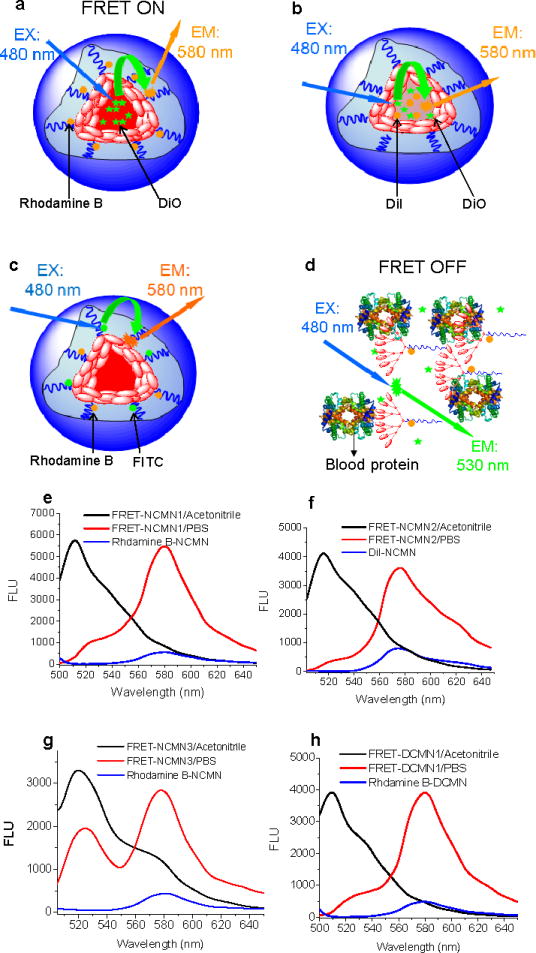
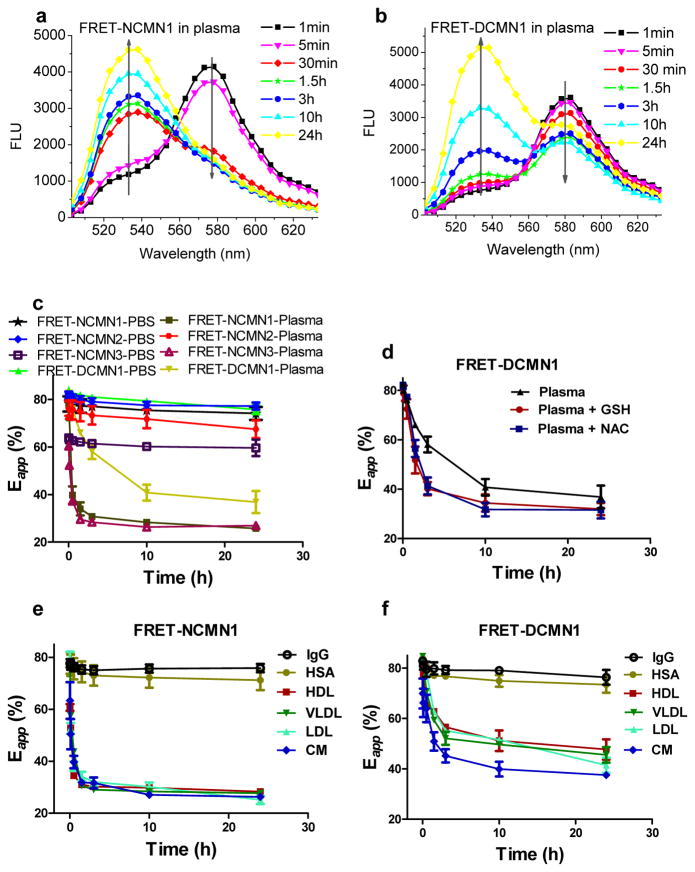
Fully understanding the influence of blood proteins on the assembly structure and dynamics within nanoparticles is difficult because of the complexity of the system and the difficulty in probing the diverse elements and milieus involved. Here we show the use of site-specific labeling with spin probes and fluorophores combined with electron paramagnetic resonance (EPR) spectroscopy and fluorescence resonance energy transfer (FRET) measurements to provide insights into the molecular architecture and dynamics within nanoparticles. These tools are especially useful for determining nanoparticle stability in the context of blood proteins and lipoproteins and have allowed us to quantitatively analyze the dynamic changes in assembly structure, local stability, and cargo diffusion of a class of novel telodendrimer-based micellar nanoparticles. When combined with human plasma and individual plasma components, we find that non-cross-linked nanoparticles immediately lose their original assembly structure and release their payload upon interaction with lipoproteins. In contrast, serum albumins and immunoglobulin gamma have moderate affects on the integrity of the nanoparticles. Disulfide cross-linked nanoparticles show minimal interaction with lipoproteins and can better retain their assembly structure and payload in vitro and in vivo. We further demonstrate how the enhanced stability and release property of disulfide cross-linked nanoparticles can be reversed in reductive conditions. These findings identify factors that are crucial to the performance of nanomedicines and provide design modes to control their interplay with blood factors.
充分了解血蛋白对纳米粒子内组装结构和动力学的影响具有挑战性,因为该系统的复杂性以及探测所涉及的多种元素和环境的难度。在这里,我们展示了使用带有自旋探针和荧光团的定点标记,结合电子顺磁共振(EPR)光谱和荧光共振能量转移(FRET)测量,深入了解纳米粒子内的分子结构和动力学。这些工具对于确定血蛋白和脂蛋白背景下的纳米颗粒稳定性特别有用,并使我们能够定量分析一类新型基于树状大分子的胶束纳米颗粒的组装结构、局部稳定性和货物扩散的动态变化。当与人类血浆和单个血浆成分结合时,我们发现非交联纳米颗粒在与脂蛋白相互作用时立即失去其原始组装结构并释放其有效载荷。相比之下,血清白蛋白和免疫球蛋白γ对纳米颗粒的完整性影响适中。二硫键交联的纳米颗粒与脂蛋白的相互作用最小,在体外和体内都能更好地保持其组装结构和有效载荷。我们进一步证明了如何在还原条件下逆转二硫键交联纳米颗粒的增强稳定性和释放性能。这些发现确定了对纳米药物性能至关重要的因素,并为控制其与血液因素相互作用提供了设计模式。