Calvani Maura, Comito Giuseppina, Giannoni Elisa, Chiarugi Paola
Department of Biochemical Sciences, University of Florence, Florence, Italy.
PLoS One. 2012;7(10):e38388. doi: 10.1371/journal.pone.0038388. Epub 2012 Oct 29.
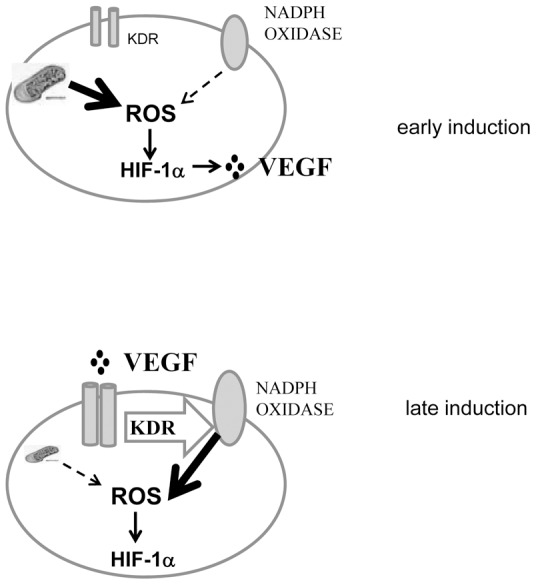
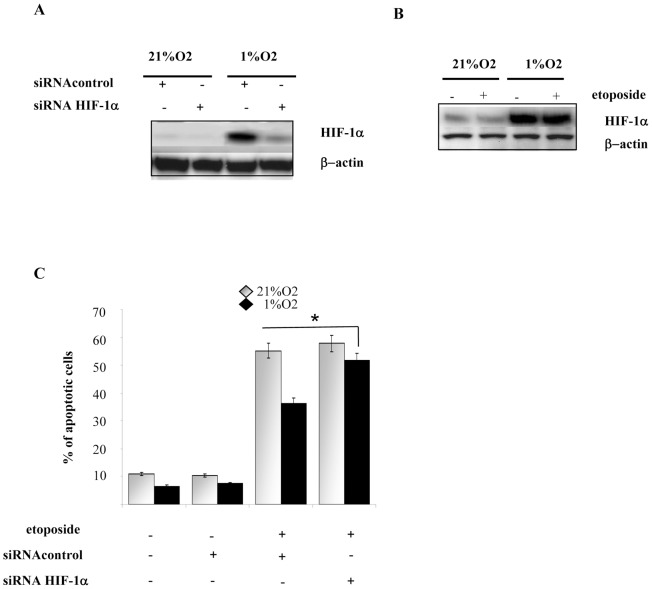
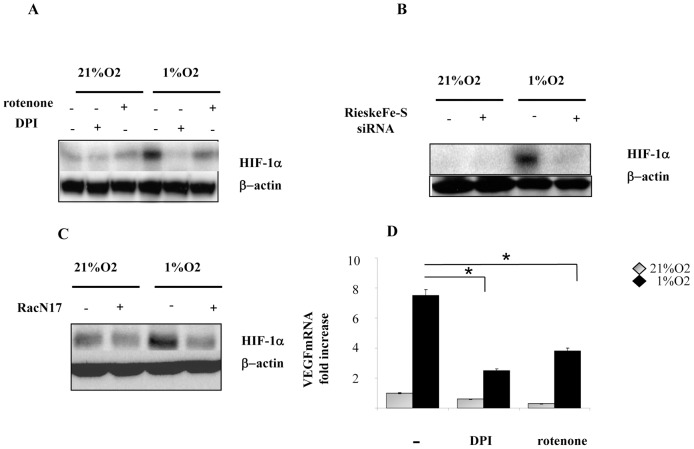
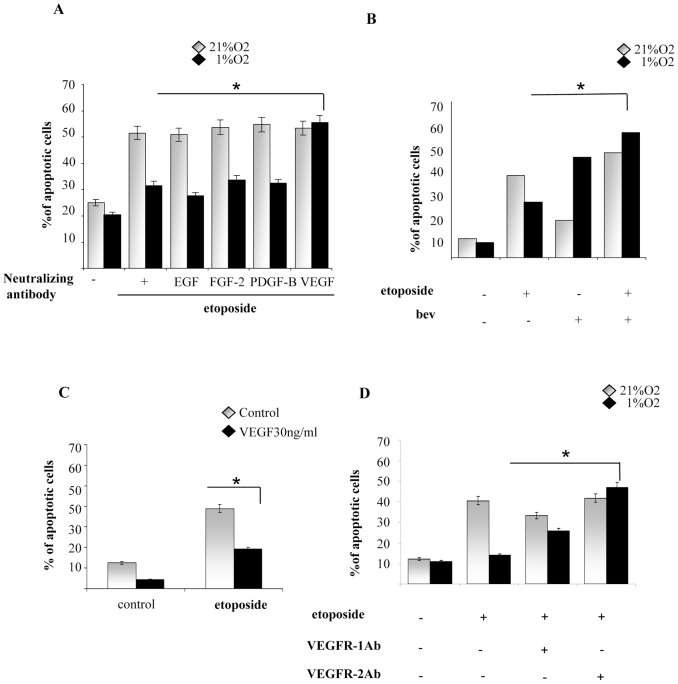
Intratumoral hypoxia is a major obstacle in the development of effective cancer chemotherapy, decreasing the efficacy of anti-neoplastic drugs in several solid tumours. The hypoxic environment, through its master regulator hypoxia inducible factor-1 (HIF-1), is able to maintain an anti-apoptotic potential through activation of critical genes associated with drug resistance. Besides affecting metabolism and motility of tumour cells, hypoxia also paradoxically increases production of reactive oxygen species (ROS), which contribute to stabilize HIF-1 through a redox-mediated inhibition of its proteolysis. Here we reported that 1% O(2) hypoxia increases the resistance of human metastatic melanoma cells to conventional chemotherapy with etoposide, and that the increase in chemoresistance strongly depends on ROS delivery due to hypoxia. We reported a biphasic redox-dependent role of HIF-1, involving mitochondrial complex III and NADPH oxidase as oxidants sources, synergising in enhancing survival to chemotherapy. The feed-forward loop engaged by hypoxia involves first an HIF-1-dependent vascular endothelial growth factor-A (VEGF-A) autocrine production and, in the later phase, activation of NADPH oxidase from VEGF/VEGFR2 interaction, finally leading to a further redox-dependent long lasting stabilization of HIF-1. We therefore identified a redox-dependent circuitry linking hypoxia-driven ROS to VEGF-A secretion and to enhanced melanoma cell survival to etoposide chemotherapy.
肿瘤内缺氧是有效癌症化疗发展的主要障碍,它降低了几种实体瘤中抗肿瘤药物的疗效。缺氧环境通过其主要调节因子缺氧诱导因子-1(HIF-1),能够通过激活与耐药性相关的关键基因来维持抗凋亡潜能。除了影响肿瘤细胞的代谢和运动性外,缺氧还反常地增加活性氧(ROS)的产生,ROS通过氧化还原介导的对HIF-1蛋白水解的抑制作用来促进HIF-1的稳定。在此我们报道,1%氧气浓度的缺氧增加了人转移性黑色素瘤细胞对依托泊苷常规化疗的耐药性,且化疗耐药性的增加强烈依赖于缺氧导致的ROS产生。我们报道了HIF-1的双相氧化还原依赖性作用,涉及线粒体复合物III和NADPH氧化酶作为氧化剂来源,协同增强对化疗的耐受性。缺氧引发的前馈回路首先涉及HIF-1依赖性血管内皮生长因子-A(VEGF-A)的自分泌产生,在后期阶段,通过VEGF/VEGFR2相互作用激活NADPH氧化酶,最终导致HIF-1进一步的氧化还原依赖性长期稳定。因此,我们确定了一个氧化还原依赖性回路,将缺氧驱动的ROS与VEGF-A分泌以及黑色素瘤细胞对依托泊苷化疗的增强存活联系起来。