Key Laboratory of Advanced Control and Optimization for Chemical Processes, Ministry of Education, East China University of Science and Technology, Shanghai, PR China.
PLoS One. 2012;7(11):e49688. doi: 10.1371/journal.pone.0049688. Epub 2012 Nov 26.
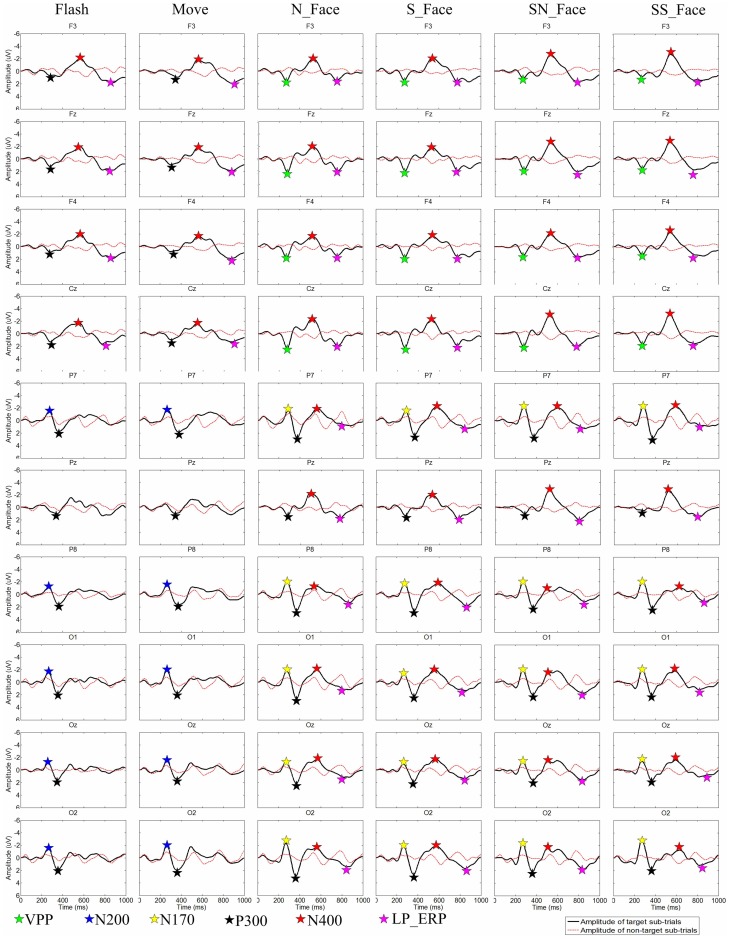
One of the most common types of brain-computer interfaces (BCIs) is called a P300 BCI, since it relies on the P300 and other event-related potentials (ERPs). In the canonical P300 BCI approach, items on a monitor flash briefly to elicit the necessary ERPs. Very recent work has shown that this approach may yield lower performance than alternate paradigms in which the items do not flash but instead change in other ways, such as moving, changing colour or changing to characters overlaid with faces.
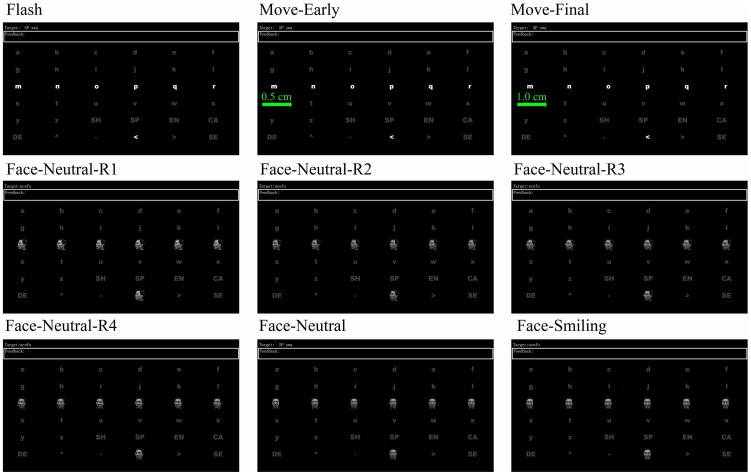
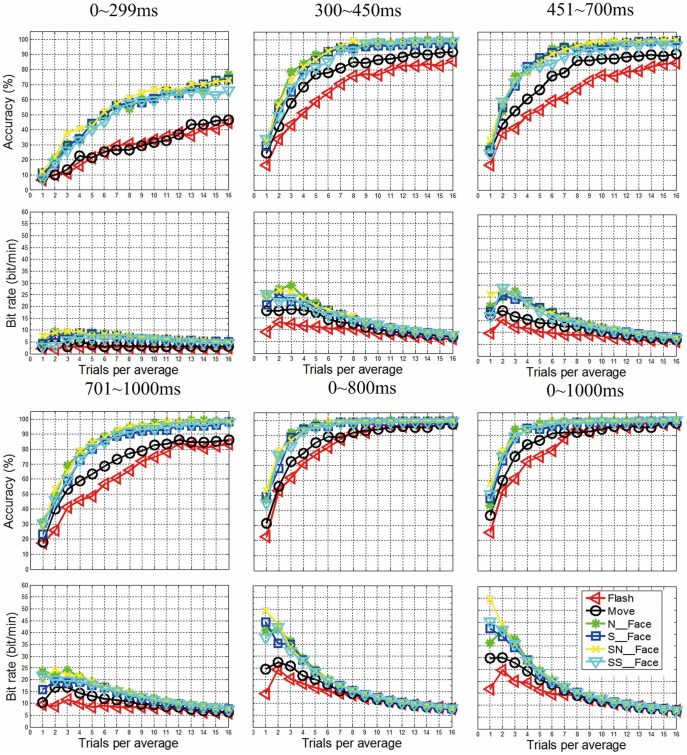
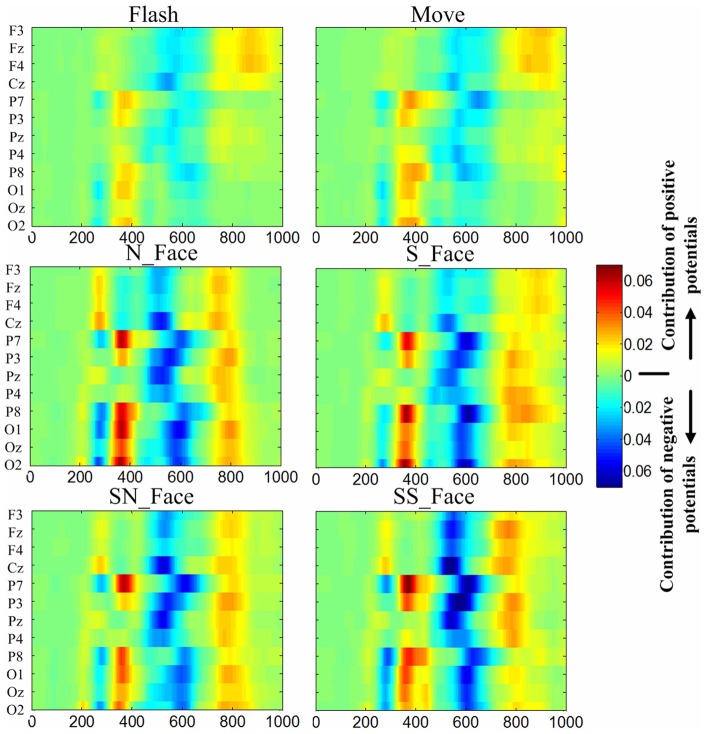
METHODOLOGY/PRINCIPAL FINDINGS: The present study sought to extend this research direction by parametrically comparing different ways to change items in a P300 BCI. Healthy subjects used a P300 BCI across six different conditions. Three conditions were similar to our prior work, providing the first direct comparison of characters flashing, moving, and changing to faces. Three new conditions also explored facial motion and emotional expression. The six conditions were compared across objective measures such as classification accuracy and bit rate as well as subjective measures such as perceived difficulty. In line with recent studies, our results indicated that the character flash condition resulted in the lowest accuracy and bit rate. All four face conditions (mean accuracy >91%) yielded significantly better performance than the flash condition (mean accuracy = 75%).
CONCLUSIONS/SIGNIFICANCE: Objective results reaffirmed that the face paradigm is superior to the canonical flash approach that has dominated P300 BCIs for over 20 years. The subjective reports indicated that the conditions that yielded better performance were not considered especially burdensome. Therefore, although further work is needed to identify which face paradigm is best, it is clear that the canonical flash approach should be replaced with a face paradigm when aiming at increasing bit rate. However, the face paradigm has to be further explored with practical applications particularly with locked-in patients.
最常见的脑机接口(BCI)之一是 P300 BCI,因为它依赖于 P300 和其他事件相关电位(ERP)。在典型的 P300 BCI 方法中,监视器上的项目会短暂闪烁以引出必要的 ERP。最近的研究表明,与项目不闪烁而是以其他方式(例如移动、改变颜色或变成带有面孔的字符)变化的替代范式相比,这种方法可能会产生较低的性能。
方法/主要发现:本研究旨在通过参数比较 P300 BCI 中改变项目的不同方式来扩展这一研究方向。健康受试者在六个不同的条件下使用 P300 BCI。三种条件与我们之前的工作类似,首次直接比较了字符闪烁、移动和变成面孔的方式。三种新条件还探索了面部运动和情感表达。这六种条件通过分类准确性和比特率等客观测量以及感知难度等主观测量进行了比较。与最近的研究一致,我们的结果表明字符闪烁条件导致最低的准确性和比特率。所有四个面孔条件(平均准确率>91%)的性能都明显优于闪烁条件(平均准确率=75%)。
结论/意义:客观结果再次证实,面孔范式优于主导 P300 BCI 超过 20 年的典型闪烁方法。主观报告表明,表现更好的条件并不被认为特别繁琐。因此,虽然需要进一步工作来确定哪种面孔范式是最佳的,但很明显,在提高比特率的目标下,应将典型的闪烁方法替换为面孔范式。然而,需要进一步探索面孔范式在实际应用中的应用,特别是在锁定患者中。