Department of Orthopaedic Surgery, Chiba University Graduate School of Medicine, Chuo-Ku, Chiba, Japan.
PLoS One. 2012;7(11):e50391. doi: 10.1371/journal.pone.0050391. Epub 2012 Nov 27.
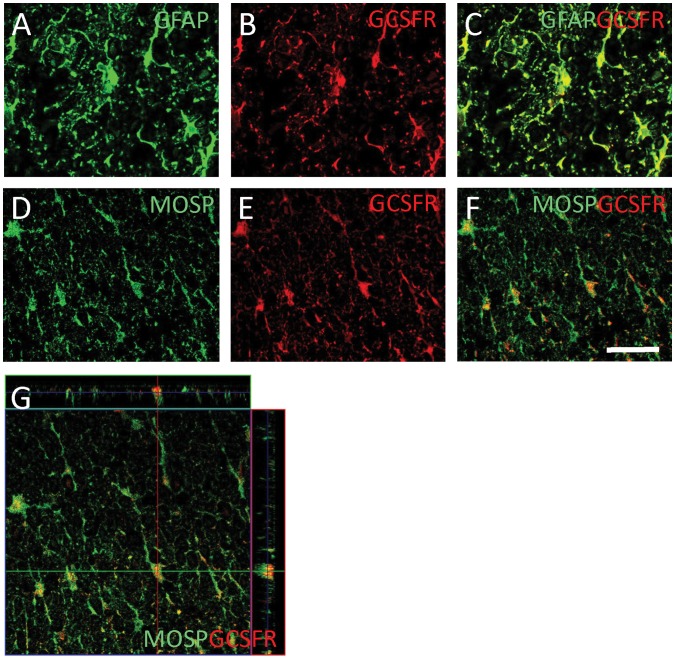
Granulocyte colony-stimulating factor (G-CSF) is a protein that stimulates differentiation, proliferation, and survival of cells in the granulocytic lineage. Recently, a neuroprotective effect of G-CSF was reported in a model of cerebral infarction and we previously reported the same effect in studies of murine spinal cord injury (SCI). The aim of the present study was to elucidate the potential therapeutic effect of G-CSF for SCI in rats.
Adult female Sprague-Dawley rats were used in the present study. Contusive SCI was introduced using the Infinite Horizon Impactor (magnitude: 200 kilodyne). Recombinant human G-CSF (15.0 µg/kg) was administered by tail vein injection at 1 h after surgery and daily the next four days. The vehicle control rats received equal volumes of normal saline at the same time points.
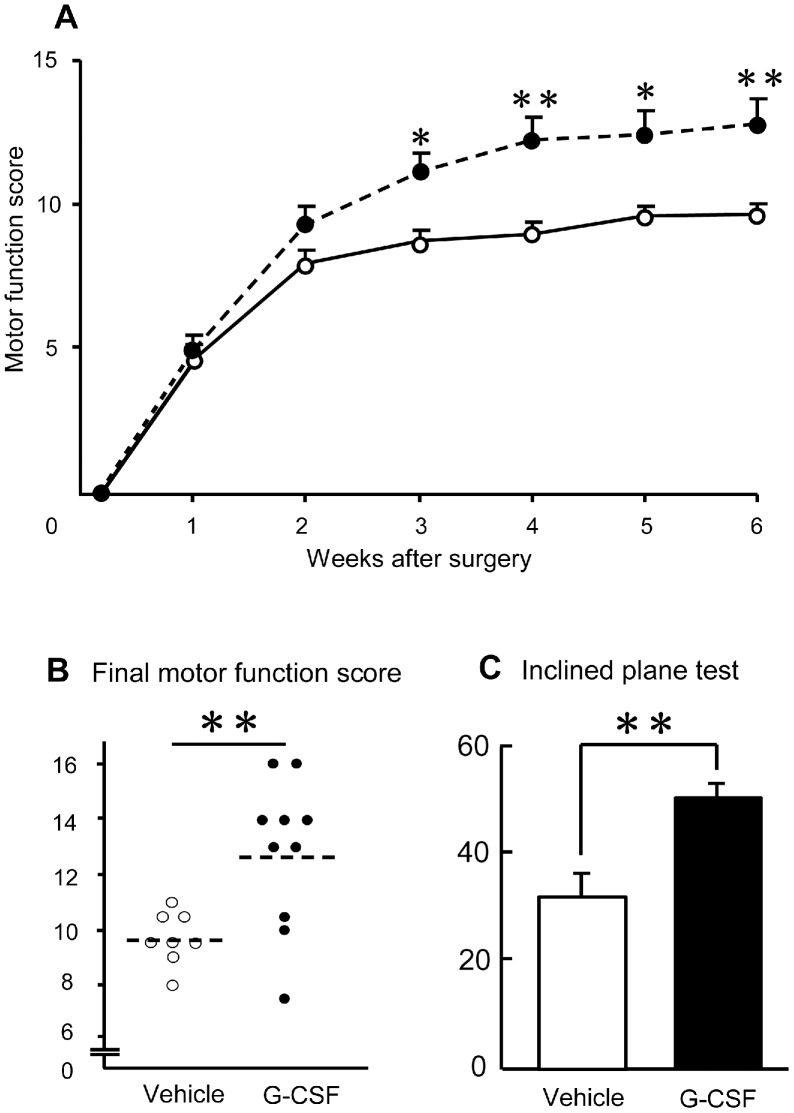
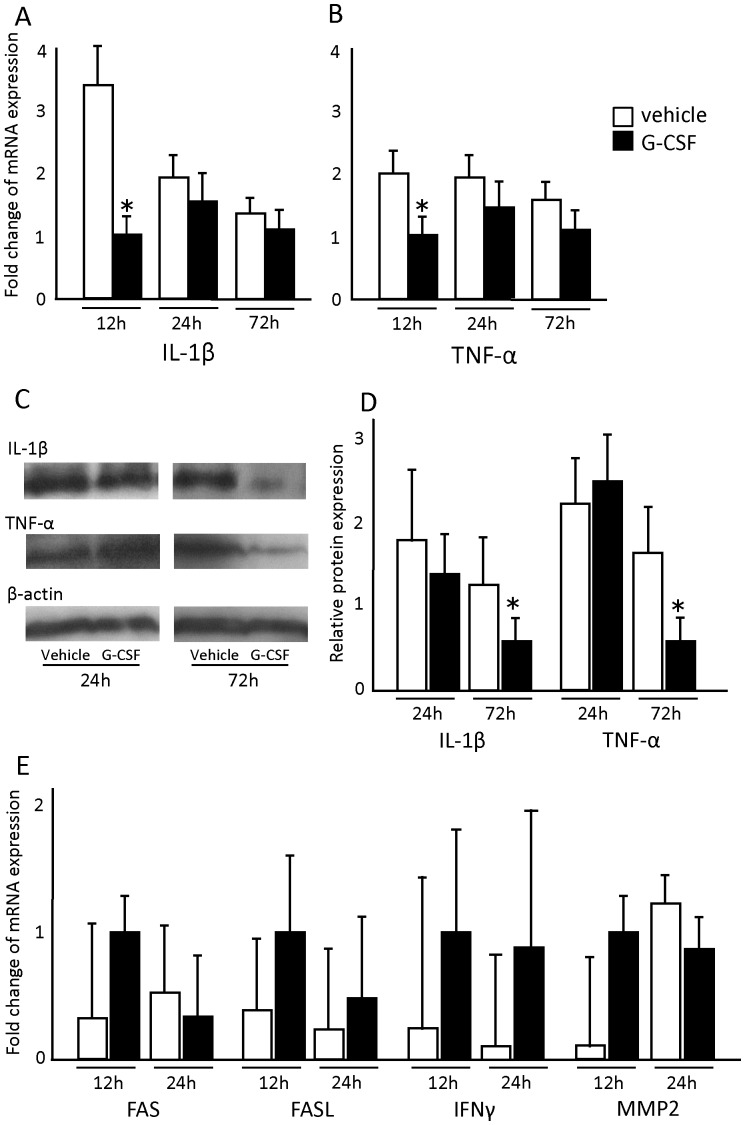
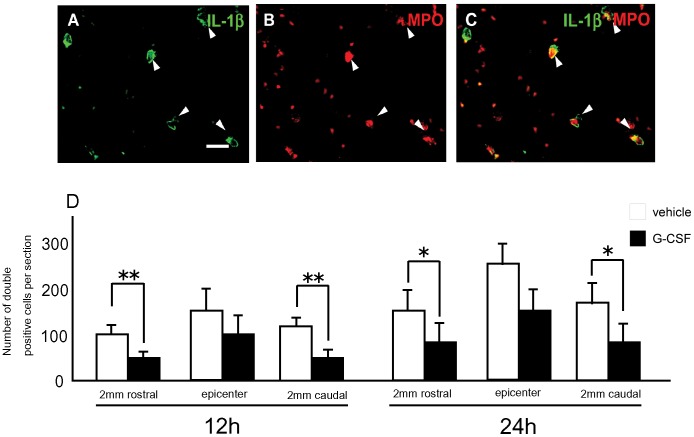
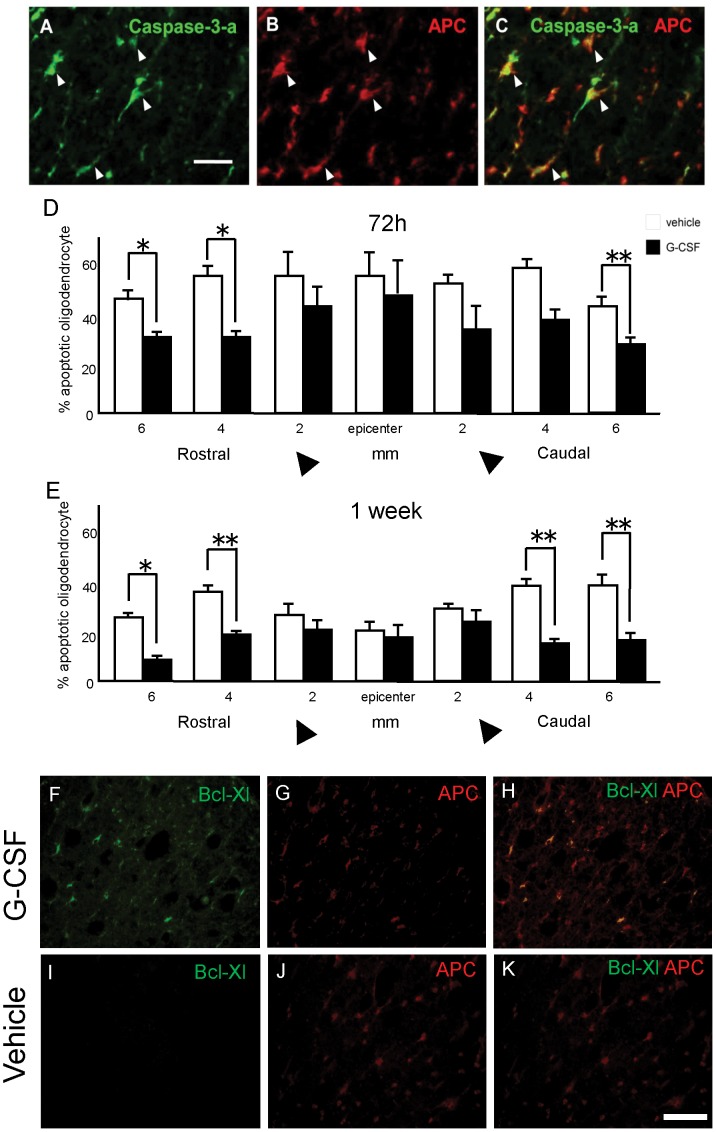
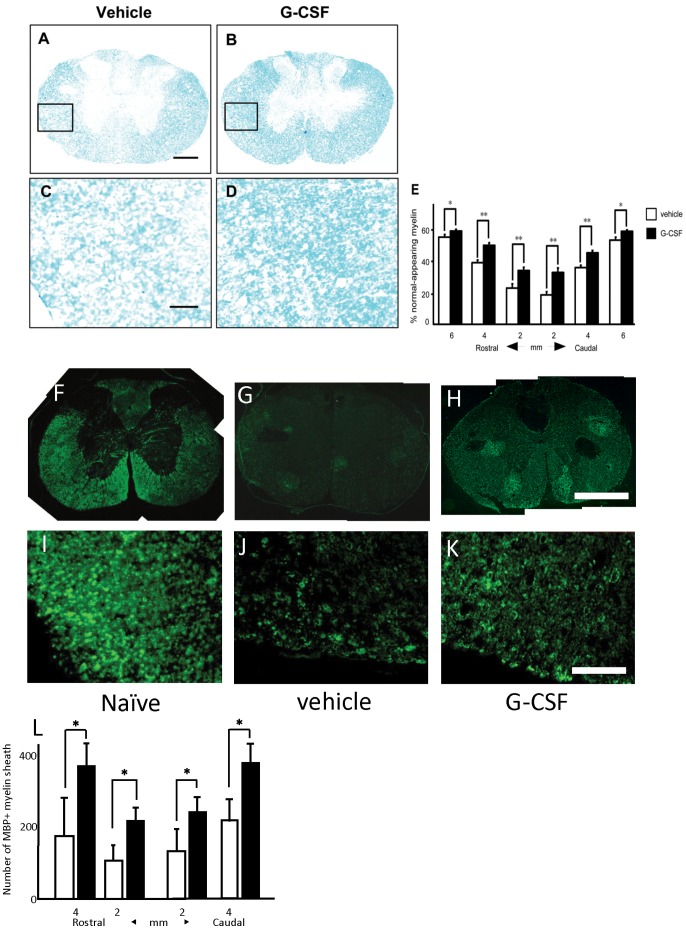
Using a contusive SCI model to examine the neuroprotective potential of G-CSF, we found that G-CSF suppressed the expression of pro-inflammatory cytokine (IL-1 beta and TNF- alpha) in mRNA and protein levels. Histological assessment with luxol fast blue staining revealed that the area of white matter spared in the injured spinal cord was significantly larger in G-CSF-treated rats. Immunohistochemical analysis showed that G-CSF promoted up-regulation of anti-apoptotic protein Bcl-Xl on oligpodendrocytes and suppressed apoptosis of oligodendrocytes after SCI. Moreover, administration of G-CSF promoted better functional recovery of hind limbs.
G-CSF protects oligodendrocyte from SCI-induced cell death via the suppression of inflammatory cytokines and up-regulation of anti-apoptotic protein. As a result, G-CSF attenuates white matter loss and promotes hindlimb functional recovery.
粒细胞集落刺激因子(G-CSF)是一种蛋白,可刺激粒细胞谱系细胞的分化、增殖和存活。最近,有研究报道 G-CSF 对脑梗死模型具有神经保护作用,我们之前也在鼠脊髓损伤(SCI)的研究中报道了相同的作用。本研究旨在阐明 G-CSF 对大鼠 SCI 的潜在治疗作用。
本研究使用成年雌性 Sprague-Dawley 大鼠。使用 Infinite Horizon 撞击器(幅度:200 千达因)造成挫伤性 SCI。在手术后 1 小时通过尾静脉注射给予重组人 G-CSF(15.0 µg/kg),并在接下来的四天每天给予一次。载体对照大鼠在相同时间点接受等量的生理盐水。
使用挫伤性 SCI 模型来检测 G-CSF 的神经保护潜力,我们发现 G-CSF 抑制了促炎细胞因子(IL-1β和 TNF-α)在 mRNA 和蛋白水平的表达。用卢索快速蓝染色进行组织学评估显示,G-CSF 处理大鼠受伤脊髓中白质 spared 的面积明显更大。免疫组织化学分析显示,G-CSF 促进了少突胶质细胞中抗凋亡蛋白 Bcl-Xl 的上调,并抑制了 SCI 后少突胶质细胞的凋亡。此外,G-CSF 的给药促进了后肢功能的更好恢复。
G-CSF 通过抑制炎症细胞因子和上调抗凋亡蛋白来保护少突胶质细胞免受 SCI 诱导的细胞死亡。结果,G-CSF 减轻了白质丢失并促进了后肢功能的恢复。