Department of Biomedical Engineering, University of Texas at Austin, 1 University Station, BME 5.202D, C0800, Austin, Texas 78712, USA.
Biotechnol Bioeng. 2013 Jun;110(6):1782-93. doi: 10.1002/bit.24823. Epub 2013 Feb 4.
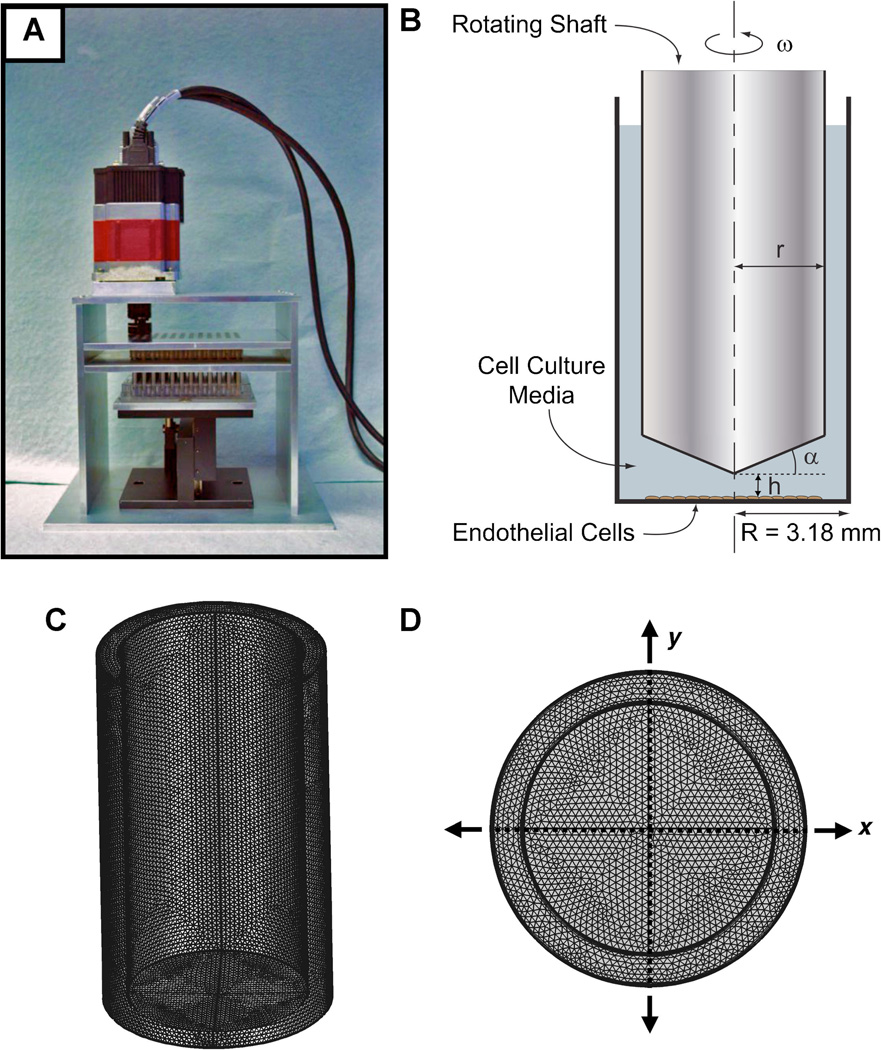
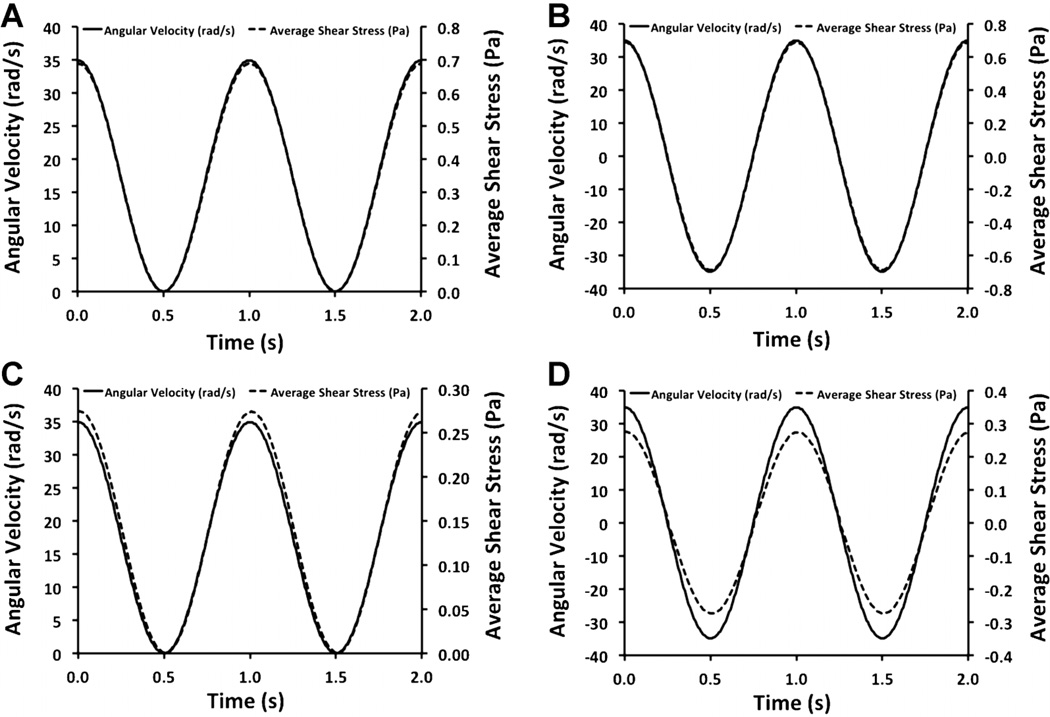
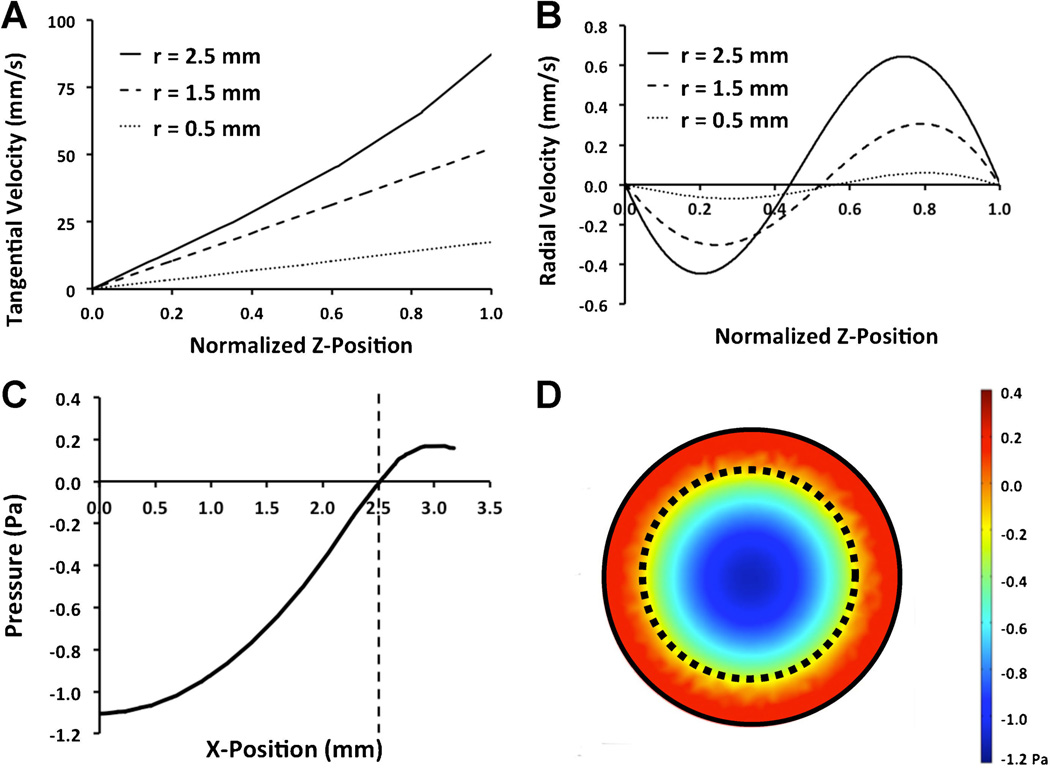
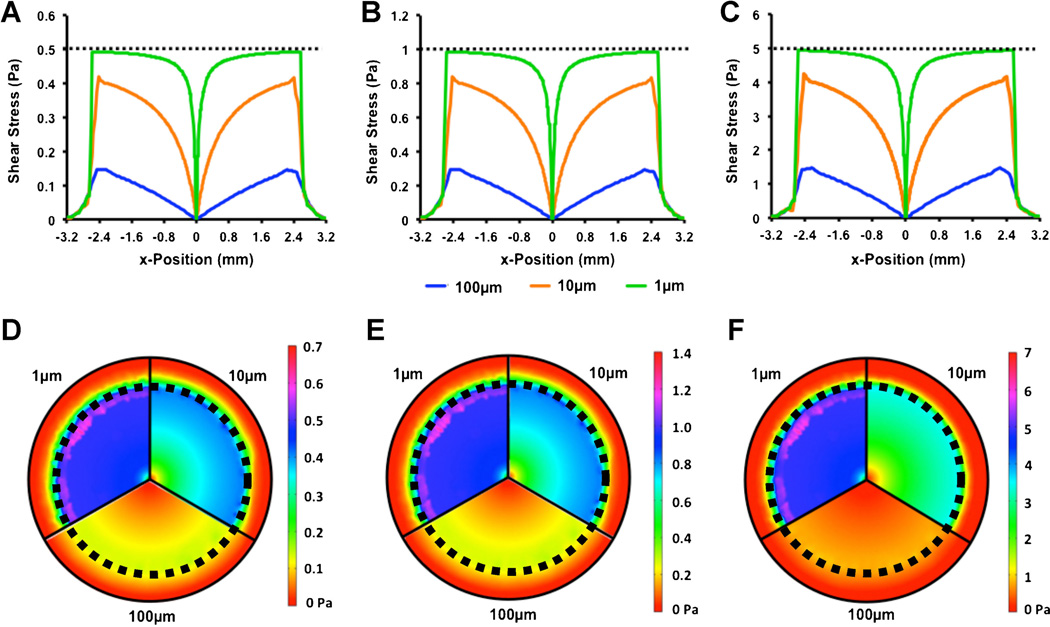
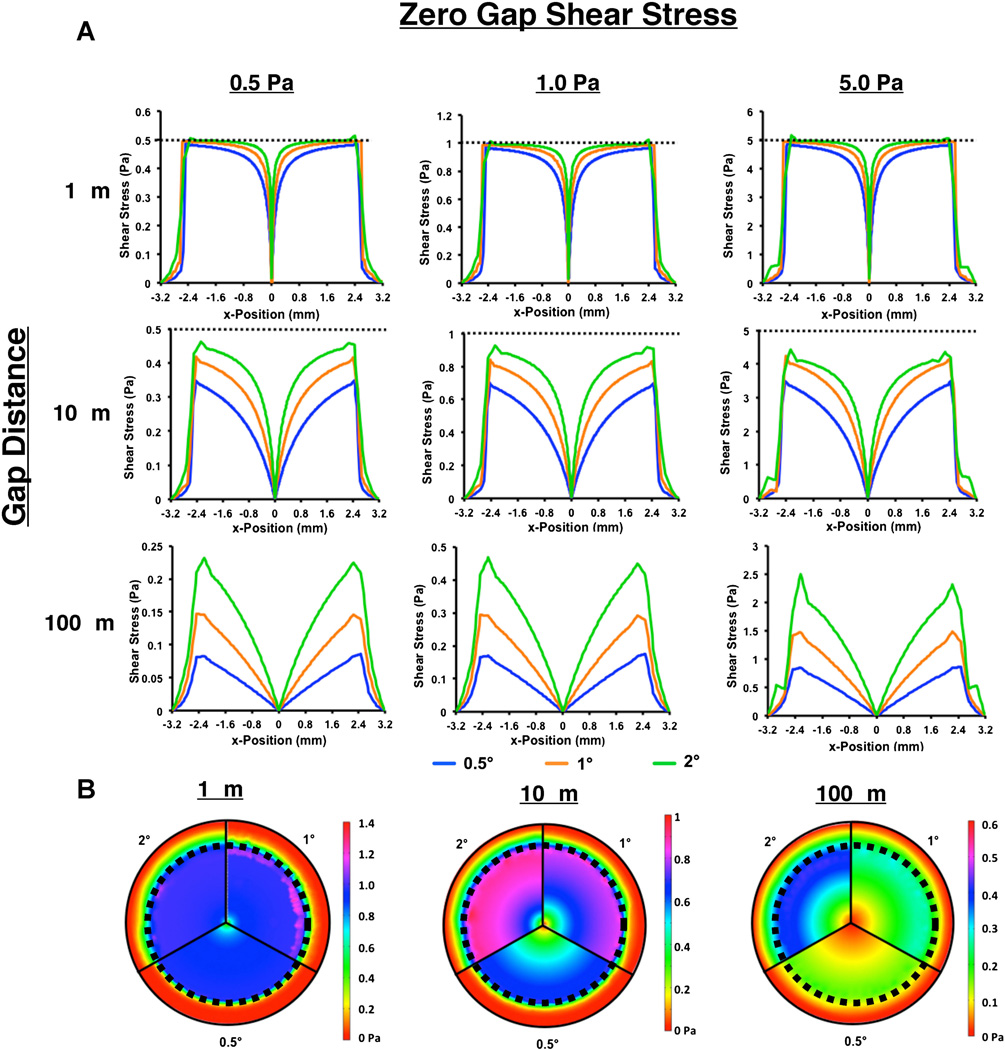
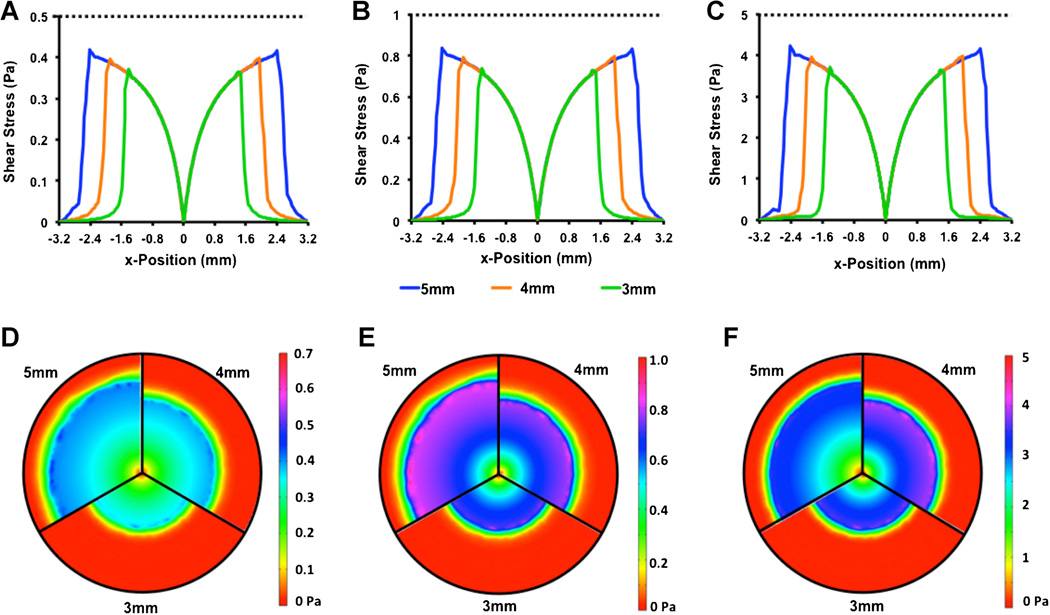
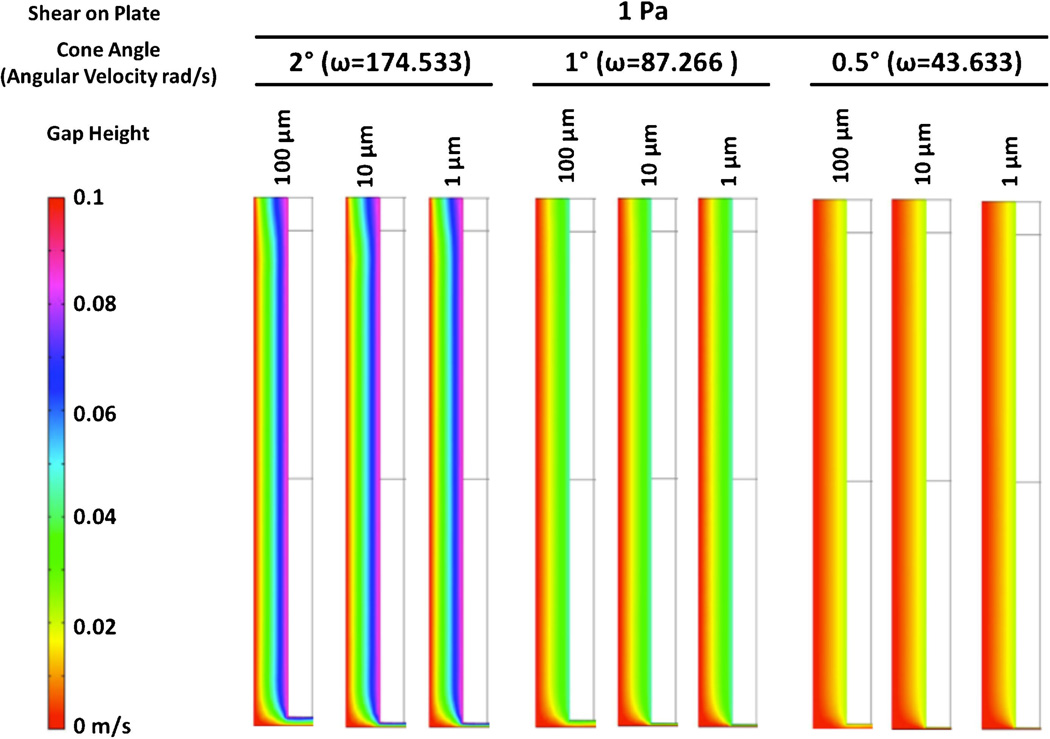
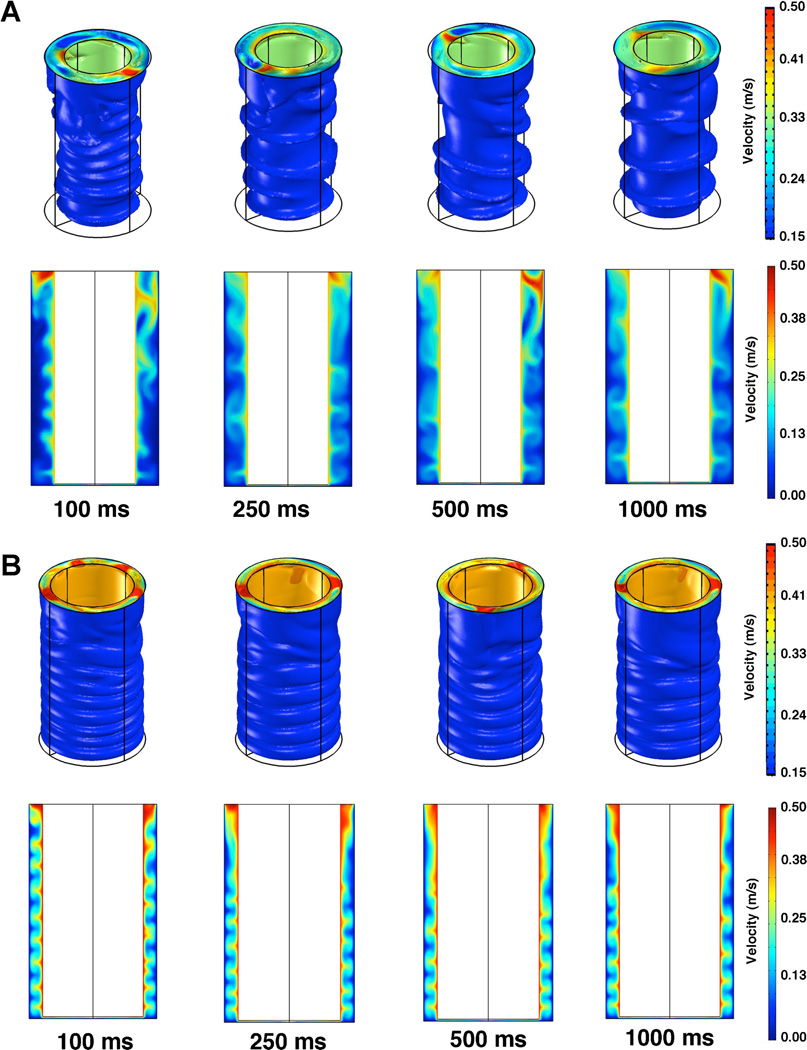
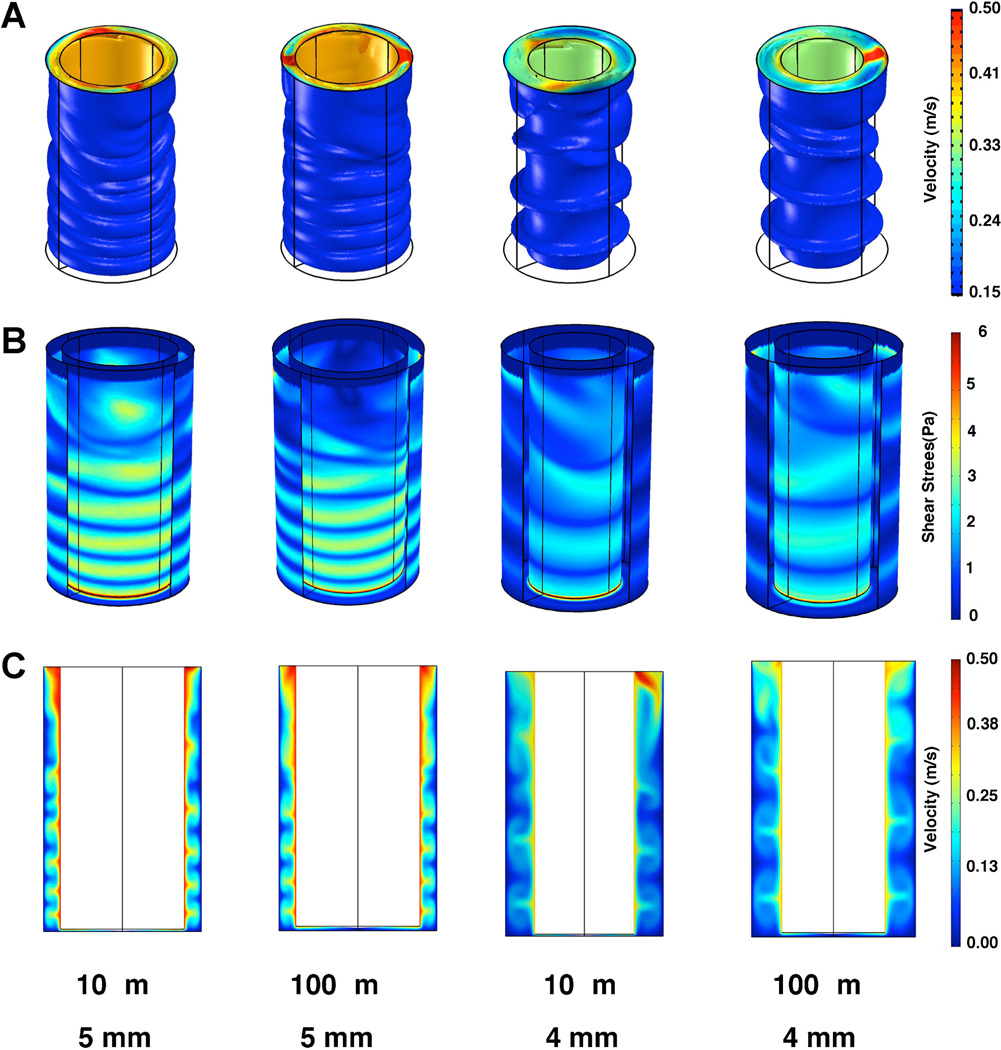
The shear stresses derived from blood flow regulate many aspects of vascular and immunobiology. In vitro studies on the shear stress-mediated mechanobiology of endothelial cells have been carried out using systems analogous to the cone-and-plate viscometer in which a rotating, low-angle cone applies fluid shear stress to cells grown on an underlying, flat culture surface. We recently developed a device that could perform high-throughput studies on shear-mediated mechanobiology through the rotation of cone-tipped shafts in a standard 96-well culture plate. Here, we present a model of the three-dimensional flow within the culture wells with a rotating, cone-tipped shaft. Using this model we examined the effects of modifying the design parameters of the system to allow the device to create a variety of flow profiles. We first examined the case of steady-state flow with the shaft rotating at constant angular velocity. By varying the angular velocity and distance of the cone from the underlying plate we were able to create flow profiles with controlled shear stress gradients in the radial direction within the plate. These findings indicate that both linear and non-linear spatial distributions in shear stress can be created across the bottom of the culture plate. In the transition and "parallel shaft" regions of the system, the angular velocities needed to provide high levels of physiological shear stress (5 Pa) created intermediate Reynolds number Taylor-Couette flow. In some cases, this led to the development of a flow regime in which stable helical vortices were created within the well. We also examined the system under oscillatory and pulsatile motion of the shaft and demonstrated minimal time lag between the rotation of the cone and the shear stress on the cell culture surface.
血流产生的切应力调节血管和免疫生物学的许多方面。已经使用类似于锥板粘度计的系统进行了体外研究,在该系统中,旋转的小角度锥体会对生长在下面的平板培养表面上的细胞施加流体切应力。我们最近开发了一种设备,可以通过在标准 96 孔培养板中旋转锥形轴来进行高通量剪切介导的机械生物学研究。在这里,我们提出了一种带有旋转锥形轴的培养皿内三维流动模型。使用该模型,我们研究了修改系统设计参数的效果,以允许该设备创建各种流动模式。我们首先研究了轴以恒定角速度旋转时的稳态流情况。通过改变角速度和锥离底层板的距离,我们能够在板内的径向方向上创建具有受控剪切应力梯度的流动模式。这些发现表明,在培养板底部可以产生线性和非线性的剪切应力空间分布。在系统的过渡区和“平行轴”区,提供高生理剪切应力(5 Pa)所需的角速度会产生中间雷诺数泰勒-库埃特流动。在某些情况下,这会导致在井内产生稳定的螺旋涡。我们还研究了轴的振荡和脉动运动系统,并证明了锥形旋转和细胞培养表面剪切应力之间的最小时间滞后。