Rowett Institute of Nutrition and Health, University of Aberdeen, Bucksburn, Aberdeen, AB21 9SB, UK.
BMC Microbiol. 2013 Jan 11;13:6. doi: 10.1186/1471-2180-13-6.
The products of protein breakdown in the human colon are considered to be detrimental to gut health. Amino acid catabolism leads to the formation of sulfides, phenolic compounds and amines, which are inflammatory and/or precursors to the formation of carcinogens, including N-nitroso compounds. The aim of this study was to investigate the kinetics of protein breakdown and the bacterial species involved.
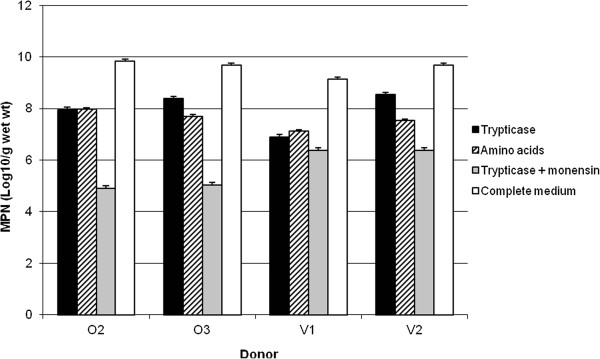
Casein, pancreatic casein hydrolysate (mainly short-chain peptides) or amino acids were incubated in vitro with suspensions of faecal bacteria from 3 omnivorous and 3 vegetarian human donors. Results from the two donor groups were similar. Ammonia production was highest from peptides, followed by casein and amino acids, which were similar. The amino acids metabolized most extensively were Asp, Ser, Lys and Glu. Monensin inhibited the rate of ammonia production from amino acids by 60% (P = 0.001), indicating the involvement of Gram-positive bacteria. Enrichment cultures were carried out to investigate if, by analogy with the rumen, there was a significant population of asaccharolytic, obligately amino acid-fermenting bacteria ('hyper-ammonia-producing' bacteria; HAP) in the colon. Numbers of bacteria capable of growth on peptides or amino acids alone averaged 3.5% of the total viable count, somewhat higher than the rumen. None of these were HAP, however. The species enriched included Clostridium spp., one of which was C. perfringens, Enterococcus, Shigella and Escherichia coli.
Protein fermentation by human faecal bacteria in the absence of sugars not only leads to the formation of hazardous metabolic products, but also to the possible proliferation of harmful bacteria. The kinetics of protein metabolism were similar to the rumen, but HAP bacteria were not found.
人体结肠中蛋白质分解的产物被认为对肠道健康有害。氨基酸代谢会导致硫化物、酚类化合物和胺类的形成,这些物质具有炎症作用和/或致癌前体,包括 N-亚硝化合物。本研究旨在研究蛋白质分解的动力学及其涉及的细菌种类。
酪蛋白、胰蛋白酶水解酪蛋白(主要是短链肽)或氨基酸与来自 3 名杂食者和 3 名素食者的粪便细菌悬浮液在体外孵育。来自两组供体的结果相似。肽产生的氨最多,其次是酪蛋白和氨基酸,这三者相似。被代谢最多的氨基酸是 Asp、Ser、Lys 和 Glu。莫能菌素抑制氨基酸产生氨的速度为 60%(P = 0.001),表明革兰氏阳性菌的参与。进行了富集培养,以研究是否与瘤胃类似,结肠中是否存在大量非淀粉性、必需氨基酸发酵细菌(“高氨产生”细菌;HAP)。仅能在肽或氨基酸上生长的细菌数量平均占总活菌数的 3.5%,略高于瘤胃。然而,这些细菌中没有 HAP。富集的物种包括梭菌属、其中之一是产气荚膜梭菌、肠球菌属、志贺氏菌属和大肠杆菌。
人粪便细菌在没有糖的情况下发酵蛋白质不仅会导致危险代谢产物的形成,还可能导致有害细菌的增殖。蛋白质代谢的动力学与瘤胃相似,但未发现 HAP 细菌。