San Raffaele-Telethon Institute for Gene Therapy, San Raffaele Scientific Institute, Milan, Italy.
Nat Methods. 2013 Feb;10(2):155-61. doi: 10.1038/nmeth.2331. Epub 2013 Jan 13.
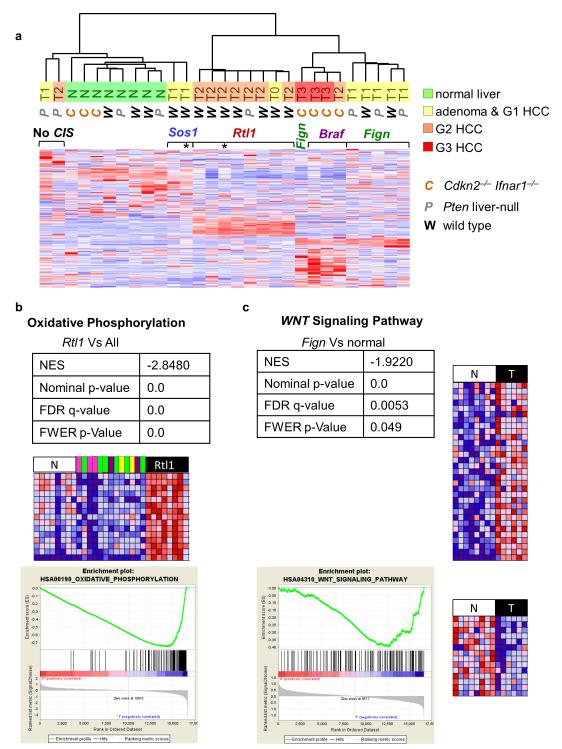
Transposons and γ-retroviruses have been efficiently used as insertional mutagens in different tissues to identify molecular culprits of cancer. However, these systems are characterized by recurring integrations that accumulate in tumor cells and that hamper the identification of early cancer-driving events among bystander and progression-related events. We developed an insertional mutagenesis platform based on lentiviral vectors (LVVs) by which we could efficiently induce hepatocellular carcinoma (HCC) in three different mouse models. By virtue of the LVV's replication-deficient nature and broad genome-wide integration pattern, LVV-based insertional mutagenesis allowed identification of four previously unknown liver cancer-associated genes from a limited number of integrations. We validated the oncogenic potential of all the identified genes in vivo, with different levels of penetrance. The newly identified genes are likely to play a role in human cancer because they are upregulated, amplified and/or deleted in human HCCs and can predict clinical outcomes of patients.
转座子和γ逆转录病毒已被有效地用作不同组织中的插入诱变剂,以鉴定癌症的分子罪魁祸首。然而,这些系统的特点是反复整合,这些整合在肿瘤细胞中积累,并阻碍了在旁观者和进展相关事件中鉴定早期驱动癌症的事件。我们开发了一种基于慢病毒载体 (LVV) 的插入诱变平台,通过该平台,我们可以在三种不同的小鼠模型中有效地诱导肝细胞癌 (HCC)。由于 LVV 的复制缺陷特性和广泛的全基因组整合模式,基于 LVV 的插入诱变允许从有限数量的整合中鉴定出四个先前未知的与肝癌相关的基因。我们在体内验证了所有鉴定基因的致癌潜力,其穿透程度不同。新鉴定的基因可能在人类癌症中发挥作用,因为它们在人类 HCC 中上调、扩增和/或缺失,并可预测患者的临床结局。