Unidade de Saúde Pública Internacional e Bioestatística, Instituto de Higiene e Medicina Tropical, Universidade Nova de Lisboa, Lisboa, Portugal.
Retrovirology. 2013 Jan 14;10:7. doi: 10.1186/1742-4690-10-7.
Understanding HIV-1 subtype distribution and epidemiology can assist preventive measures and clinical decisions. Sequence variation may affect antiviral drug resistance development, disease progression, evolutionary rates and transmission routes.
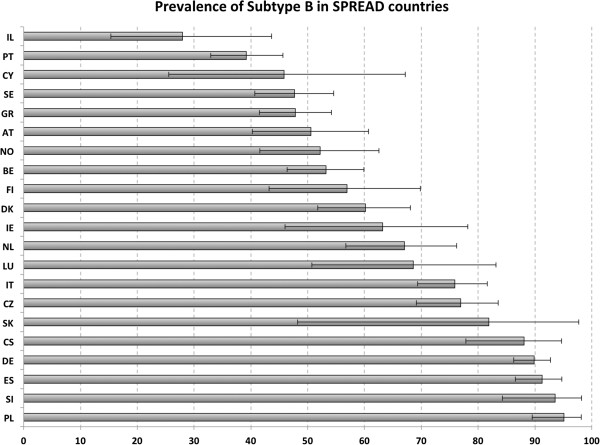
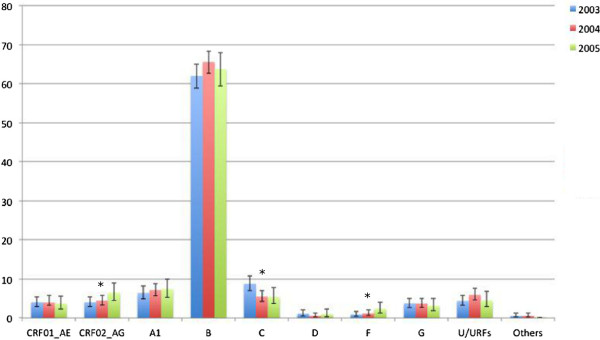
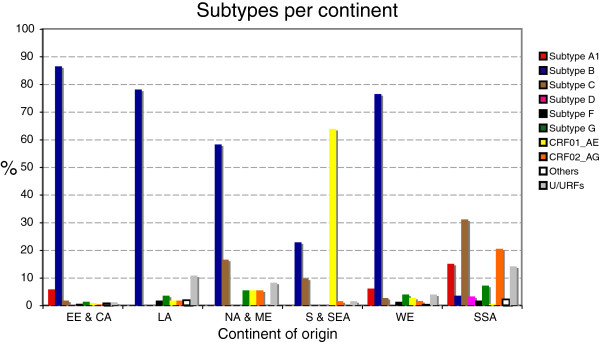
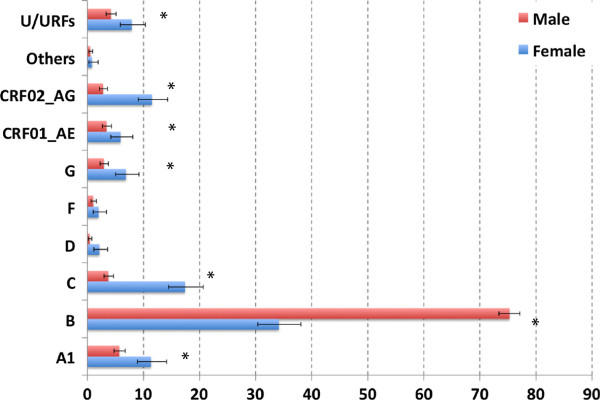
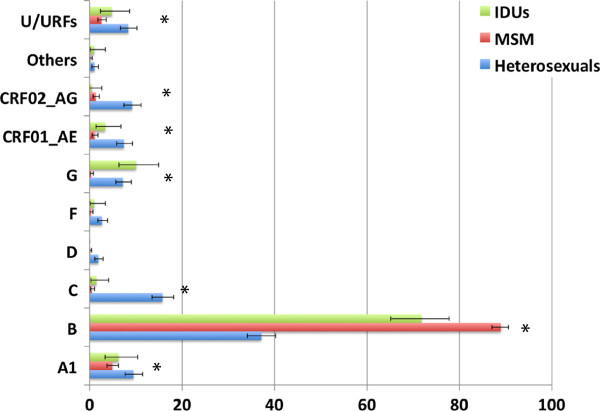
We investigated the subtype distribution of HIV-1 in Europe and Israel in a representative sample of patients diagnosed between 2002 and 2005 and related it to the demographic data available. 2793 PRO-RT sequences were subtyped either with the REGA Subtyping tool or by a manual procedure that included phylogenetic tree and recombination analysis. The most prevalent subtypes/CRFs in our dataset were subtype B (66.1%), followed by sub-subtype A1 (6.9%), subtype C (6.8%) and CRF02_AG (4.7%). Substantial differences in the proportion of new diagnoses with distinct subtypes were found between European countries: the lowest proportion of subtype B was found in Israel (27.9%) and Portugal (39.2%), while the highest was observed in Poland (96.2%) and Slovenia (93.6%). Other subtypes were significantly more diagnosed in immigrant populations. Subtype B was significantly more diagnosed in men than in women and in MSM > IDUs > heterosexuals. Furthermore, the subtype distribution according to continent of origin of the patients suggests they acquired their infection there or in Europe from compatriots.
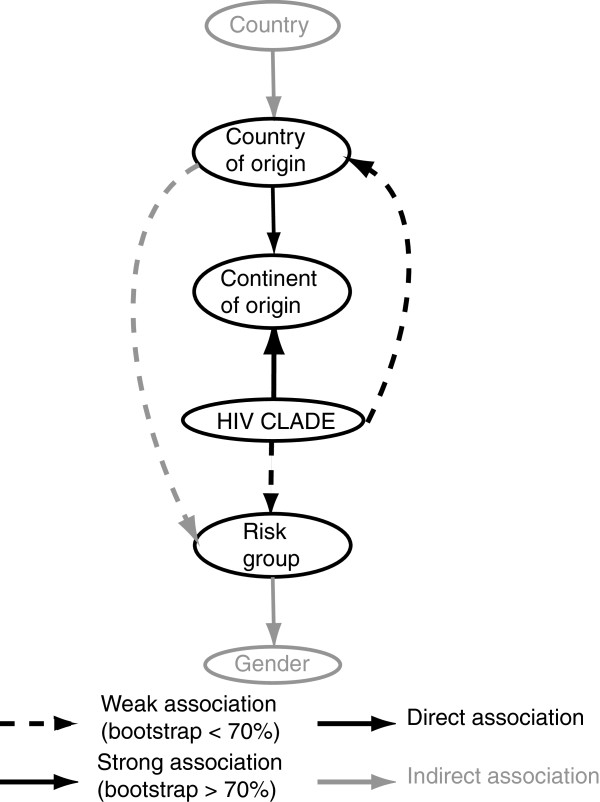
The association of subtype with demographic parameters suggests highly compartmentalized epidemics, determined by social and behavioural characteristics of the patients.
了解 HIV-1 亚型分布和流行病学情况有助于采取预防措施和临床决策。序列变异可能会影响抗病毒药物耐药性的发展、疾病进展、进化速度和传播途径。
我们调查了在 2002 年至 2005 年间确诊的患者的代表性样本中 HIV-1 的亚型分布,并将其与可获得的人口统计学数据相关联。用 REGA 亚型鉴定工具或包括系统发生树和重组分析的手动程序对 2793 个 PRO-RT 序列进行了亚型鉴定。在我们的数据集中,最常见的亚型/CRF 是 B 亚型(66.1%),其次是 A1 亚型(6.9%)、C 亚型(6.8%)和 CRF02_AG(4.7%)。在欧洲国家之间,不同亚型新诊断病例的比例存在显著差异:以色列(27.9%)和葡萄牙(39.2%)的 B 亚型比例最低,而波兰(96.2%)和斯洛文尼亚(93.6%)的 B 亚型比例最高。其他亚型在移民人群中诊断率显著更高。B 亚型在男性中比在女性中和在男男性行为者(MSM)> 静脉吸毒者(IDUs)> 异性恋者中诊断率更高。此外,根据患者原籍大陆的亚型分布情况表明,他们是在原籍国或在欧洲感染的。
亚型与人口统计学参数的关联表明存在高度隔离的流行情况,这是由患者的社会和行为特征决定的。