Pathobiology Program, Department of Global Health, University of Washington, Seattle, Washington 98104, USA.
Clin Cancer Res. 2013 Mar 15;19(6):1347-52. doi: 10.1158/1078-0432.CCR-12-0928. Epub 2013 Jan 15.
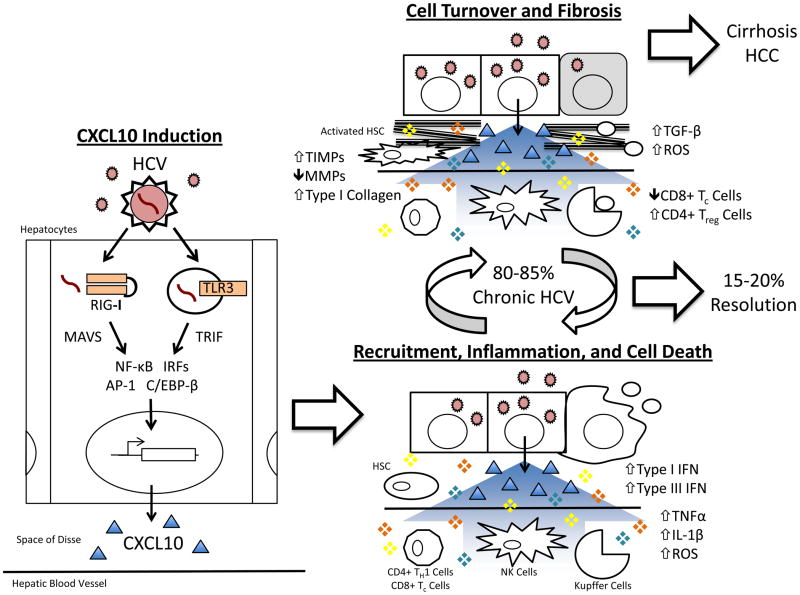
An estimated 170 million people worldwide are chronically infected with the hepatitis C virus (HCV), which is characterized histologically by a persistent immune and inflammatory response that fails to clear HCV from hepatocytes. This response is recruited to the liver, in part, by the chemokine CXCL10, the serum and intrahepatic levels of which have been inversely linked to the outcome of interferon-based therapies for hepatitis C. Bystander tissue damage from this ineffective response is thought to lead to increased hepatocyte turnover and the development of fibrosis, cirrhosis, and hepatocellular carcinoma (HCC). However, CXCL10 is traditionally viewed as an orchestrator of the angiostatic and antitumor immune response. In this review, we will explore this duality and the pathways by which CXCL10 is produced by hepatocytes during HCV infection, its effects on resident and infiltrating immune cells, and how deregulation of these cell populations within the liver may lead to chronic liver inflammation. We will also discuss potential host-directed therapies to slow or reverse HCV-induced inflammation that leads to fibrosis, cirrhosis, and HCCs.
据估计,全球有 1.7 亿人患有慢性丙型肝炎病毒 (HCV) 感染,其组织学特征是持续的免疫和炎症反应,无法从肝细胞中清除 HCV。这种反应部分是通过趋化因子 CXCL10 招募到肝脏的,血清和肝内 CXCL10 水平与基于干扰素治疗丙型肝炎的疗效呈负相关。这种无效反应导致的旁观者组织损伤被认为会导致肝细胞更新增加,进而发展为纤维化、肝硬化和肝细胞癌 (HCC)。然而,CXCL10 传统上被视为血管生成和抗肿瘤免疫反应的协调者。在这篇综述中,我们将探讨这种双重性以及 HCV 感染期间肝细胞产生 CXCL10 的途径、它对固有和浸润免疫细胞的影响,以及这些细胞群在肝脏中的失调如何导致慢性肝脏炎症。我们还将讨论潜在的宿主定向治疗方法,以减缓或逆转导致纤维化、肝硬化和 HCC 的 HCV 诱导的炎症。