Mohammadi Z, Shalavi S, Yazdizadeh M
Department of Endodontics, School of Dentistry, Hamedan University of Medical Sciences, Hamedan, Iran. ; Iranian Center for Endodontic Research (ICER), Shahid Beheshti University of Medical Sciences, Tehran, Iran.
Chonnam Med J. 2012 Dec;48(3):133-40. doi: 10.4068/cmj.2012.48.3.133. Epub 2012 Dec 21.
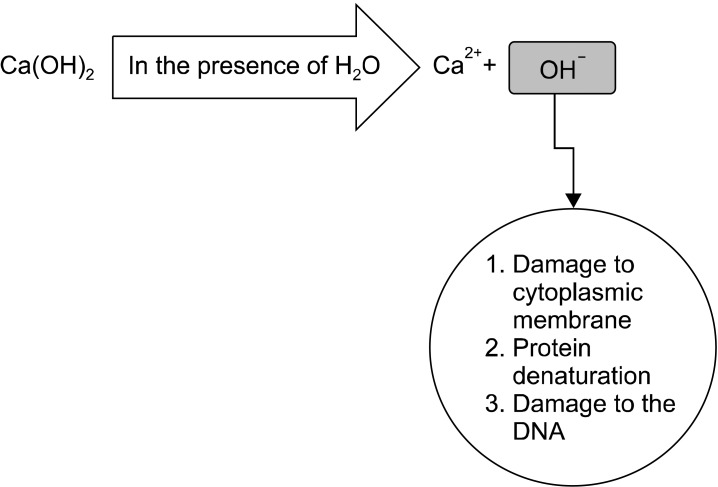
The purpose of endodontic therapy is to preserve the patient's natural teeth without compromising the patient's local or systemic health. Calcium hydroxide has been included in several materials and antimicrobial formulations that are used in several treatment modalities in endodontics, such as inter-appointment intracanal medicaments. The purpose of this article was to review the antimicrobial properties of calcium hydroxide in endodontics. Calcium hydroxide has a high pH (approximately 12.5-12.8) and is classified chemically as a strong base. The lethal effects of calcium hydroxide on bacterial cells are probably due to protein denaturation and damage to DNA and cytoplasmic membranes. Calcium hydroxide has a wide range of antimicrobial activity against common endodontic pathogens but is less effective against Enterococcus faecalis and Candida albicans. Calcium hydroxide is also a valuable anti-endotoxin agent. However, its effect on microbial biofilms is controversial.
牙髓治疗的目的是在不损害患者局部或全身健康的前提下保留患者的天然牙齿。氢氧化钙已被纳入多种材料和抗菌制剂中,这些材料和制剂用于牙髓病学的多种治疗方式,如复诊期间的根管内药物。本文的目的是综述氢氧化钙在牙髓病学中的抗菌特性。氢氧化钙具有高pH值(约12.5 - 12.8),在化学上被归类为强碱。氢氧化钙对细菌细胞的致死作用可能是由于蛋白质变性以及对DNA和细胞质膜的损伤。氢氧化钙对常见的牙髓病原体具有广泛的抗菌活性,但对粪肠球菌和白色念珠菌的效果较差。氢氧化钙也是一种有价值的抗内毒素剂。然而,其对微生物生物膜的作用存在争议。