Faculty of Dentistry, University of Toronto, Toronto, ON, Canada.
Mol Biol Cell. 2013 Mar;24(6):734-47. doi: 10.1091/mbc.E12-10-0754. Epub 2013 Jan 16.
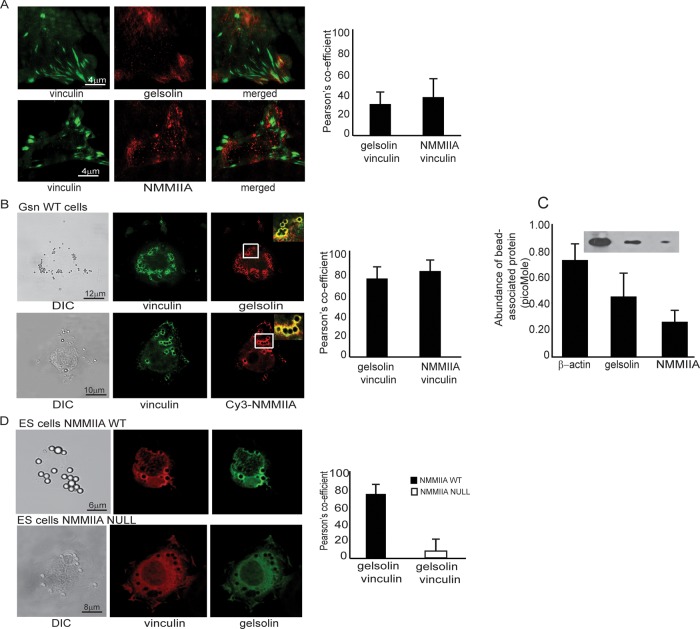
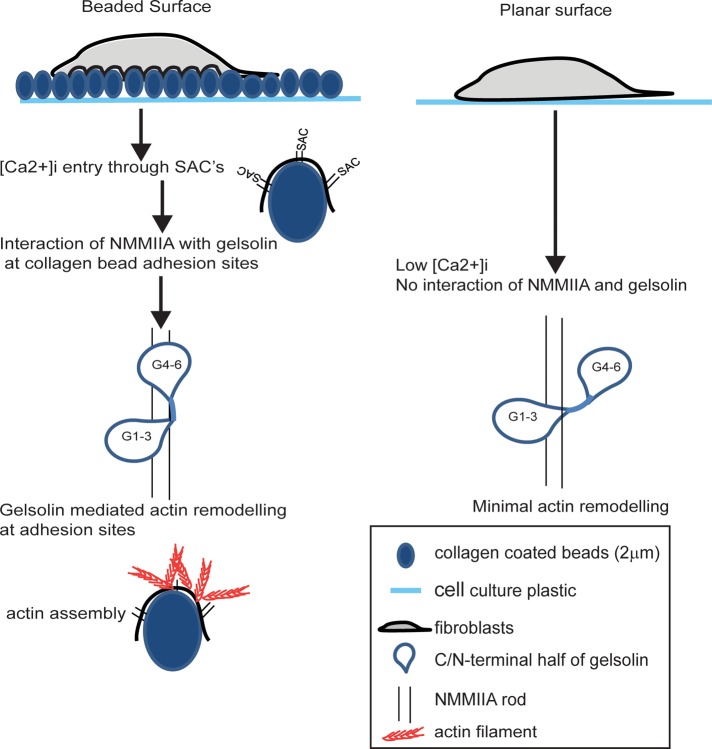
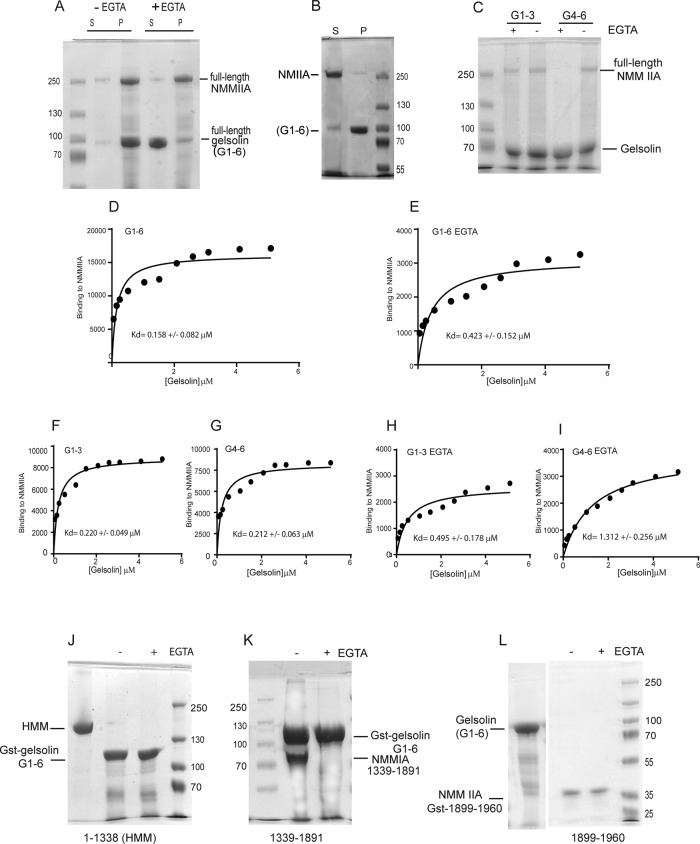
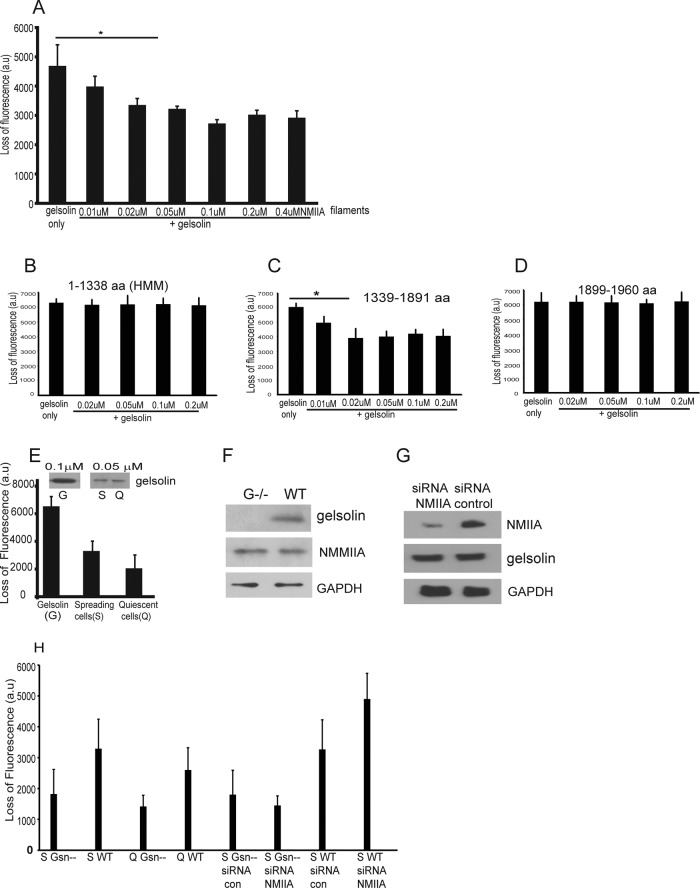
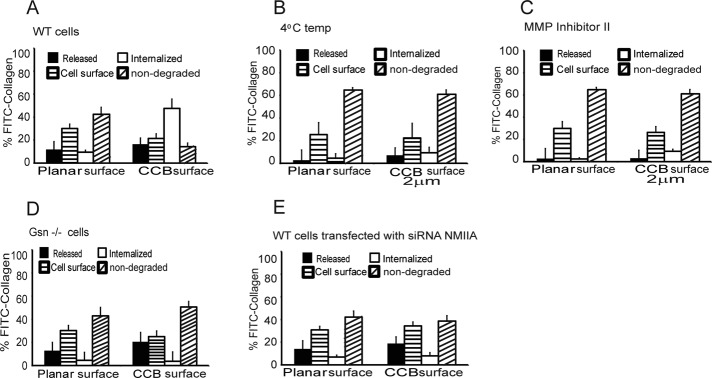
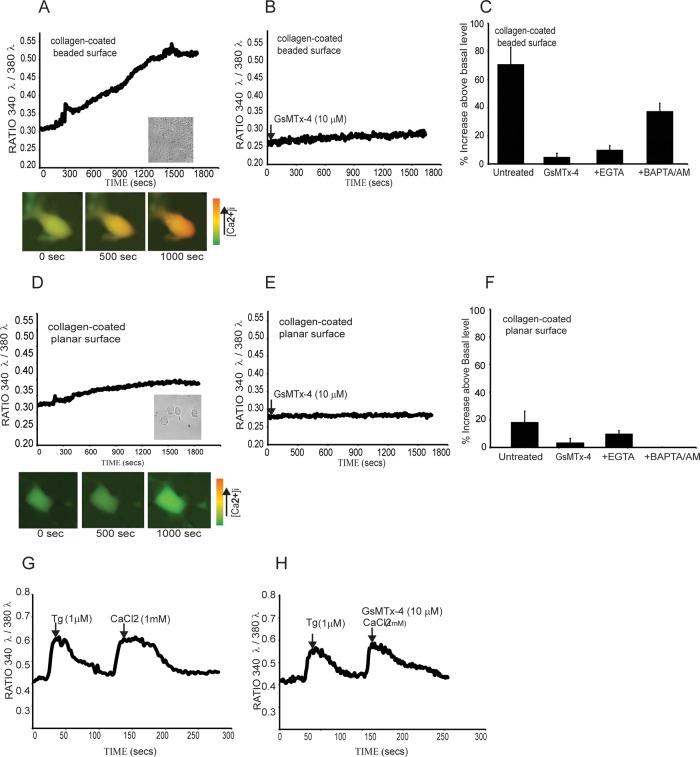
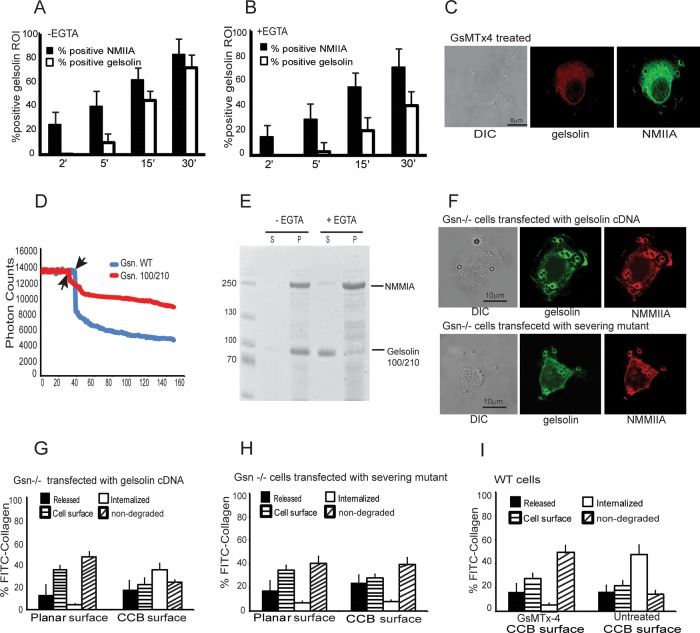
We examine how collagen substrate topography, free intracellular calcium ion concentration ([Ca(2+)]i, and the association of gelsolin with nonmuscle myosin IIA (NMMIIA) at collagen adhesions are regulated to enable collagen phagocytosis. Fibroblasts plated on planar, collagen-coated substrates show minimal increase of [Ca(2+)]i, minimal colocalization of gelsolin and NMMIIA in focal adhesions, and minimal intracellular collagen degradation. In fibroblasts plated on collagen-coated latex beads there are large increases of [Ca(2+)]i, time- and Ca(2+)-dependent enrichment of NMMIIA and gelsolin at collagen adhesions, and abundant intracellular collagen degradation. NMMIIA knockdown retards gelsolin recruitment to adhesions and blocks collagen phagocytosis. Gelsolin exhibits tight, Ca(2+)-dependent binding to full-length NMMIIA. Gelsolin domains G4-G6 selectively require Ca(2+) to interact with NMMIIA, which is restricted to residues 1339-1899 of NMMIIA. We conclude that cell adhesion to collagen presented on beads activates Ca(2+) entry and promotes the formation of phagosomes enriched with NMMIIA and gelsolin. The Ca(2+) -dependent interaction of gelsolin and NMMIIA in turn enables actin remodeling and enhances collagen degradation by phagocytosis.
我们研究了胶原蛋白底物的形貌、细胞内游离钙离子浓度([Ca(2+)]i)以及凝胶蛋白与非肌肉肌球蛋白 IIA (NMMIIA)在胶原蛋白黏附处的结合,这些因素如何被调节以实现胶原蛋白吞噬作用。铺展在平面胶原涂层基底上的成纤维细胞,[Ca(2+)]i 的增加最小,黏附处的凝胶蛋白和 NMMIIA 的共定位最小,细胞内胶原蛋白降解最小。在铺展于胶原涂层乳胶珠上的成纤维细胞中,[Ca(2+)]i 会大量增加,NMMIIA 和凝胶蛋白在胶原黏附处的时间和 Ca(2+)依赖性富集,细胞内胶原蛋白大量降解。NMMIIA 敲低会延迟凝胶蛋白在黏附处的募集并阻断胶原蛋白吞噬作用。凝胶蛋白与全长 NMMIIA 紧密、Ca(2+)依赖性结合。凝胶蛋白结构域 G4-G6 选择性地需要 Ca(2+)与 NMMIIA 相互作用,而 NMMIIA 的这一相互作用局限于 NMMIIA 的残基 1339-1899。我们的结论是,细胞黏附到珠上呈现的胶原蛋白会激活 Ca(2+)内流,并促进富含 NMMIIA 和凝胶蛋白的吞噬体的形成。反过来,凝胶蛋白和 NMMIIA 的 Ca(2+)依赖性相互作用使肌动蛋白重塑,并增强吞噬作用引起的胶原蛋白降解。