University Tunis El Manar, Veterinary Microbiology Laboratory, Institut Pasteur de Tunis, Tunis- Belvédère, Tunisia.
PLoS One. 2013;8(1):e53524. doi: 10.1371/journal.pone.0053524. Epub 2013 Jan 11.
Estimate the seroprevalence of influenza A virus in various commercial poultry farms and evaluate specific risk factors as well as analyze their genetic nature using molecular assays.
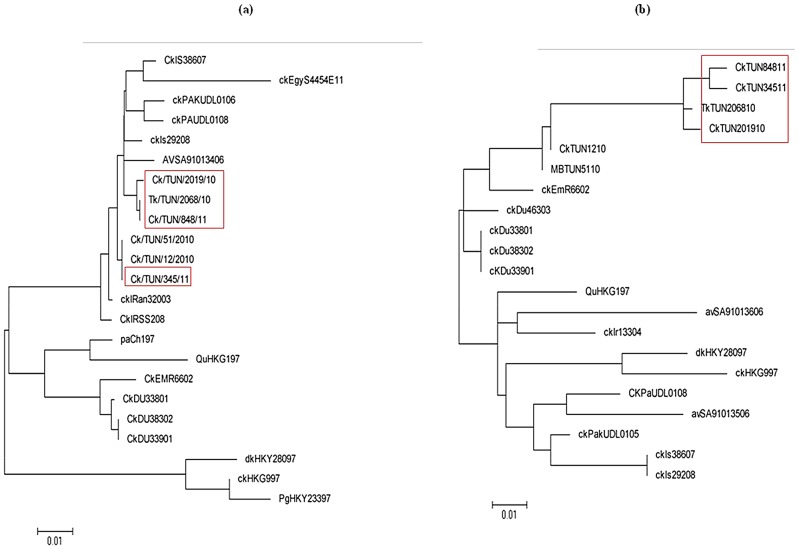
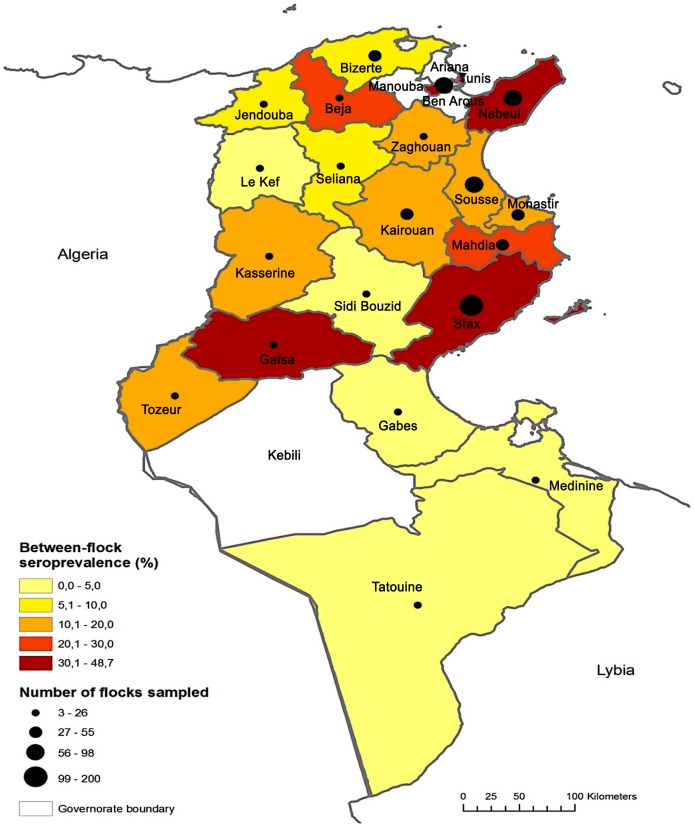
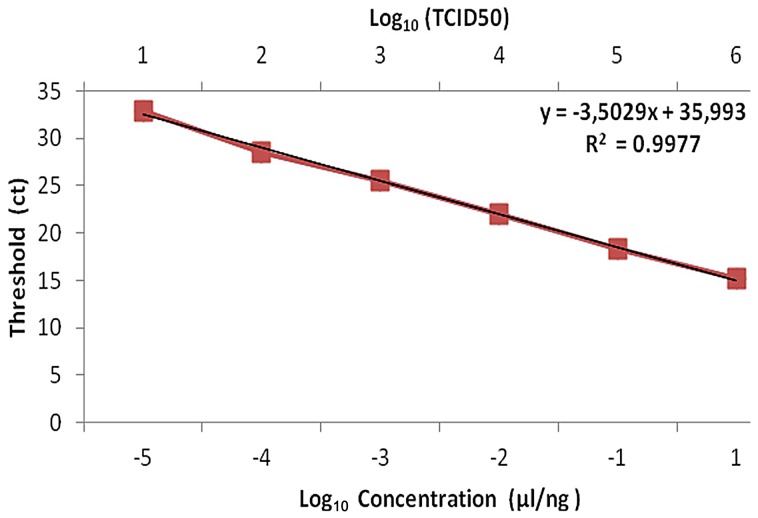
This report summarizes the findings of a national survey realized from October 2010 to May 2011 on 800 flocks in 20 governorates. Serum samples were screened for the presence of specific influenza virus antibodies using cELISA test. Additionally, swab samples were tested by real time and conventional RT-PCR and compared with results obtained by others assays. Phylogenetic and genetic analyses of the glycoproteins were established for some strains.
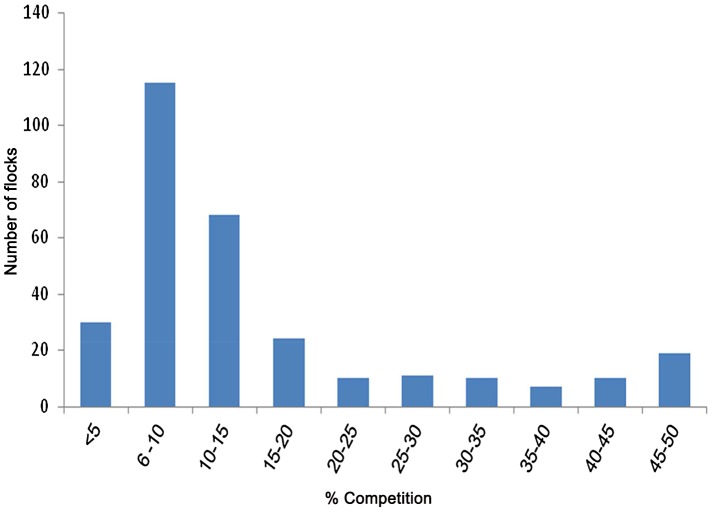
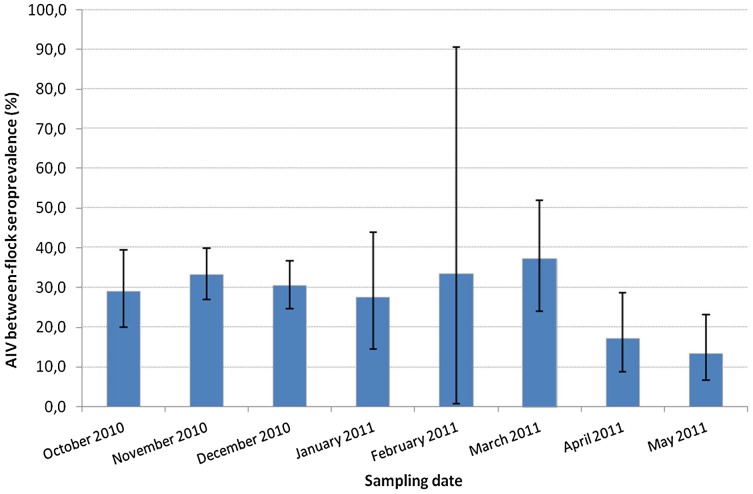
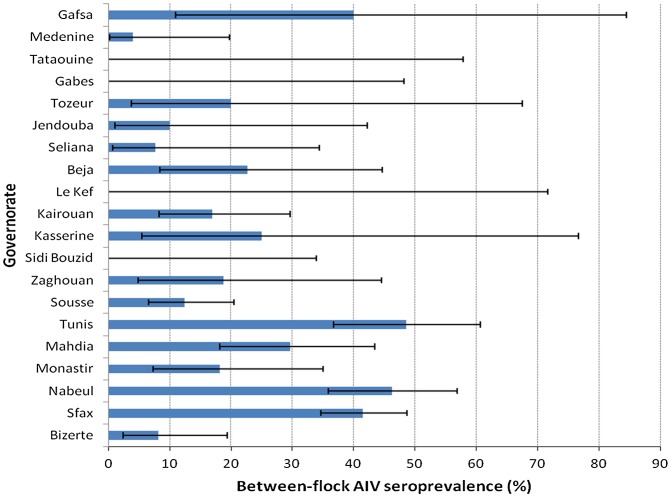
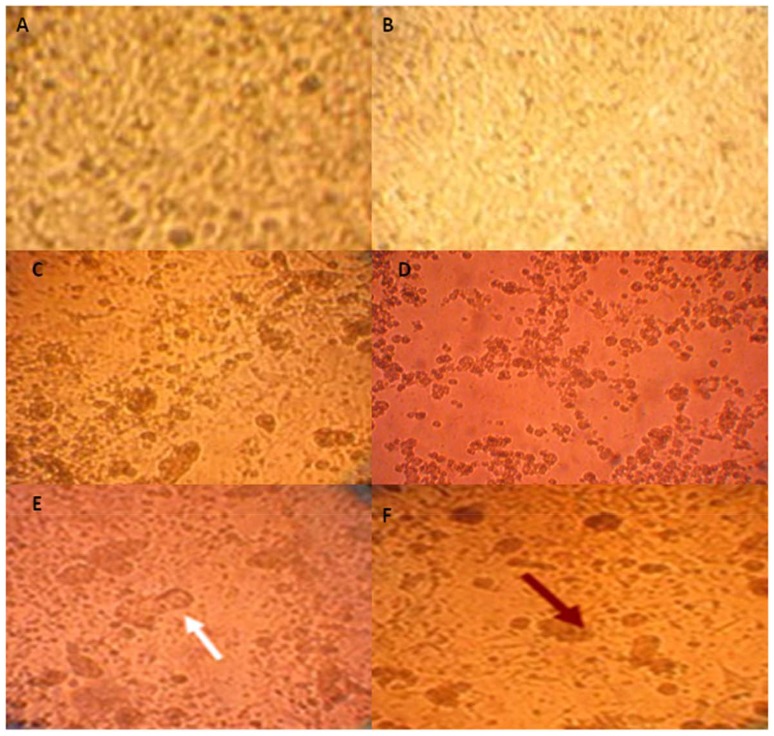
Out of the 800 chicken and turkey flocks tested by cELISA, 223 showed positive anti-NP antibodies (28.7%, 95% CI: 25.6-32.1). Significantly higher seroprevalence was found among the coastal areas compared to inland and during the autumn and winter. Broiler flocks showed significantly lower seroprevalence than layers and broiler breeders. The influenza virus infection prevalence increased after the laying phase among layer flocks. In addition, AIV seropositivity was significantly associated with low biosecurity measures. The Ag EIA and rRT-PCR tests revealed significantly higher numbers of AI positive samples as compared to cell cultures or egg inoculation. All new strains were subtyped as H9N2 by real time and conventional RT-PCR. Drift mutations, addition or deletion of glycosylation sites were likely to have occurred in the HA and NA glycoproteins of Tunisian strains resulting in multiple new amino acid substitutions. This fact may reflect different evolutionary pressures affecting these glycoproteins. The role of these newly detected substitutions should be tested.
Our findings highlight the potential risk of AIV to avian health. Strict enforcement of biosecurity measures and possible vaccination of all poultry flocks with continuous monitoring of poultry stations may ensure reduction of AIV prevalence and avoid emergence of more pathogenic strains.
评估不同商业家禽养殖场中甲型流感病毒的血清流行率,并通过分子检测评估特定风险因素及其遗传特性。
本报告总结了 2010 年 10 月至 2011 年 5 月期间在 20 个省份的 800 个禽群中进行的全国性调查结果。使用 cELISA 检测血清样本中是否存在特定的流感病毒抗体。此外,还通过实时和常规 RT-PCR 对拭子样本进行了检测,并与其他检测方法的结果进行了比较。对部分病毒株的糖蛋白进行了系统发生和遗传分析。
通过 cELISA 检测的 800 个鸡和火鸡禽群中,有 223 个显示出抗 NP 抗体阳性(28.7%,95%CI:25.6-32.1)。沿海地区的血清阳性率明显高于内陆地区,且在秋季和冬季较高。肉鸡禽群的血清阳性率明显低于蛋鸡和肉鸡种鸡。蛋鸡禽群在产蛋期后感染流感病毒的比例增加。此外,流感病毒血清阳性与低生物安全措施显著相关。与细胞培养或卵接种相比,Ag EIA 和 rRT-PCR 检测显示出更多的 AI 阳性样本。所有新分离株通过实时和常规 RT-PCR 鉴定为 H9N2。HA 和 NA 糖蛋白中的漂移突变、糖基化位点的添加或缺失可能导致突尼斯分离株中出现多个新的氨基酸替换,这一事实可能反映了影响这些糖蛋白的不同进化压力。这些新检测到的替换的作用应进行测试。
我们的研究结果强调了 AIV 对禽类健康的潜在风险。严格执行生物安全措施,并对所有家禽禽群进行可能的疫苗接种,同时持续监测家禽站,可能有助于降低 AIV 的流行率,避免更具致病性的毒株出现。