Laksmana Theresia, Kittichotirat Weerayuth, Huang Yanyan, Chen Weizhen, Jorgensen Michael, Bumgarner Roger, Chen Casey
Ostrow School of Dentistry of USC, Los Angeles, CA, USA.
Open Dent J. 2012;6:255-61. doi: 10.2174/1874210601206010255. Epub 2012 Dec 28.
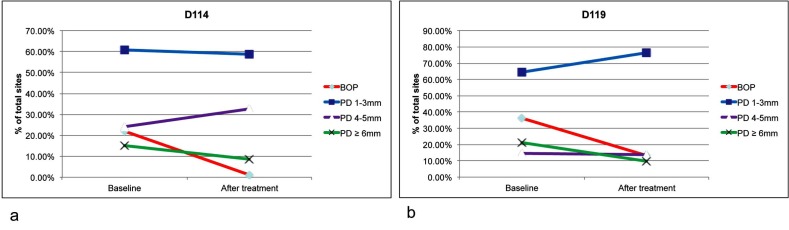
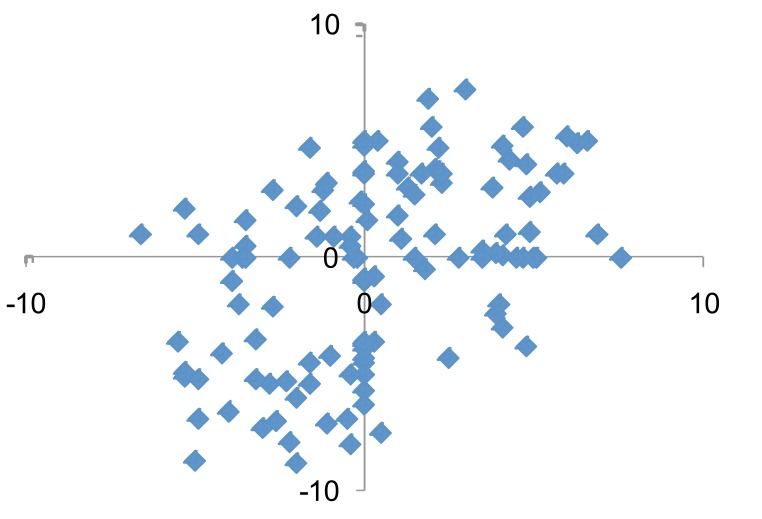
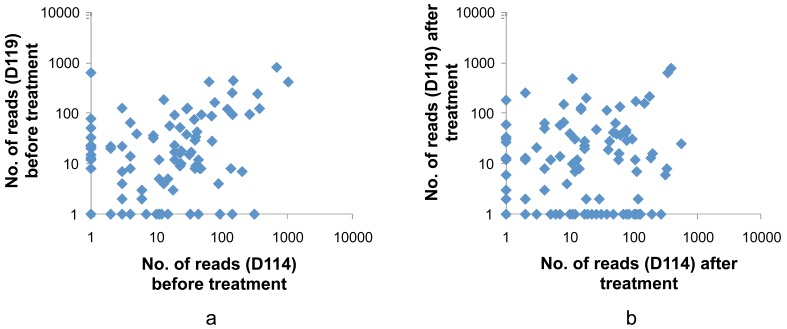
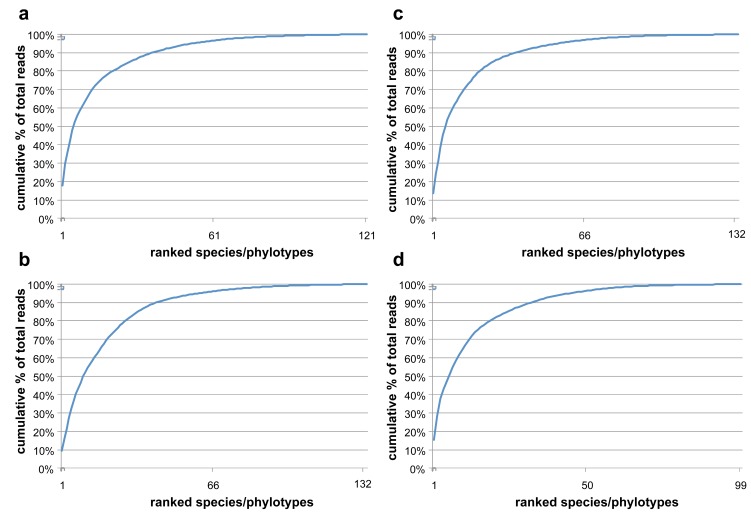
This study tested the feasibility of a high throughput metagenomic approach to analyze the pre- and posttreatment of subgingival plaque in two subjects with aggressive periodontitis. DNA was extracted from subgingival samples and subjected to PCR amplification of the c2-c4 regions of the 16S rDNA using primers with bar codes to identify individual samples. The PCR products were pooled and sequenced for the v4 region of the 16S rDNA using the 454 FLX standard platform. The results were analyzed for species/phylotypes in the Human Oral Microbiome Database (HOMD) and Ribosomal Database Project (RDP) database. The sequencing of the amplicons resulted in 24,673 reads and identified 208 species/phylotypes. Of those, 129 species/phylotypes were identified in both patients but their proportions varied. While >120 species/phylotypes were identified in all samples, 28-42 species/phylotypes cumulatively represent 90% of all subgingival bacteria in each sample. The remaining species/phylotypes each constituted ≤0.2% of the total subgingival bacteria. In conclusion, the subgingival microbiota are characterized by high species richness dominated by a few species/ phylotypes. The microbiota changed after periodontal therapy. High throughput metagenomic analysis is applicable to assess the complexity and changes of the subgingival microbiota.
本研究测试了一种高通量宏基因组学方法用于分析两名侵袭性牙周炎患者龈下菌斑治疗前后情况的可行性。从龈下样本中提取DNA,并使用带有条形码的引物对16S rDNA的c2 - c4区域进行PCR扩增,以识别各个样本。将PCR产物混合,并使用454 FLX标准平台对16S rDNA的v4区域进行测序。在人类口腔微生物组数据库(HOMD)和核糖体数据库项目(RDP)数据库中分析结果的物种/系统发育型。扩增子测序产生了24,673条读数,并鉴定出208种物种/系统发育型。其中,两名患者均鉴定出129种物种/系统发育型,但它们所占比例有所不同。虽然在所有样本中均鉴定出超过120种物种/系统发育型,但28 - 42种物种/系统发育型累计占每个样本中所有龈下细菌的90%。其余的物种/系统发育型各自占龈下细菌总数的≤0.2%。总之,龈下微生物群的特征是物种丰富度高,由少数物种/系统发育型主导。牙周治疗后微生物群发生了变化。高通量宏基因组分析适用于评估龈下微生物群的复杂性和变化。