KEMRI-Wellcome Trust Research Programme Centre for Geographic Medicine Research–Coast, Kilifi, Kenya.
Emerg Infect Dis. 2013 Feb;19(2):223-9. doi: 10.3201/eid1902.120940.
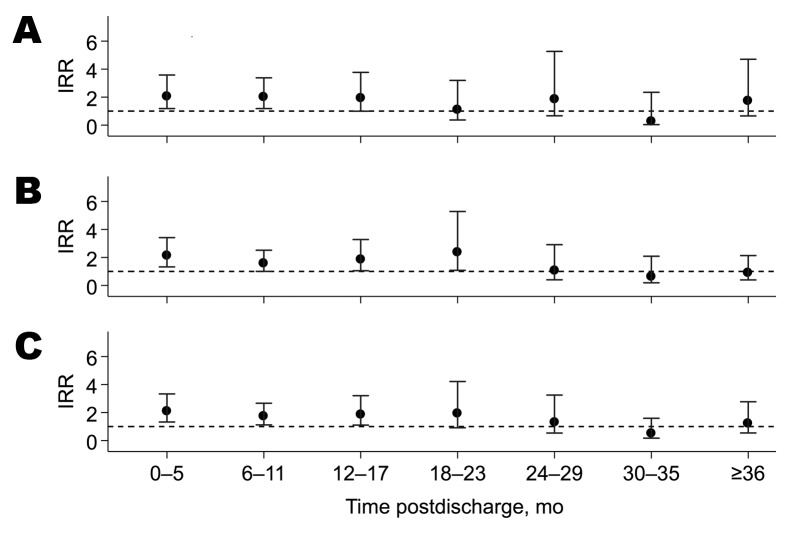
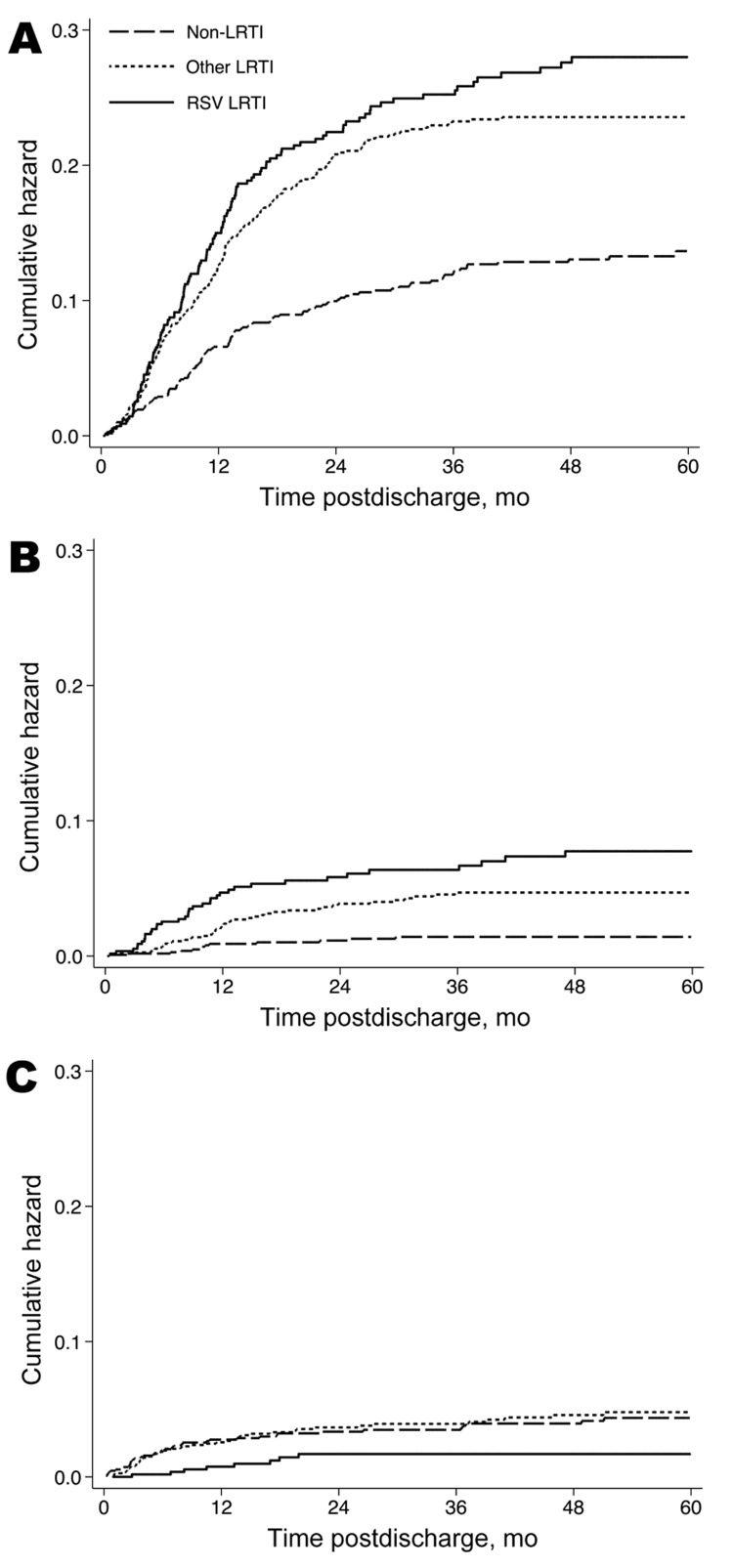
Severe lower respiratory tract infection (LRTI) in infants caused by respiratory syncytial virus (RSV) has been associated with later pneumonia hospitalization among children. To determine risk for pneumonia after RSV hospitalization in infancy, we conducted a retrospective cohort analysis of 2,813 infants admitted to a hospital in Kenya and identified readmissions for pneumonia among this group during early childhood (<60 months of age). Incidence of readmission for pneumonia was higher for children whose first admission as infants was for LRTI and who were <3 months of age than for children who were first admitted as infants for non-LRTI, irrespective of RSV status. Incidence of readmission for pneumonia with wheeze was higher for children whose first admission involved RSV compared with those who had non-RSV LRTI. Excess pneumonia risk persisted for 2 years after the initial hospitalization. Close postdischarge follow-up of infants with LRTI, with or without RSV, could help prevent severe pneumonia later in childhood.
婴儿严重下呼吸道感染(LRTI)由呼吸道合胞病毒(RSV)引起,与儿童后期肺炎住院有关。为了确定婴儿 RSV 住院后的肺炎风险,我们对肯尼亚一家医院收治的 2813 名婴儿进行了回顾性队列分析,并在该组儿童(<60 个月龄)中确定了肺炎的再次入院情况。与首次以非 LRTI 入院的婴儿相比,首次以 LRTI 入院且年龄<3 个月的婴儿因肺炎再次入院的发生率更高,而不论 RSV 状态如何。与患有非 RSV LRTI 的婴儿相比,首次入院涉及 RSV 的婴儿因肺炎伴喘息而再次入院的发生率更高。初始住院后 2 年内肺炎风险持续增加。对患有 LRTI(无论是否伴有 RSV)的婴儿进行密切的出院后随访,可能有助于预防儿童后期发生严重肺炎。