Department of Entomology, Faculty of Agriculture, Tarbiat Modares University, Tehran, Iran.
PLoS One. 2013;8(1):e54025. doi: 10.1371/journal.pone.0054025. Epub 2013 Jan 17.
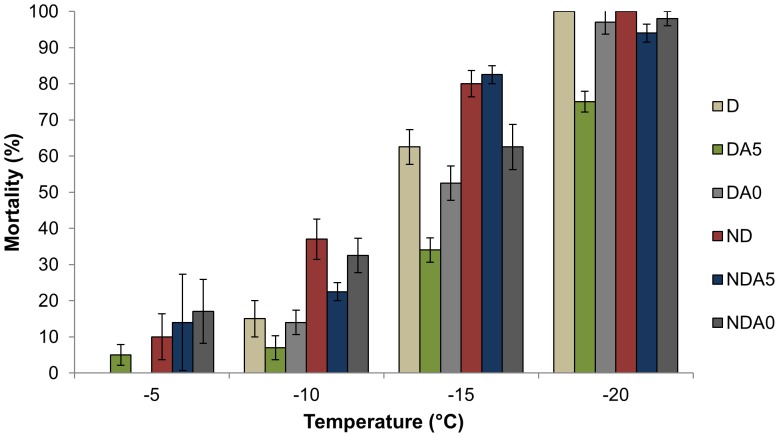
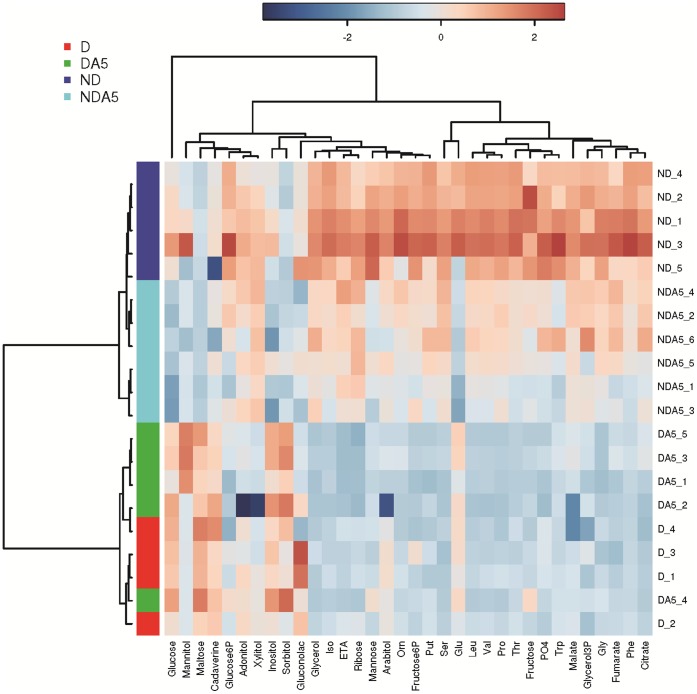
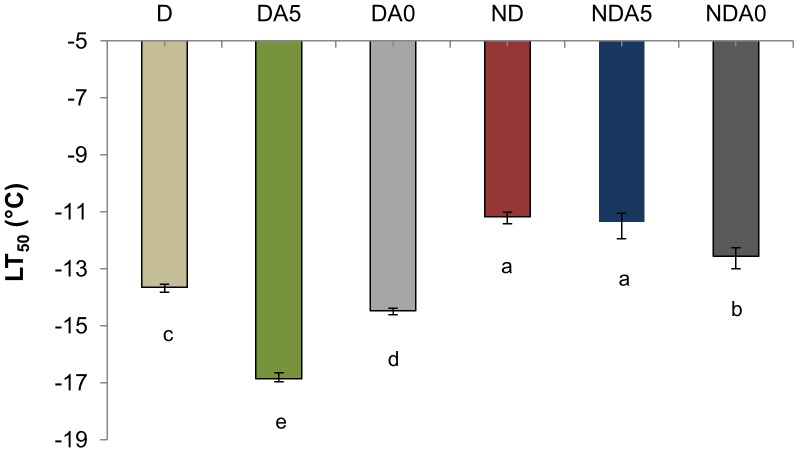
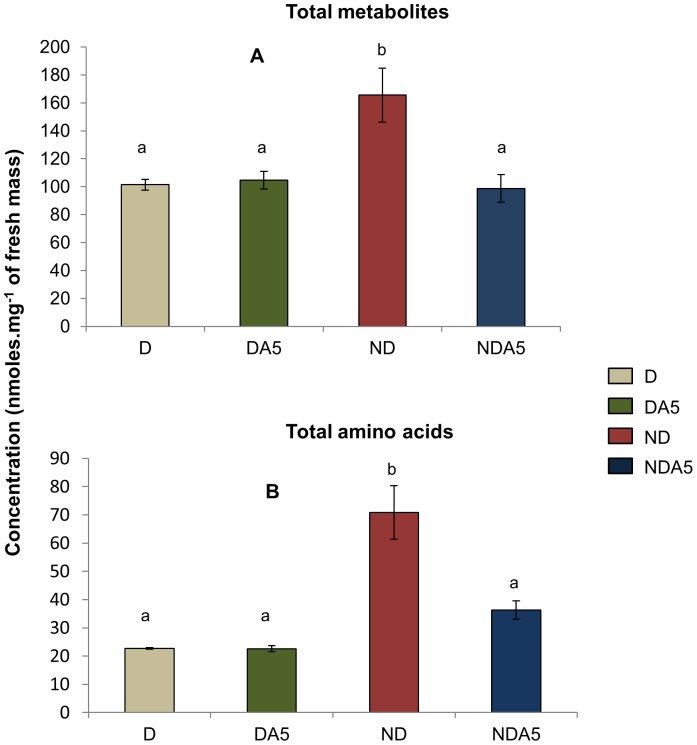
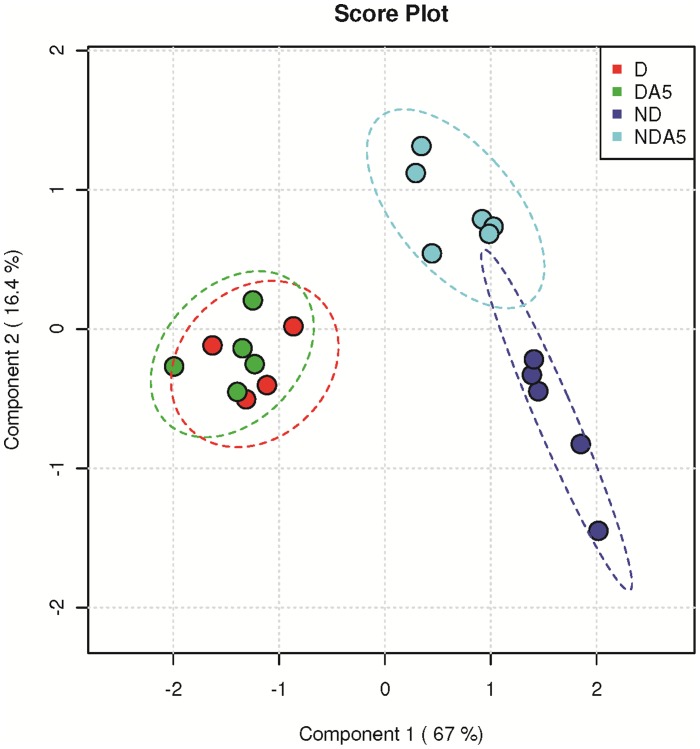
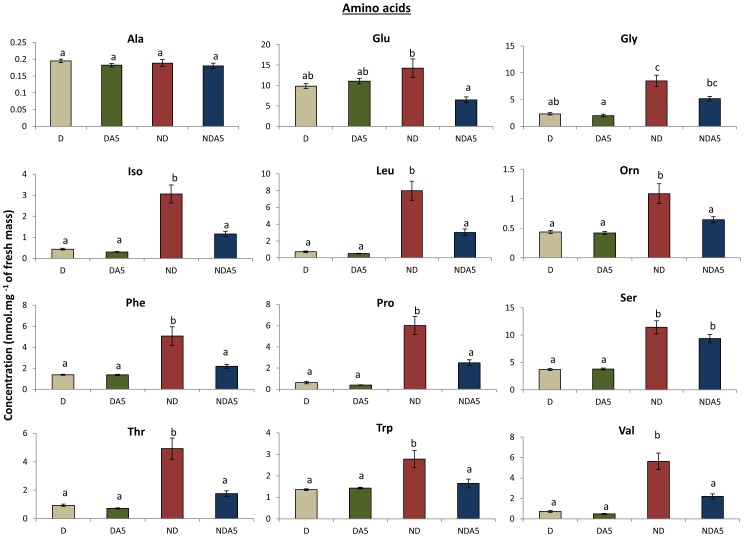
Diapause is a common feature in several arthropod species that are subject to unfavorable growing seasons. The range of environmental cues that trigger the onset and termination of diapause, in addition to associated hormonal, biochemical, and molecular changes, have been studied extensively in recent years; however, such information is only available for a few insect species. Diapause and cold hardening usually occur together in overwintering arthropods, and can be characterized by recording changes to the wealth of molecules present in the tissue, hemolymph, or whole body of organisms. Recent technological advances, such as high throughput screening and quantification of metabolites via chromatographic analyses, are able to identify such molecules. In the present work, we examined the survival ability of diapausing and non-diapausing females of the two-spotted spider mite, Tetranychus urticae, in the presence (0 or 5°C) or absence of cold acclimation. Furthermore, we examined the metabolic fingerprints of these specimens via gas chromatography-mass spectrophotometry (GC-MS). Partial Least Square Discriminant Analysis (PLS-DA) of metabolites revealed that major metabolic variations were related to diapause, indicating in a clear cut-off between diapausing and non-diapausing females, regardless of acclimation state. Signs of metabolic depression were evident in diapausing females, with most amino acids and TCA cycle intermediates being significantly reduced. Out of the 40 accurately quantified metabolites, seven metabolites remained elevated or were accumulated in diapausing mites, i.e. cadaverine, gluconolactone, glucose, inositol, maltose, mannitol and sorbitol. The capacity to accumulate winter polyols during cold-acclimation was restricted to diapausing females. We conclude that the induction of increased cold hardiness in this species is associated with the diapause syndrome, rather than being a direct effect of low temperature. Our results provide novel information about biochemical events related to the cold hardening process in the two-spotted spider mite.
滞育是几种节肢动物的常见特征,这些物种会受到不利生长季节的影响。近年来,人们广泛研究了触发滞育开始和结束的环境线索,以及相关的激素、生化和分子变化;然而,这种信息仅适用于少数几种昆虫。滞育和抗寒通常同时发生在越冬节肢动物中,可以通过记录组织、血淋巴或生物体整体中存在的分子的丰富度变化来进行特征描述。最近的技术进步,如高通量筛选和通过色谱分析对代谢物进行定量,能够识别这些分子。在本工作中,我们检查了二斑叶螨滞育和非滞育雌螨在存在(0 或 5°C)或不存在冷驯化的情况下的生存能力。此外,我们通过气相色谱-质谱法(GC-MS)检查了这些标本的代谢指纹。代谢物的偏最小二乘判别分析(PLS-DA)表明,主要的代谢变化与滞育有关,这表明在滞育和非滞育雌螨之间有明显的分界,无论适应状态如何。在滞育雌螨中可以明显看到代谢抑制的迹象,大多数氨基酸和 TCA 循环中间产物显著减少。在 40 种准确定量的代谢物中,有 7 种代谢物在滞育螨中升高或积累,即尸胺、葡糖酸内酯、葡萄糖、肌醇、麦芽糖、甘露醇和山梨醇。在冷驯化期间积累冬季多元醇的能力仅限于滞育雌螨。我们得出结论,在该物种中诱导增加的抗寒性与滞育综合征有关,而不是低温的直接影响。我们的研究结果为与二斑叶螨抗寒过程相关的生化事件提供了新的信息。