Department of Bioengineering, Rice University, MS-142, PO Box 1892, Houston, TX 77251-1892, USA.
Biomed Mater. 2013 Feb;8(1):014103. doi: 10.1088/1748-6041/8/1/014103. Epub 2013 Jan 25.
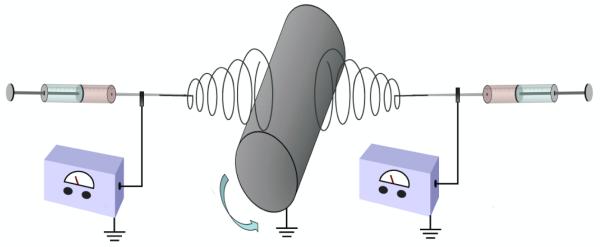
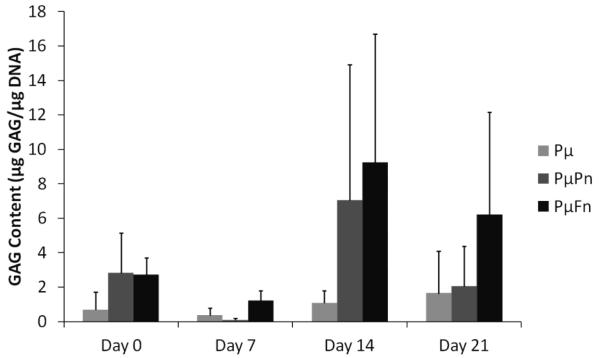
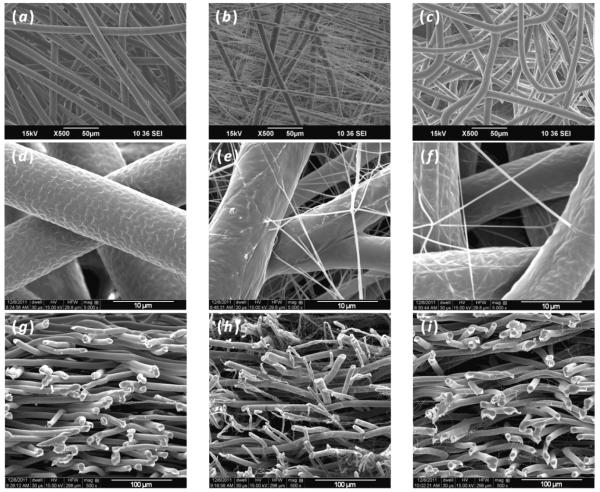
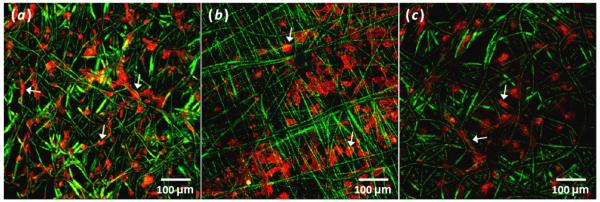
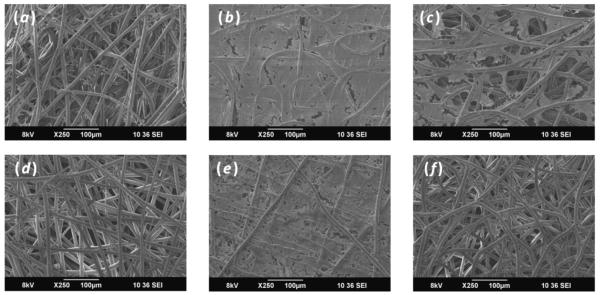
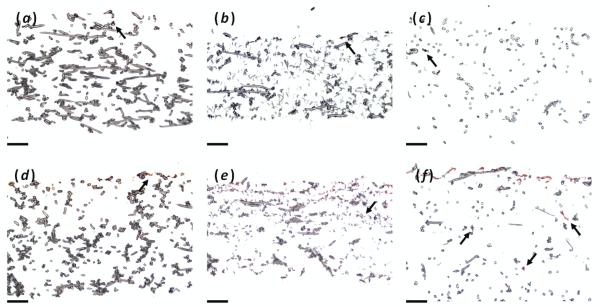
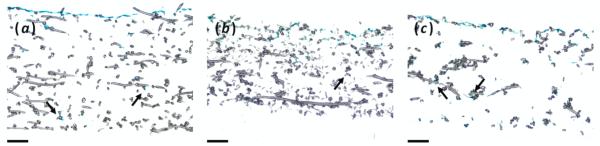
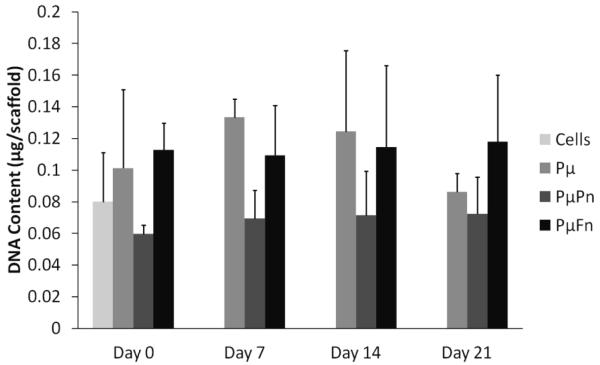
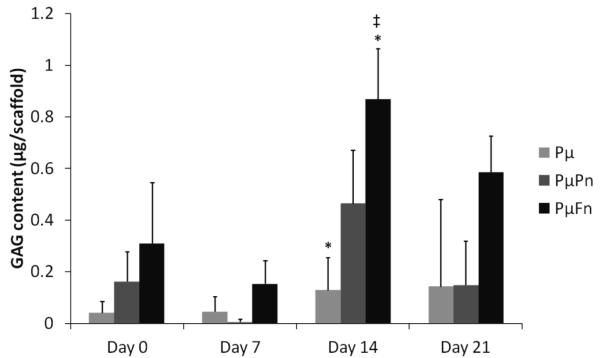
Recently, scaffolds for tissue regeneration purposes have been observed to utilize nanoscale features in an effort to reap the cellular benefits of scaffold features resembling extracellular matrix (ECM) components. However, one complication surrounding electrospun nanofibers is limited cellular infiltration. One method to ameliorate this negative effect is by incorporating nanofibers into microfibrous scaffolds. This study shows that it is feasible to fabricate electrospun scaffolds containing two differently scaled fibers interspersed evenly throughout the entire construct as well as scaffolds containing fibers composed of two discrete materials, specifically fibrin and poly(ε-caprolactone). In order to accomplish this, multiscale fibrous scaffolds of different compositions were generated using a dual extrusion electrospinning setup with a rotating mandrel. These scaffolds were then characterized for fiber diameter, porosity and pore size and seeded with human mesenchymal stem cells to assess the influence of scaffold architecture and composition on cellular responses as determined by cellularity, histology and glycosaminoglycan (GAG) content. Analysis revealed that nanofibers within a microfiber mesh function to maintain scaffold cellularity under serum-free conditions as well as aid the deposition of GAGs. This supports the hypothesis that scaffolds with constituents more closely resembling native ECM components may be beneficial for cartilage regeneration.
最近,人们观察到用于组织再生目的的支架利用纳米级特征,以收获类似于细胞外基质 (ECM) 成分的支架特征的细胞益处。然而,围绕电纺纳米纤维的一个复杂问题是细胞浸润有限。改善这种负面影响的一种方法是将纳米纤维纳入微纤维支架中。这项研究表明,通过使用带有旋转心轴的双挤出电纺设置来制造均匀分散在整个结构中的两种不同尺度纤维的电纺支架以及由两种离散材料(即纤维蛋白和聚(ε-己内酯)组成的纤维的支架是可行的。为了实现这一点,使用双挤出电纺设置生成了具有不同组成的多尺度纤维支架,该设置带有旋转心轴。然后对这些支架进行纤维直径、孔隙率和孔径的表征,并接种人骨髓间充质干细胞,以评估支架结构和组成对细胞反应的影响,这些反应通过细胞密度、组织学和糖胺聚糖 (GAG) 含量来确定。分析表明,微纤维网中的纳米纤维在无血清条件下有助于维持支架的细胞密度,并有助于 GAG 的沉积。这支持了这样一种假设,即更类似于天然 ECM 成分的支架成分可能有益于软骨再生。