Department of Nanobiotechnology, Institute for Biophysics, University of Natural Resources and Life Science, Vienna, Muthgasse 11, Vienna 1190, Austria.
Int J Mol Sci. 2013 Jan 25;14(2):2484-501. doi: 10.3390/ijms14022484.
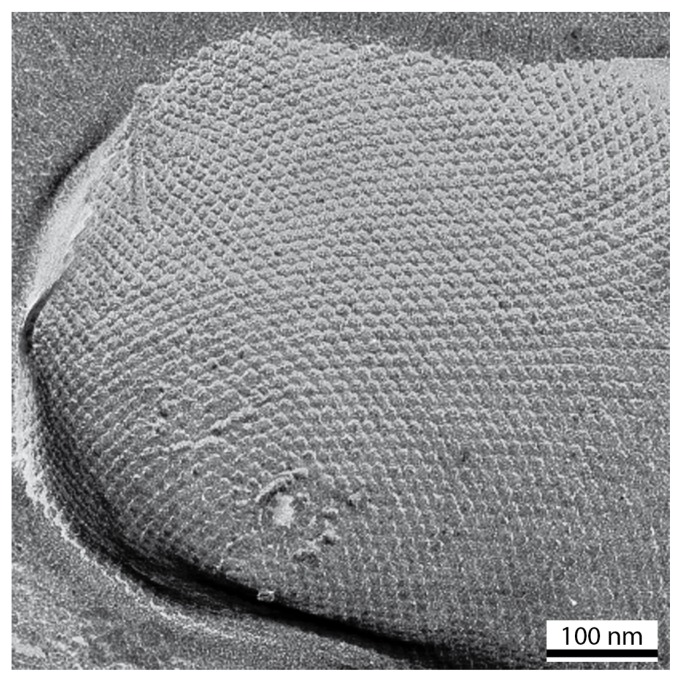
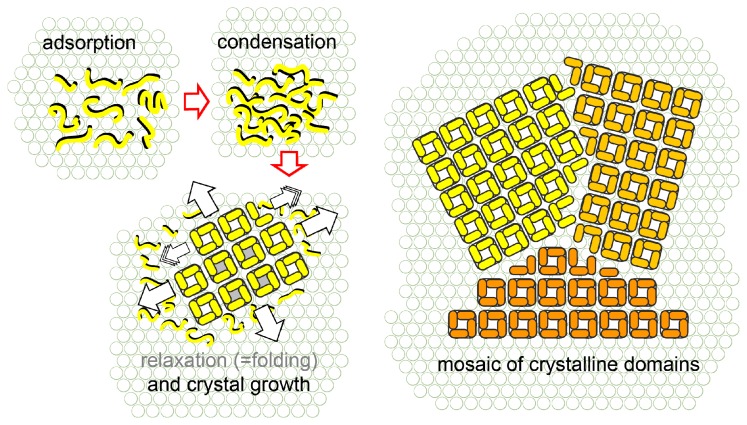
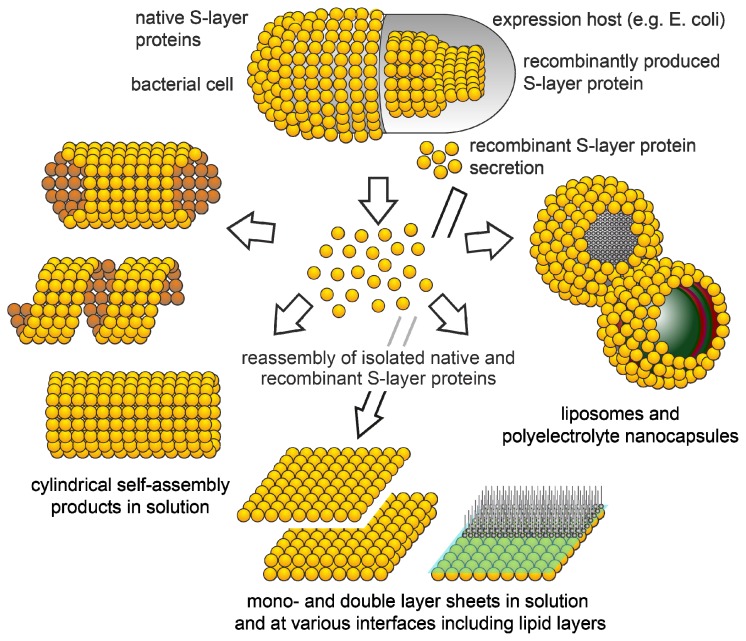
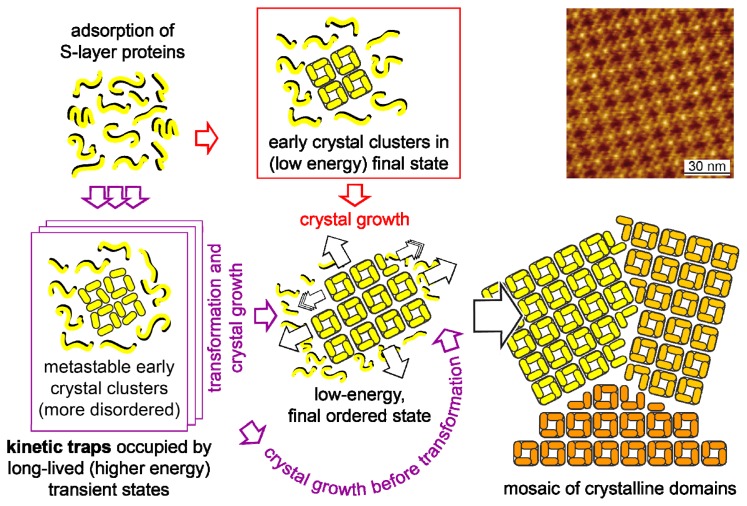
Crystalline S(urface)-layers are the most commonly observed cell surface structures in prokaryotic organisms (bacteria and archaea). S-layers are highly porous protein meshworks with unit cell sizes in the range of 3 to 30 nm, and thicknesses of ~10 nm. One of the key features of S-layer proteins is their intrinsic capability to form self-assembled mono- or double layers in solution, and at interfaces. Basic research on S-layer proteins laid foundation to make use of the unique self-assembly properties of native and, in particular, genetically functionalized S-layer protein lattices, in a broad range of applications in the life and non-life sciences. This contribution briefly summarizes the knowledge about structure, genetics, chemistry, morphogenesis, and function of S-layer proteins and pays particular attention to the self-assembly in solution, and at differently functionalized solid supports.
晶体表面层是原核生物(细菌和古菌)中最常见的细胞表面结构。S-层是高度多孔的蛋白质网格,其单元晶格尺寸在 3 到 30nm 之间,厚度约为 10nm。S-层蛋白的一个关键特征是其内在能力,即在溶液中和界面处形成自组装的单分子或双分子层。对 S-层蛋白的基础研究为利用天然的、特别是遗传功能化的 S-层蛋白晶格的独特自组装特性奠定了基础,这些特性在生命科学和非生命科学的广泛应用中得到了利用。本贡献简要总结了 S-层蛋白的结构、遗传学、化学、形态发生和功能方面的知识,并特别关注其在溶液中和不同功能化固体载体上的自组装。