National Institute for Communicable Disease, Sandringham, Johannesburg, South Africa.
Malar J. 2013 Feb 1;12:44. doi: 10.1186/1475-2875-12-44.
Anopheles arabiensis is a major malaria vector in Africa. It thrives in agricultural areas and has been associated with increased malaria incidence in areas under rice and maize cultivation. This effect may be due to increased adult size and abundance as a consequence of optimal larval nutrition. The aim of this study was to examine the effect of larval nutrition on the life history and expression of insecticide resistance in adults of laboratory reared An. arabiensis.
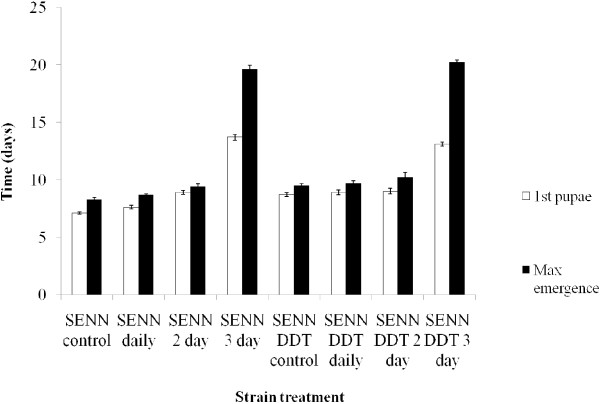
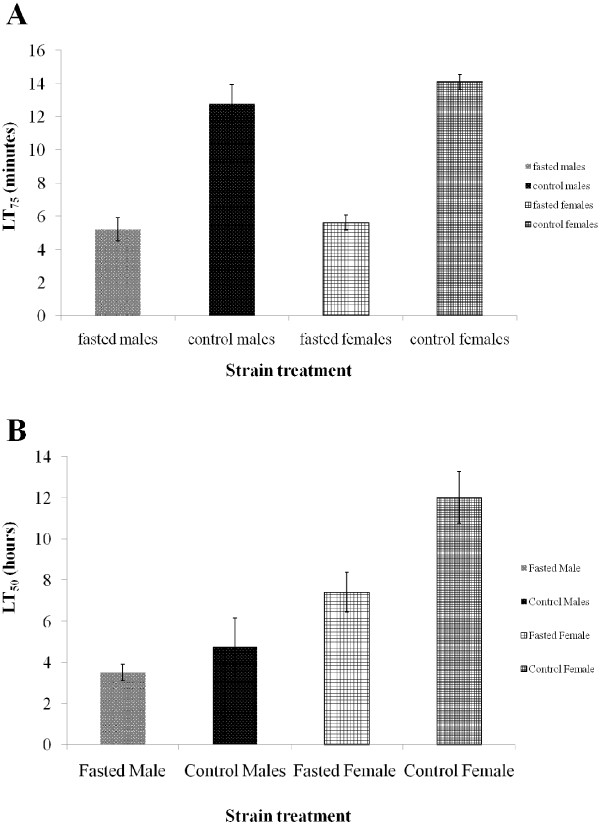
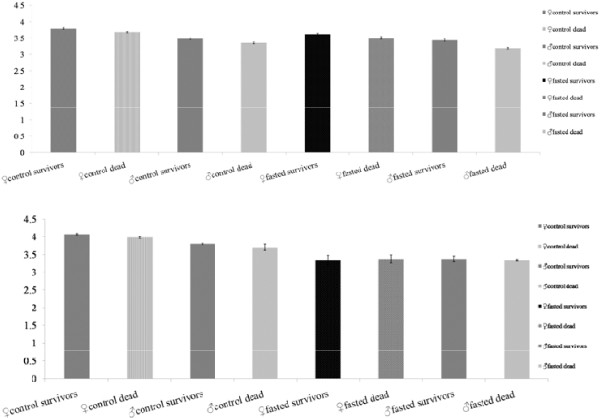
Larvae drawn from an insecticide susceptible An. arabiensis strain (SENN) as well as a DDT-resistant strain (SENN-DDT) were subjected to three fasting regimes: 1 mg of food per larva offered once per day, once every second day and once every third day. Control cohorts included larvae offered 1 mg food thrice per day. The rate of larval development was compared between matched cohorts from each strain as well as between fasted larvae and their respective controls. The expression of DDT resistance/tolerance in adults was compared between the starved cohorts and their controls by strain. Factors potentially affecting variation in DDT resistance/tolerance were examined including: adult body size (wing length), knock-down resistance (kdr) status and levels of detoxification enzyme activity.
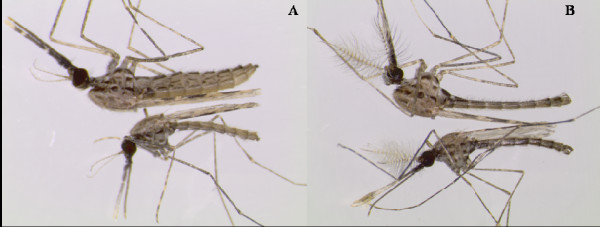
Anopheles arabiensis larval development is prolonged by nutrient deprivation and adults that eclose from starved larvae are smaller and less tolerant to DDT intoxication. This effect on DDT tolerance in adults is also associated with reduced detoxification enzyme activity. Conversely, well fed larvae develop comparatively quickly into large, more DDT tolerant (SENN) or resistant (SENN-DDT) adults. This is important in those instances where cereal farming is associated with increased An. arabiensis transmitted malaria incidence, because large adult females with high teneral reserves and decreased susceptibility to insecticide intoxication may also prove to be more efficient malaria vectors. In general, larval nutrient deprivation in An. arabiensis has important implications for subsequent adults in terms of their size and relative insecticide susceptibility, which may in turn impact on their malaria vector capacity in areas where insecticide based control measures are in place.
阿拉伯按蚊是非洲的主要疟疾传播媒介。它在农业区很繁盛,并与水稻和玉米种植区疟疾发病率增加有关。这种影响可能是由于幼虫最佳营养条件下导致成蚊体型增大和数量增加。本研究旨在探讨幼虫营养对实验室饲养的阿拉伯按蚊成虫生活史和杀虫剂抗性表达的影响。
从对杀虫剂敏感的阿拉伯按蚊品系(SENN)和滴滴涕抗性品系(SENN-DDT)中取出幼虫,分别进行三种禁食处理:每天每只幼虫提供 1mg 食物、每两天提供 1 次和每三天提供 1 次。对照组幼虫每天提供 3 次 1mg 食物。比较每组幼虫的发育速度,以及禁食幼虫与其各自对照组之间的差异。通过品系比较饥饿幼虫与其对照组之间成虫对滴滴涕的抗性/耐受性表达差异。检查了可能影响滴滴涕抗性/耐受性变化的因素,包括:成虫体型(翅长)、击倒抗性(kdr)状态和解毒酶活性水平。
阿拉伯按蚊幼虫的发育因营养缺乏而延长,从饥饿幼虫中羽化的成虫体型较小,对滴滴涕中毒的耐受性降低。这种对成虫滴滴涕耐受性的影响也与解毒酶活性降低有关。相反,喂养良好的幼虫相对较快地发育成体型较大、对滴滴涕耐受性更高的(SENN)或抗性更强的(SENN-DDT)成虫。在与谷类农业相关的疟疾传播增加的地区,这一点很重要,因为携带大量初孵储备且对杀虫剂中毒敏感性降低的大型成年雌性蚊子也可能成为更有效的疟疾传播媒介。一般来说,阿拉伯按蚊幼虫的营养剥夺对随后的成虫有重要影响,包括它们的体型和相对杀虫剂敏感性,这反过来可能会影响在使用杀虫剂的控制措施的地区它们作为疟疾传播媒介的能力。