Centre for Emerging Zoonotic and Parasitic Diseases, National Institute for Communicable Diseases of the National Health Laboratory Service, Johannesburg, South Africa.
Wits Research Institute for Malaria, MRC Collaborating Centre for Multi-disciplinary Research on Malaria, School of Pathology, Faculty of Health Sciences, University of the Witwatersrand, Johannesburg, South Africa.
Parasit Vectors. 2020 Jan 7;13(1):4. doi: 10.1186/s13071-020-3886-9.
Members of the Anopheles gambiae complex breed in clean, sunlit temporary bodies of water. Anthropogenic pollution is, however, altering the breeding sites of the vectors with numerous biological effects. Although the effects of larval metal pollution have previously been examined, this study aims to assess the transgenerational effects of larval metal pollution on the major malaria vector An. arabiensis.
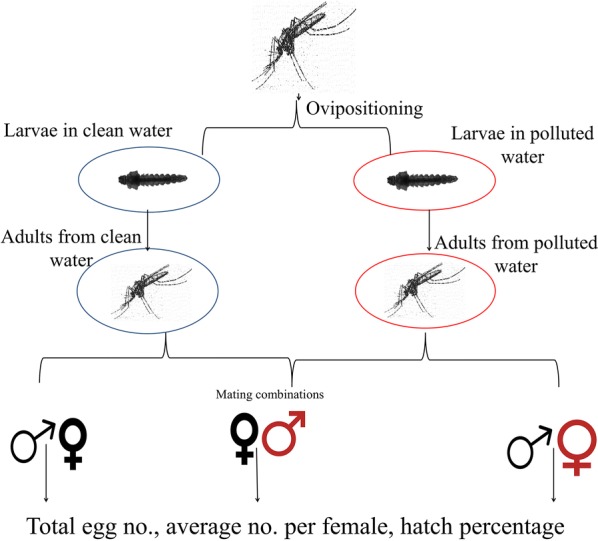
Two laboratory strains of An. arabiensis, SENN (insecticide-susceptible) and SENN-DDT (insecticide-resistant), were used in this study. After being bred in water polluted with either cadmium chloride, copper nitrate or lead nitrate, several life history characteristics that can have epidemiological implications (fertility, apoptotic damage to reproductive structures, adult longevity and insecticide tolerance) were examined in the adults and compared to those of adults bred in clean water.
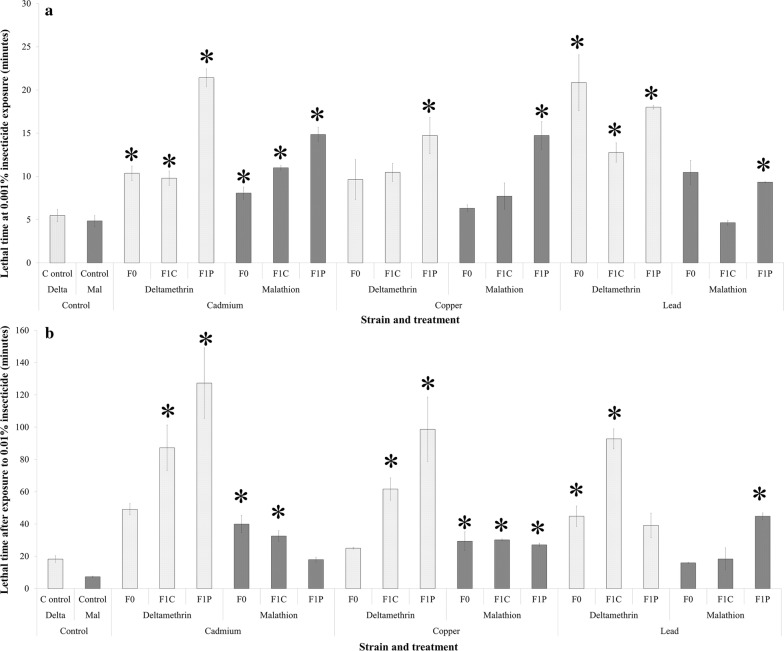
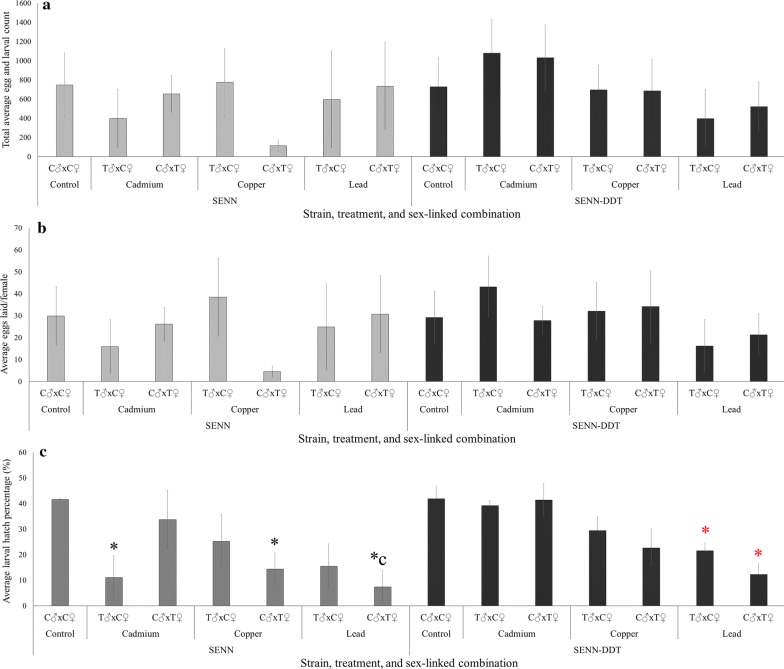
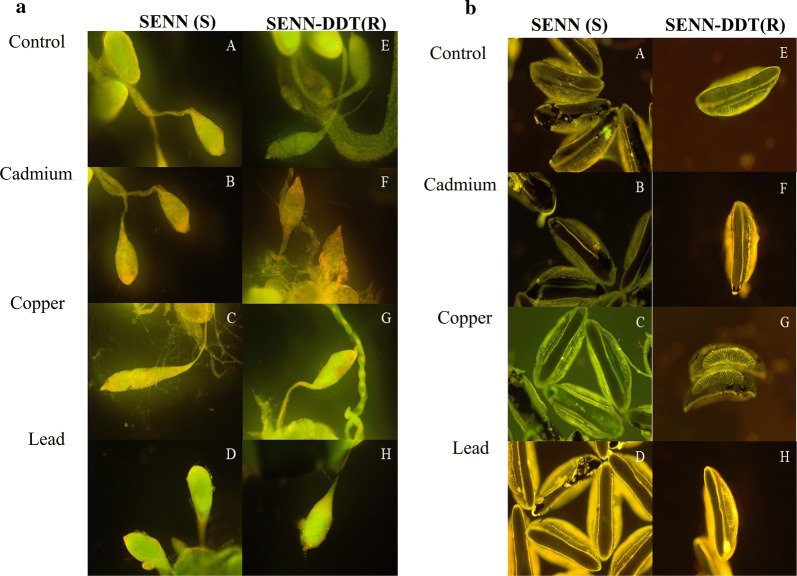
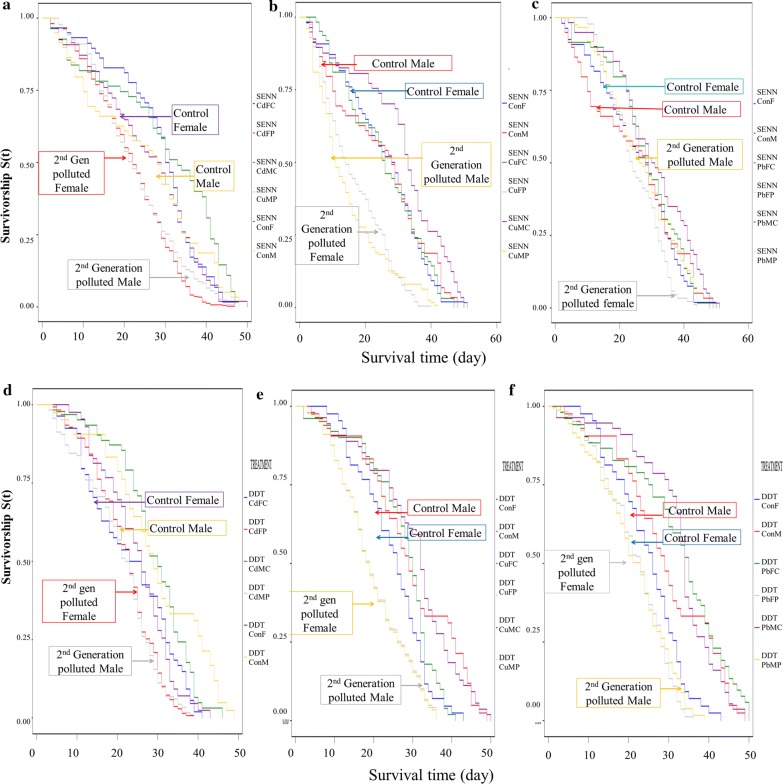
All metal treatments reduced fecundity in SENN, but only lead treatment reduced fertility in SENN-DDT. Cadmium chloride exposure resulted in apoptosis and deformation of the testes in both strains. After breeding generation F0 in polluted water, F1 larvae bred in clean water showed an increase in longevity in SENN-DDT adult females. In contrast, after breeding the F0 generation in polluted water, longevity was reduced after cadmium and copper exposure in the F1 generation. Larval metal exposure resulted in an increase in insecticide tolerance in adults of the SENN strain, with SENN-DDT adults gaining the greatest fold increase in insecticide tolerance.
This study demonstrates that a single exposure to metal pollution can have transgenerational effects that are not negated by subsequent breeding in clean water.
冈比亚按蚊复合体的成员在干净、阳光充足的临时水体中繁殖。然而,人为污染正在通过多种生物效应改变病媒的滋生地。虽然以前已经研究过幼虫金属污染的影响,但本研究旨在评估幼虫金属污染对主要疟疾媒介冈比亚按蚊的跨代影响。
本研究使用了两种实验室品系的冈比亚按蚊,SENN(杀虫剂敏感)和 SENN-DDT(杀虫剂抗性)。在被氯化镉、硝酸铜或硝酸铅污染的水中繁殖后,研究了一些具有流行病学意义的生活史特征(生育力、生殖结构的凋亡损伤、成虫寿命和杀虫剂耐受性),并将其与在清洁水中繁殖的成虫进行了比较。
所有金属处理都降低了 SENN 的繁殖力,但只有铅处理降低了 SENN-DDT 的生育力。氯化镉暴露导致两种菌株的睾丸凋亡和变形。在污染水中繁殖 F0 代后,F1 幼虫在清洁水中繁殖时,SENN-DDT 雌成虫的寿命延长。相比之下,在污染水中繁殖 F0 代后,F1 代在镉和铜暴露后,寿命缩短。幼虫金属暴露导致 SENN 菌株成虫的杀虫剂耐受性增加,而 SENN-DDT 成虫的杀虫剂耐受性增加幅度最大。
本研究表明,单次接触金属污染就会产生跨代影响,而随后在清洁水中繁殖并不能消除这些影响。