Laboratório de Química e Função de Proteínas e Peptídeos, Centro de Biociências e Biotecnologia, Universidade Estadual do Norte Fluminense Darcy Ribeiro, Campos dos Goytacazes, Rio de Janeiro, Brazil.
PLoS One. 2013;8(2):e55127. doi: 10.1371/journal.pone.0055127. Epub 2013 Feb 4.
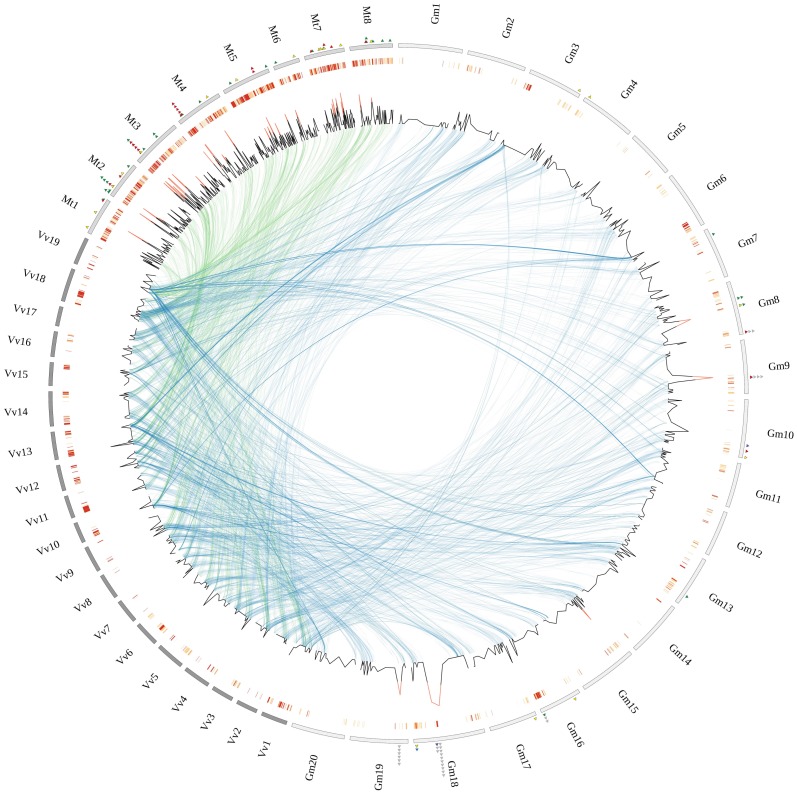
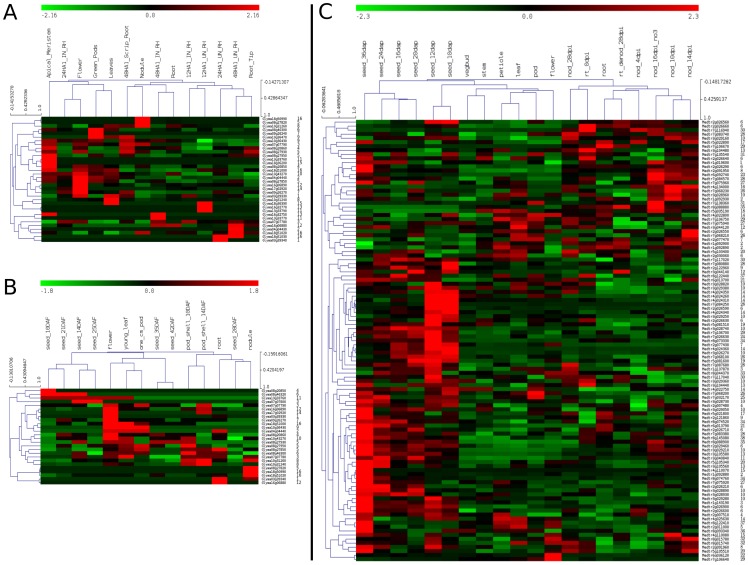
F-box proteins constitute a large gene family that regulates processes from hormone signaling to stress response. F-box proteins are the substrate recognition modules of SCF E3 ubiquitin ligases. Here we report very distinct trends in family size, duplication, synteny and transcription of F-box genes in two nitrogen-fixing legumes, Glycine max (soybean) and Medicago truncatula (alfafa). While the soybean FBX genes emerged mainly through segmental duplications (including whole-genome duplications), M. truncatula genome is dominated by locally-duplicated (tandem) F-box genes. Many of these young FBX genes evolved complex transcriptional patterns, including preferential transcription in different tissues, suggesting that they have probably been recruited to important biochemical pathways (e.g. nodulation and seed development).
F-box 蛋白构成了一个庞大的基因家族,调节从激素信号到应激反应的过程。F-box 蛋白是 SCF E3 泛素连接酶的底物识别模块。在这里,我们报告了两种固氮豆科植物大豆(Glycine max)和紫花苜蓿(Medicago truncatula)中 F-box 基因家族大小、复制、基因同线性和转录的非常明显的趋势。虽然大豆 FBX 基因主要通过片段复制(包括全基因组复制)产生,但 M. truncatula 基因组主要由局部复制(串联)的 F-box 基因组成。这些年轻的 FBX 基因中的许多都进化出了复杂的转录模式,包括在不同组织中的优先转录,这表明它们可能已经被招募到重要的生化途径中(例如结瘤和种子发育)。