Zhang Hailing, Cao Yingping, Shang Chen, Li Jikai, Wang Jianli, Wu Zhenying, Ma Lichao, Qi Tianxiong, Fu Chunxiang, Bai Zetao, Hu Baozhong
College of Life Science, Northeast Agricultural University, Harbin, China.
Pratacultural Sciences Institute of Heilongjiang Academy of Agricultural Sciences, Harbin, Heilongjiang, China.
PLoS One. 2017 Sep 25;12(9):e0185439. doi: 10.1371/journal.pone.0185439. eCollection 2017.
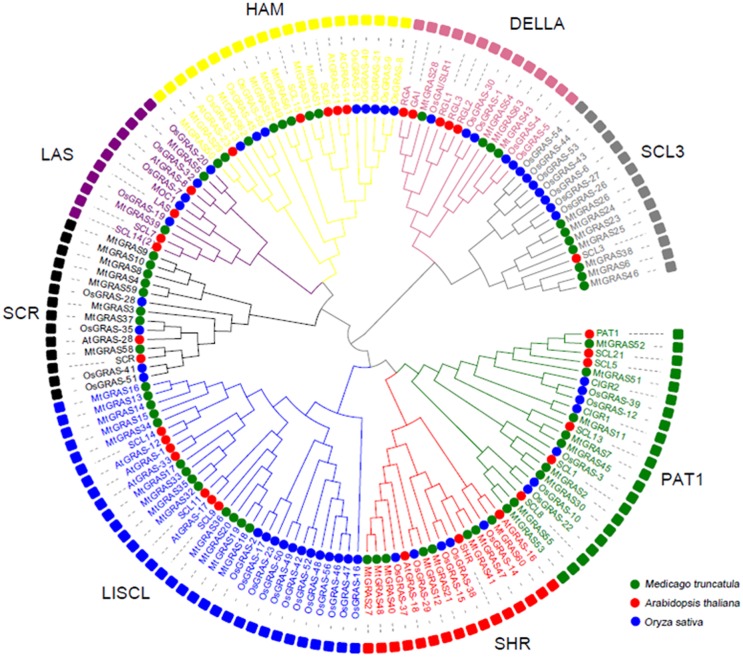
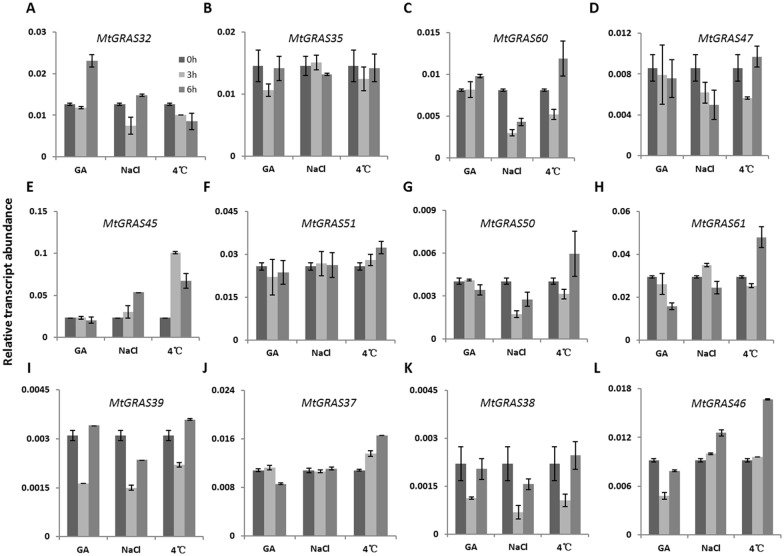
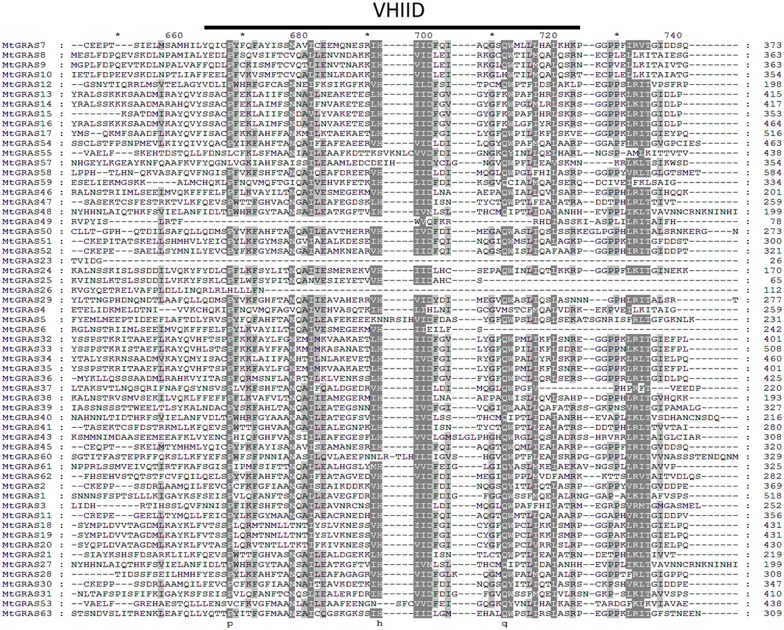
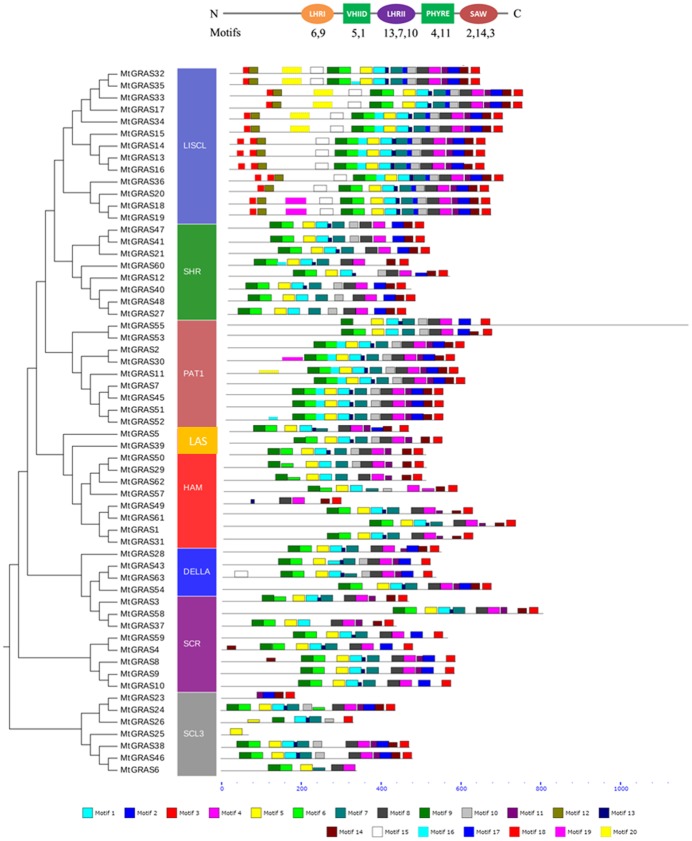
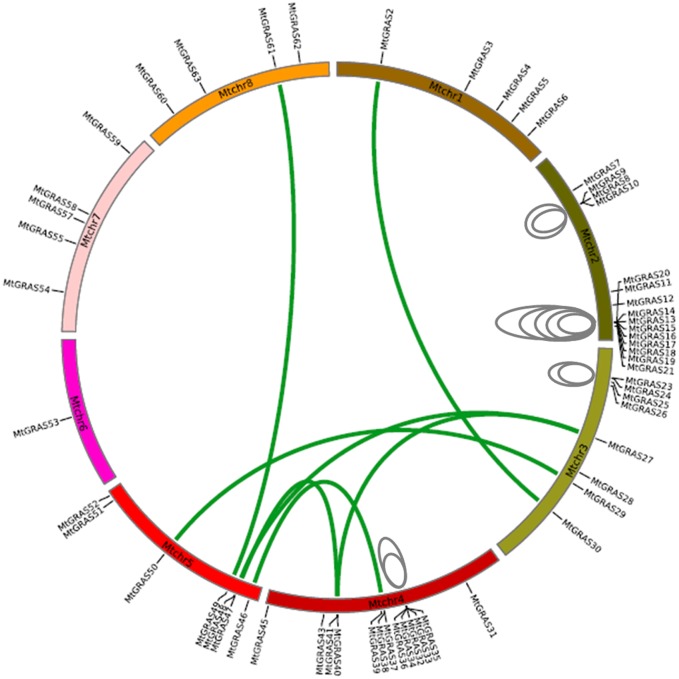
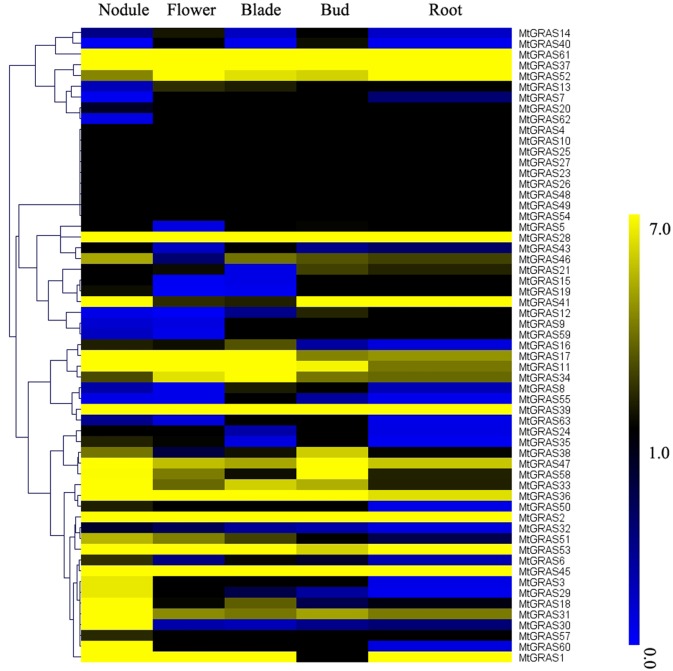
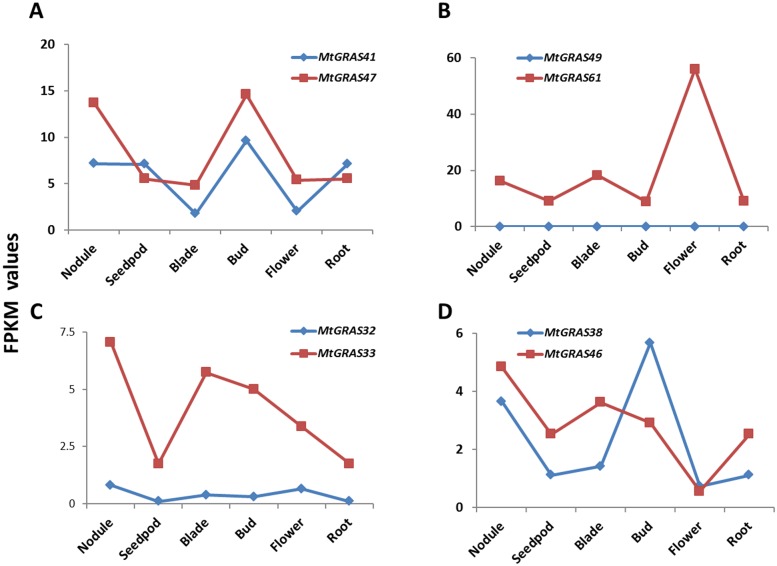
The GRAS gene family is a large plant-specific family of transcription factors that are involved in diverse processes during plant development. Medicago truncatula is an ideal model plant for genetic research in legumes, and specifically for studying nodulation, which is crucial for nitrogen fixation. In this study, 59 MtGRAS genes were identified and classified into eight distinct subgroups based on phylogenetic relationships. Motifs located in the C-termini were conserved across the subgroups, while motifs in the N-termini were subfamily specific. Gene duplication was the main evolutionary force for MtGRAS expansion, especially proliferation of the LISCL subgroup. Seventeen duplicated genes showed strong effects of purifying selection and diverse expression patterns, highlighting their functional importance and diversification after duplication. Thirty MtGRAS genes, including NSP1 and NSP2, were preferentially expressed in nodules, indicating possible roles in the process of nodulation. A transcriptome study, combined with gene expression analysis under different stress conditions, suggested potential functions of MtGRAS genes in various biological pathways and stress responses. Taken together, these comprehensive analyses provide basic information for understanding the potential functions of GRAS genes, and will facilitate further discovery of MtGRAS gene functions.
GRAS基因家族是一个大型的植物特异性转录因子家族,参与植物发育过程中的多种进程。蒺藜苜蓿是豆科植物遗传研究的理想模式植物,尤其适用于研究对固氮至关重要的结瘤作用。在本研究中,共鉴定出59个蒺藜苜蓿GRAS基因,并根据系统发育关系将其分为八个不同的亚组。位于C端的基序在各亚组中保守,而位于N端的基序具有亚家族特异性。基因复制是蒺藜苜蓿GRAS基因扩张的主要进化动力,尤其是LISCL亚组的扩增。17个复制基因表现出强烈的纯化选择效应和多样的表达模式,突出了它们在复制后的功能重要性和多样化。包括NSP1和NSP2在内的30个蒺藜苜蓿GRAS基因在根瘤中优先表达,表明它们在结瘤过程中可能发挥作用。一项转录组研究,结合不同胁迫条件下的基因表达分析,提示了蒺藜苜蓿GRAS基因在各种生物学途径和胁迫反应中的潜在功能。综上所述,这些综合分析为理解GRAS基因的潜在功能提供了基本信息,并将有助于进一步发现蒺藜苜蓿GRAS基因的功能。