Department of Psychiatry, Yale University School of Medicine, New Haven, CT, USA.
Obesity (Silver Spring). 2013 Feb;21(2):367-77. doi: 10.1002/oby.20068.
An important endeavor involves increasing our understanding of biobehavioral processes underlying different types of obesity. The current study investigated the neural correlates of cognitive control (involving conflict monitoring and response inhibition) in obese individuals with binge eating disorder (BED) as compared to BMI-matched non-BED obese (OB) individuals and lean comparison (LC) participants. Alterations in cognitive control may contribute to differences in behavioral control over eating behaviors in BED and obesity.
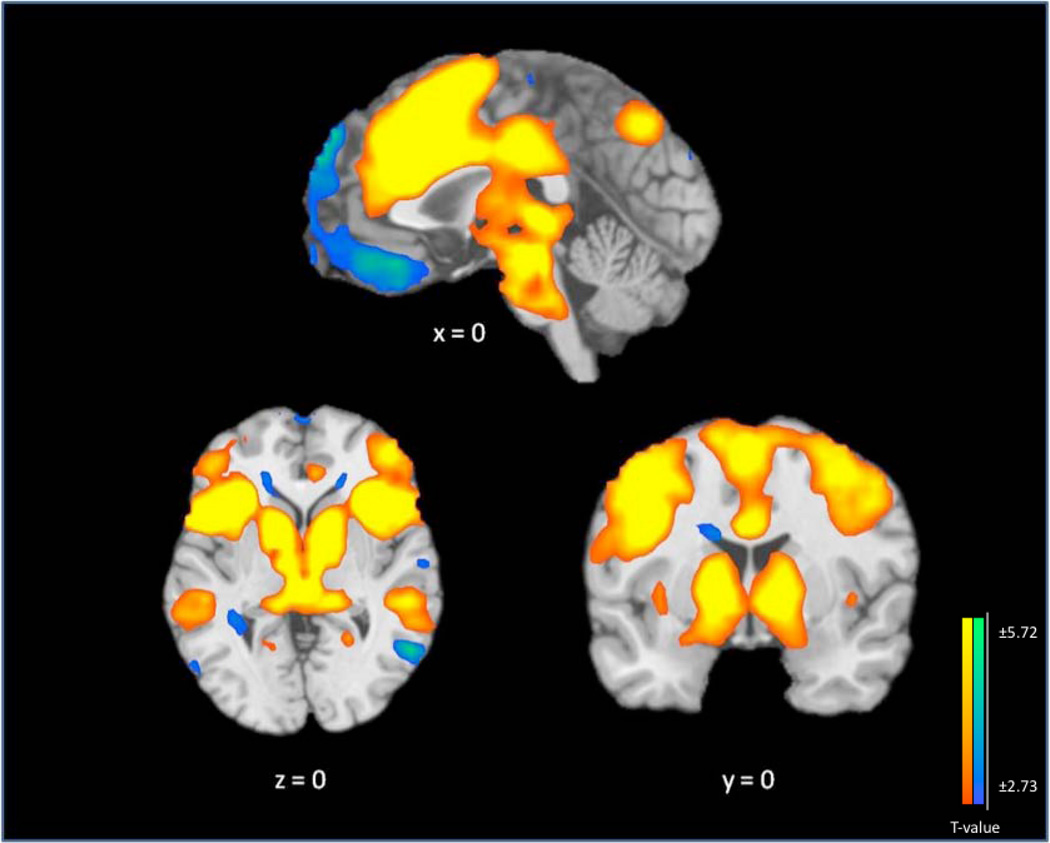
Participants underwent functional magnetic resonance imaging while completing the Stroop color-word interference task.
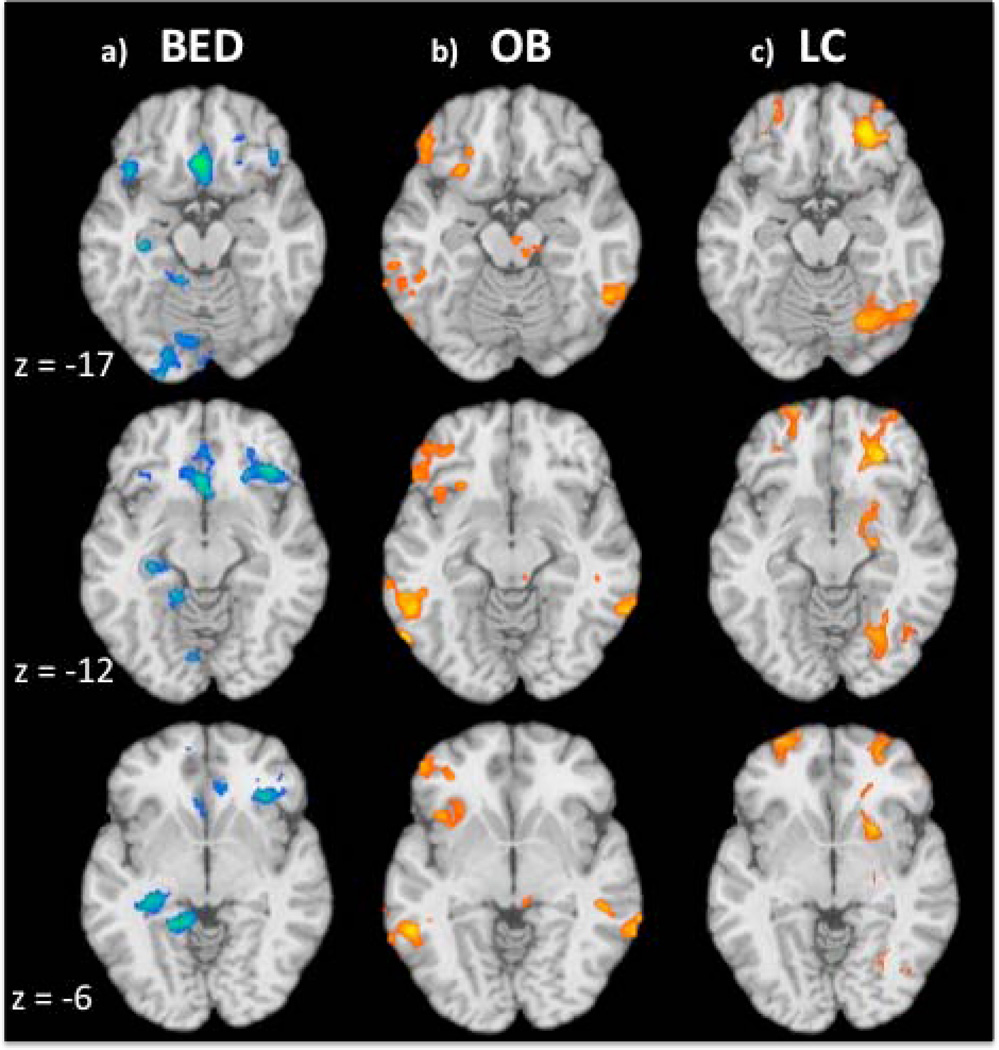
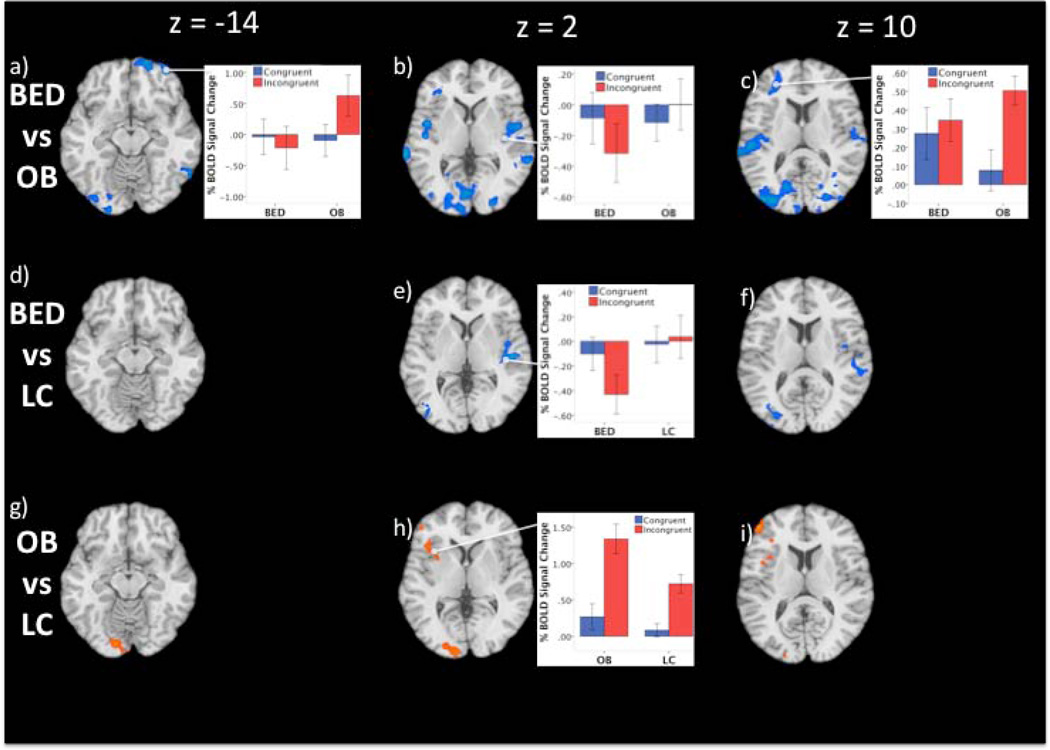
Relative to the OB and LC groups, activity in the BED group was differentiated by relative hypoactivity in brain areas involved in self-regulation and impulse control. Specifically, the BED group showed diminished activity in the ventromedial prefrontal cortex (vmPFC), inferior frontal gyrus (IFG), and insula during Stroop performance. In addition, dietary restraint scores were negatively correlated with right IFG and vmPFC activation in the BED group, but not in the OB or HC groups. Thus, BED individuals' diminished ability to recruit impulse-control-related brain regions appears associated with impaired dietary restraint. The observed differences in neural correlates of inhibitory processing in BED relative to OB and LC groups suggest distinct eurobiological contributions to binge eating as a subgroup of obese individuals.
了解不同类型肥胖的生物行为学基础是一项重要的任务。本研究旨在比较暴食障碍(BED)肥胖者、BMI 匹配的非暴食障碍肥胖者(OB)和正常体重对照组(LC)参与者的认知控制(包括冲突监测和反应抑制)的神经相关性。认知控制的改变可能导致 BED 和肥胖者在饮食行为方面的行为控制存在差异。
参与者在完成 Stroop 颜色-词语干扰任务时接受了功能磁共振成像。
与 OB 和 LC 组相比,BED 组在涉及自我调节和冲动控制的脑区的活动相对减少。具体来说,BED 组在完成 Stroop 任务时,腹内侧前额叶皮层(vmPFC)、下额回和脑岛的活动减少。此外,BED 组的饮食抑制评分与右侧 IFG 和 vmPFC 的激活呈负相关,但在 OB 或 HC 组中则没有相关性。因此,BED 个体在冲动控制相关脑区的募集能力下降似乎与饮食抑制受损有关。与 OB 和 LC 组相比,BED 组在抑制加工的神经相关性方面存在差异,这表明暴食作为肥胖个体的一个亚组,存在独特的神经生物学贡献。