Department of Cell and Developmental Biology, University of Massachusetts Medical School, Worcester, Massachusetts, United States of America.
PLoS One. 2013;8(2):e55628. doi: 10.1371/journal.pone.0055628. Epub 2013 Feb 6.
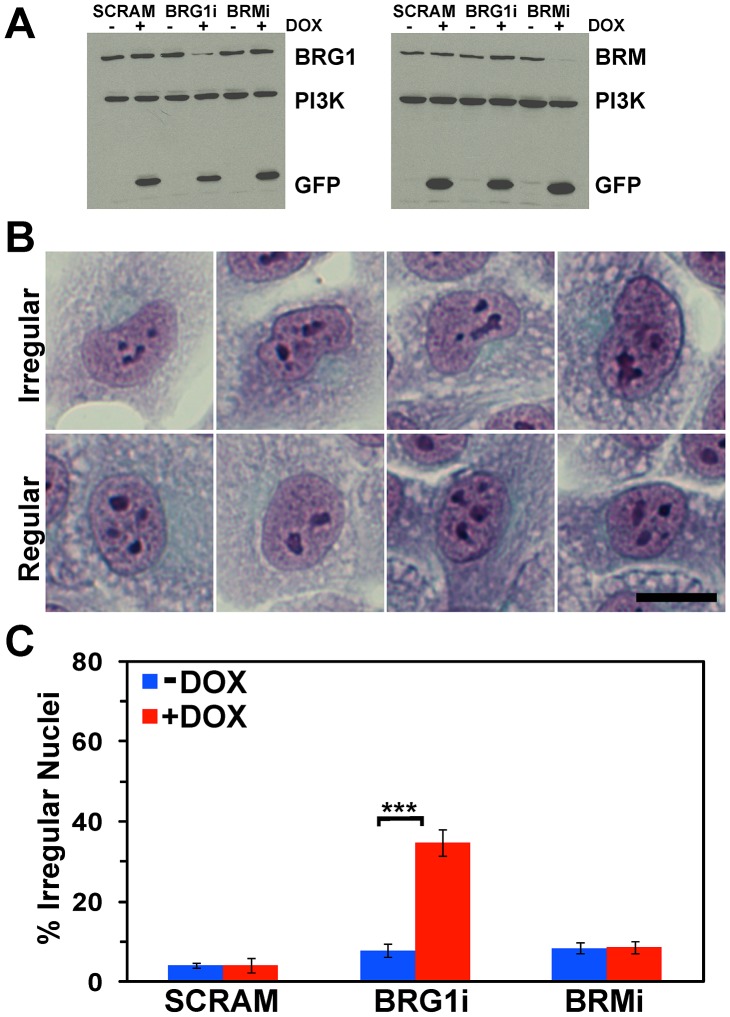
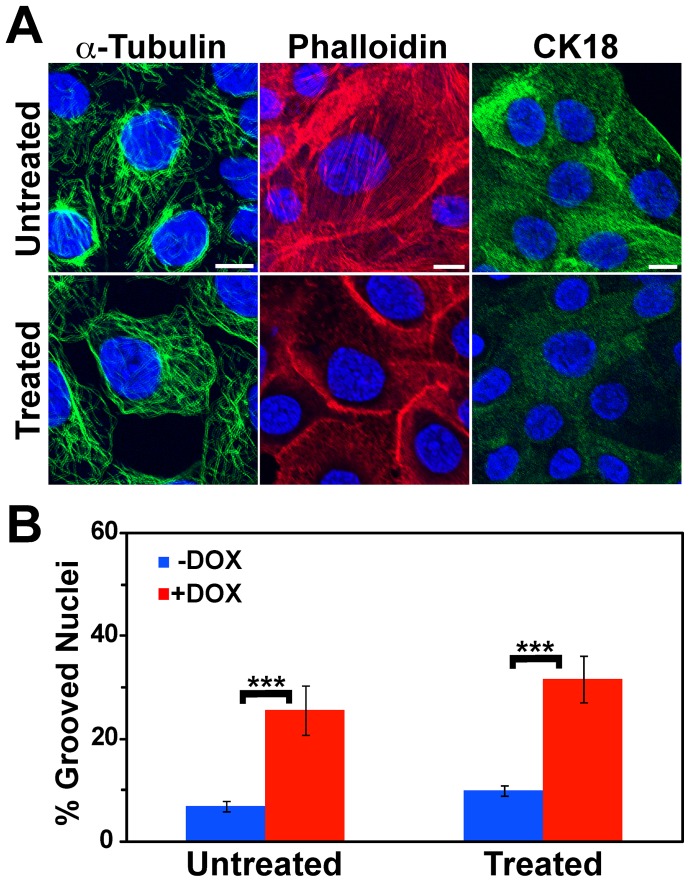
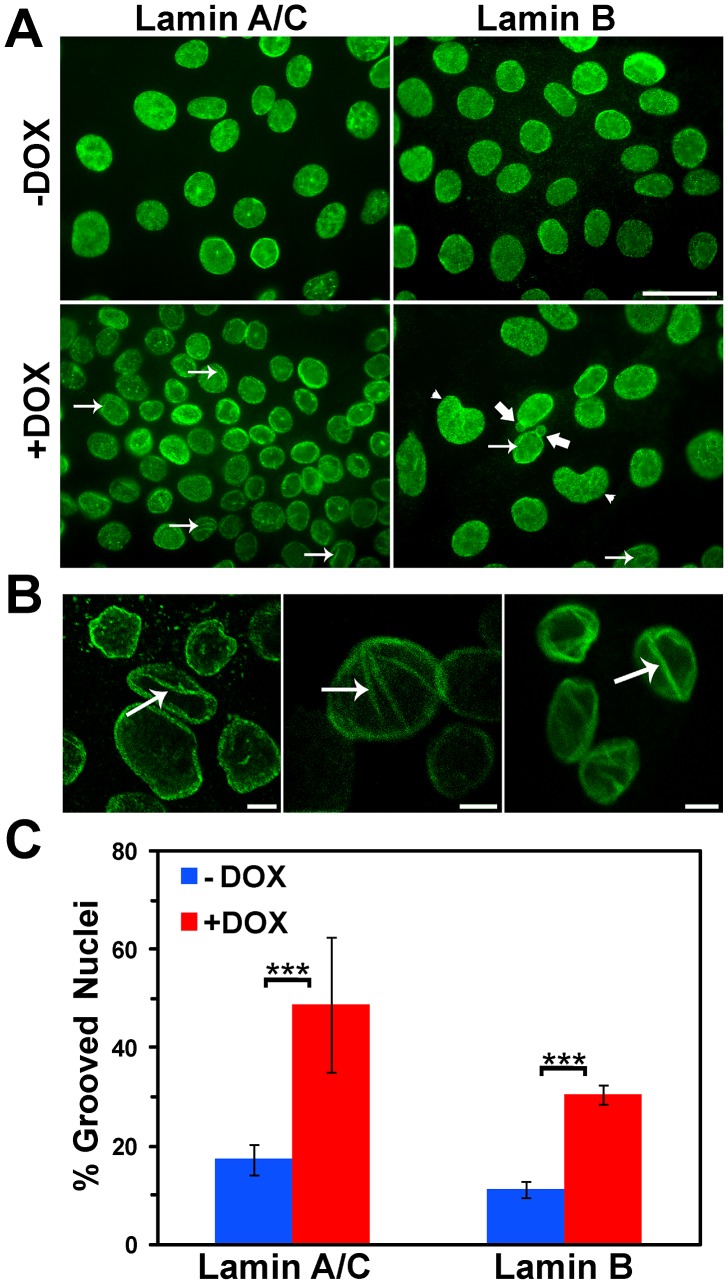
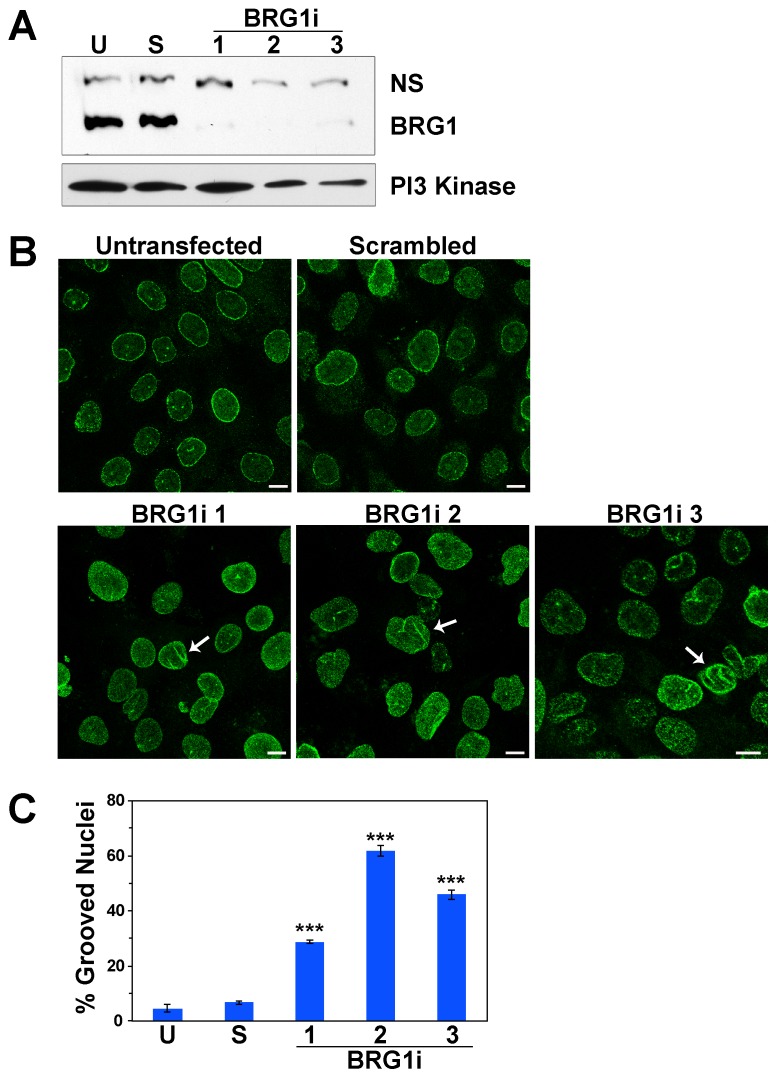
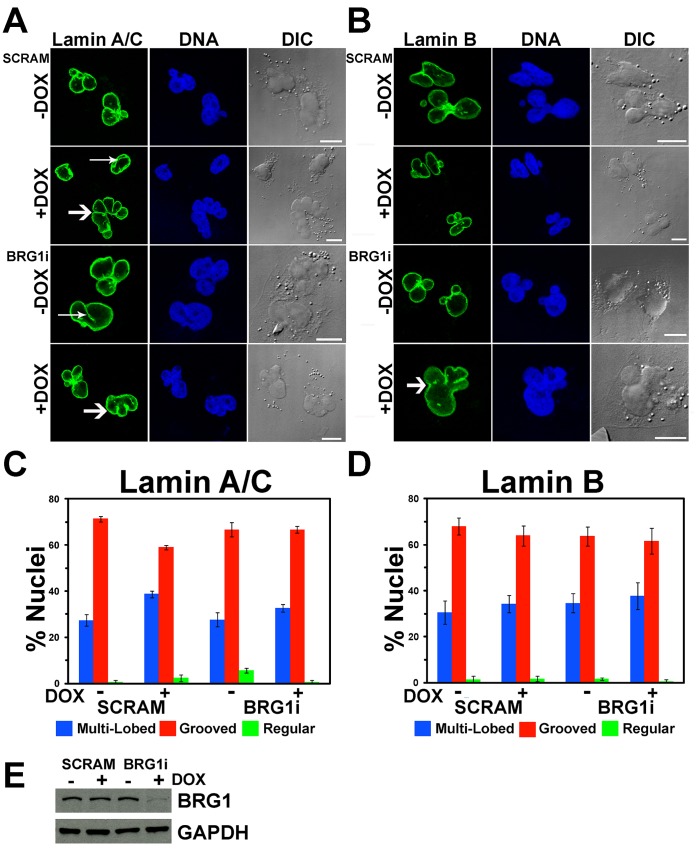
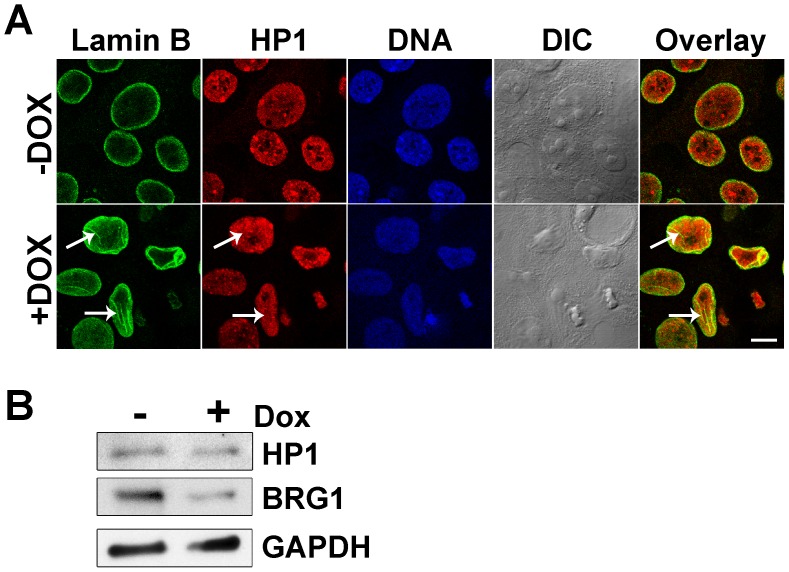
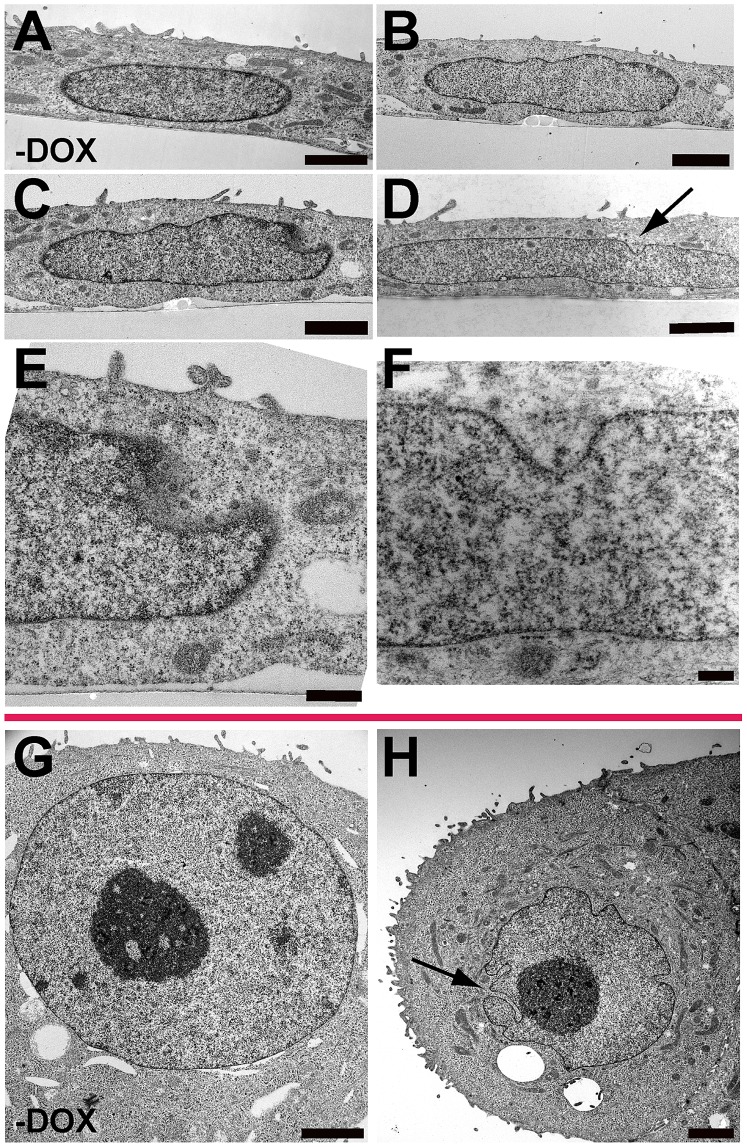
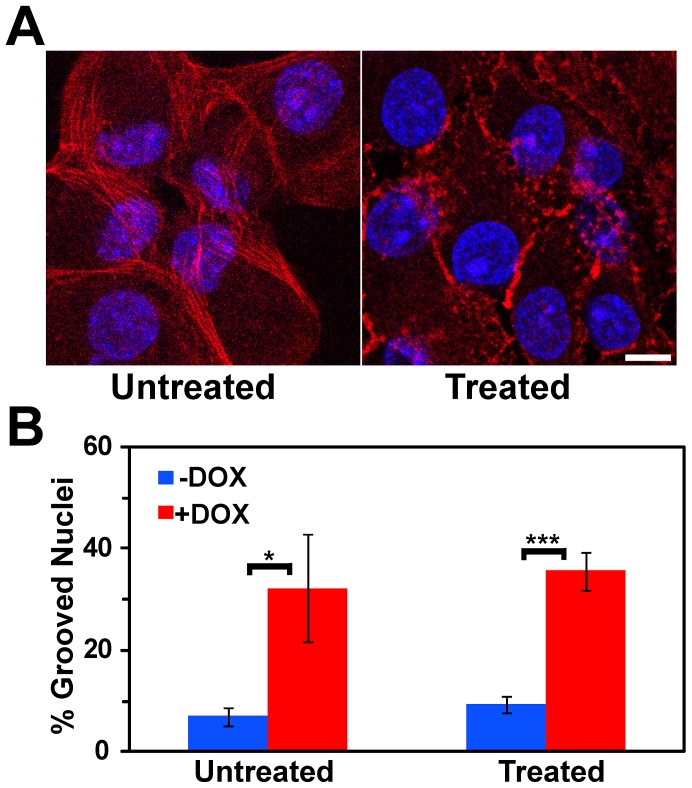
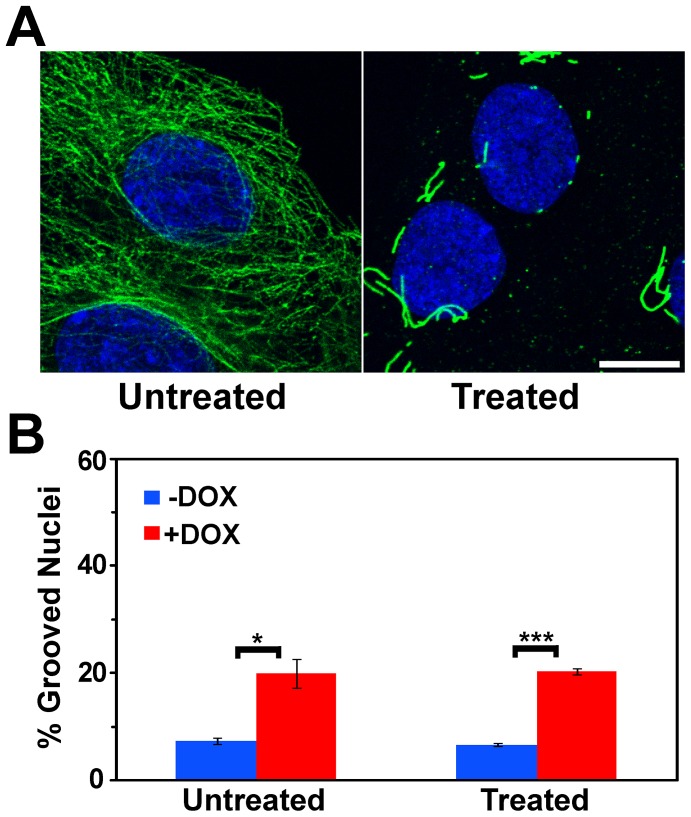
Changes in nuclear morphology occur during normal development and have been observed during the progression of several diseases. The shape of a nucleus is governed by the balance of forces exerted by nuclear-cytoskeletal contacts and internal forces created by the structure of the chromatin and nuclear envelope. However, factors that regulate the balance of these forces and determine nuclear shape are poorly understood. The SWI/SNF chromatin remodeling enzyme ATPase, BRG1, has been shown to contribute to the regulation of overall cell size and shape. Here we document that immortalized mammary epithelial cells show BRG1-dependent nuclear shape changes. Specifically, knockdown of BRG1 induced grooves in the nuclear periphery that could be documented by cytological and ultrastructural methods. To test the hypothesis that the observed changes in nuclear morphology resulted from altered tension exerted by the cytoskeleton, we disrupted the major cytoskeletal networks and quantified the frequency of BRG1-dependent changes in nuclear morphology. The results demonstrated that disruption of cytoskeletal networks did not change the frequency of BRG1-induced nuclear shape changes. These findings suggest that BRG1 mediates control of nuclear shape by internal nuclear mechanisms that likely control chromatin dynamics.
在正常发育过程中会发生核形态的变化,并且在几种疾病的进展过程中也观察到了这种变化。细胞核的形状受核质骨架接触所产生的力的平衡以及染色质和核膜结构所产生的内力的控制。然而,调节这些力的平衡并决定核形状的因素尚不清楚。SWI/SNF 染色质重塑酶 ATP 酶 BRG1 已被证明有助于调节细胞大小和形状的整体状态。在这里,我们记录到永生化的乳腺上皮细胞显示出 BRG1 依赖性的核形状变化。具体来说,BRG1 的敲低会诱导核周的凹槽,可以通过细胞学和超微结构方法来记录。为了验证观察到的核形态变化是由于细胞骨架张力的改变,我们破坏了主要的细胞骨架网络,并量化了 BRG1 依赖性核形态变化的频率。结果表明,细胞骨架网络的破坏并没有改变 BRG1 诱导的核形状变化的频率。这些发现表明,BRG1 通过内部核机制介导核形状的控制,这些机制可能控制染色质动力学。