Division of Endocrinology and Metabolism, Department of Internal Medicine, Istanbul Faculty of Medicine, Istanbul University, Turgut Ozal Caddesi, Capa, 34093, Istanbul, Turkey.
Eur J Epidemiol. 2013 Feb;28(2):169-80. doi: 10.1007/s10654-013-9771-5. Epub 2013 Feb 14.
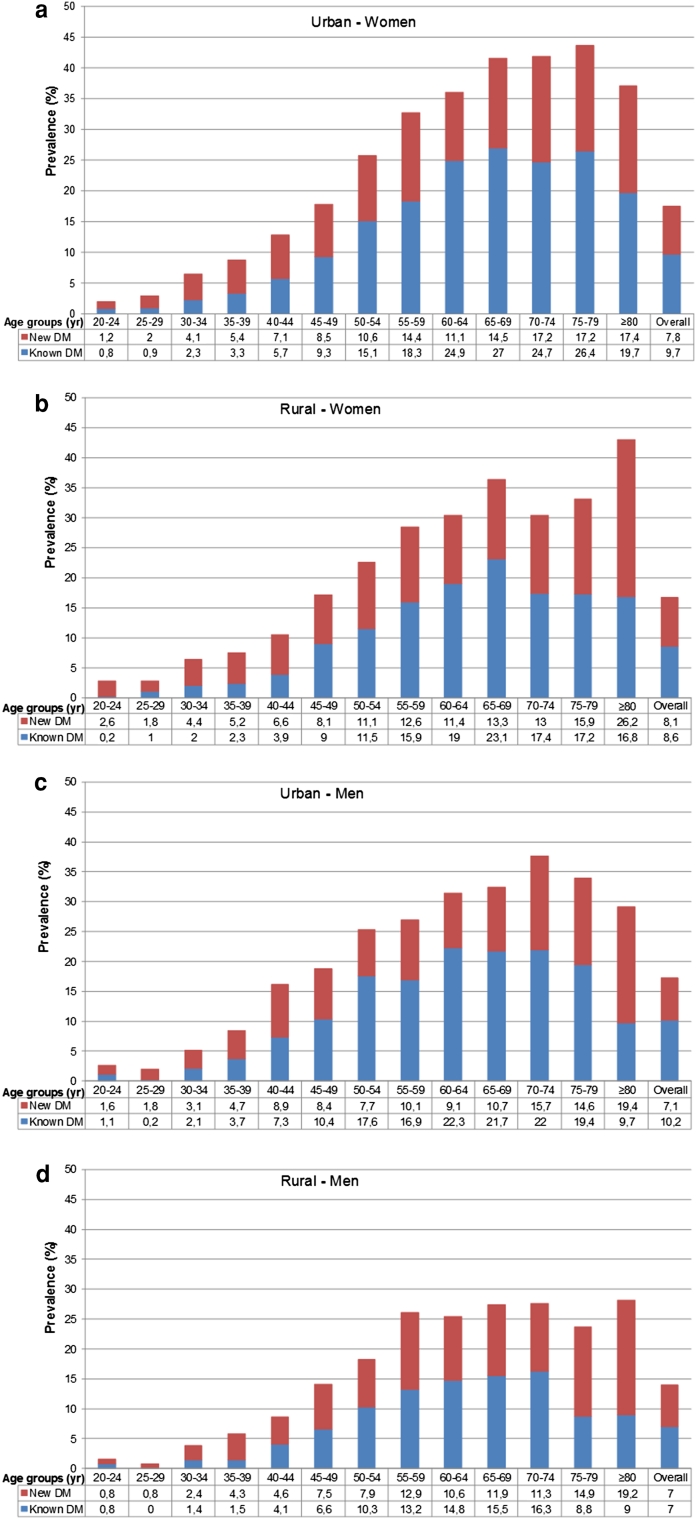
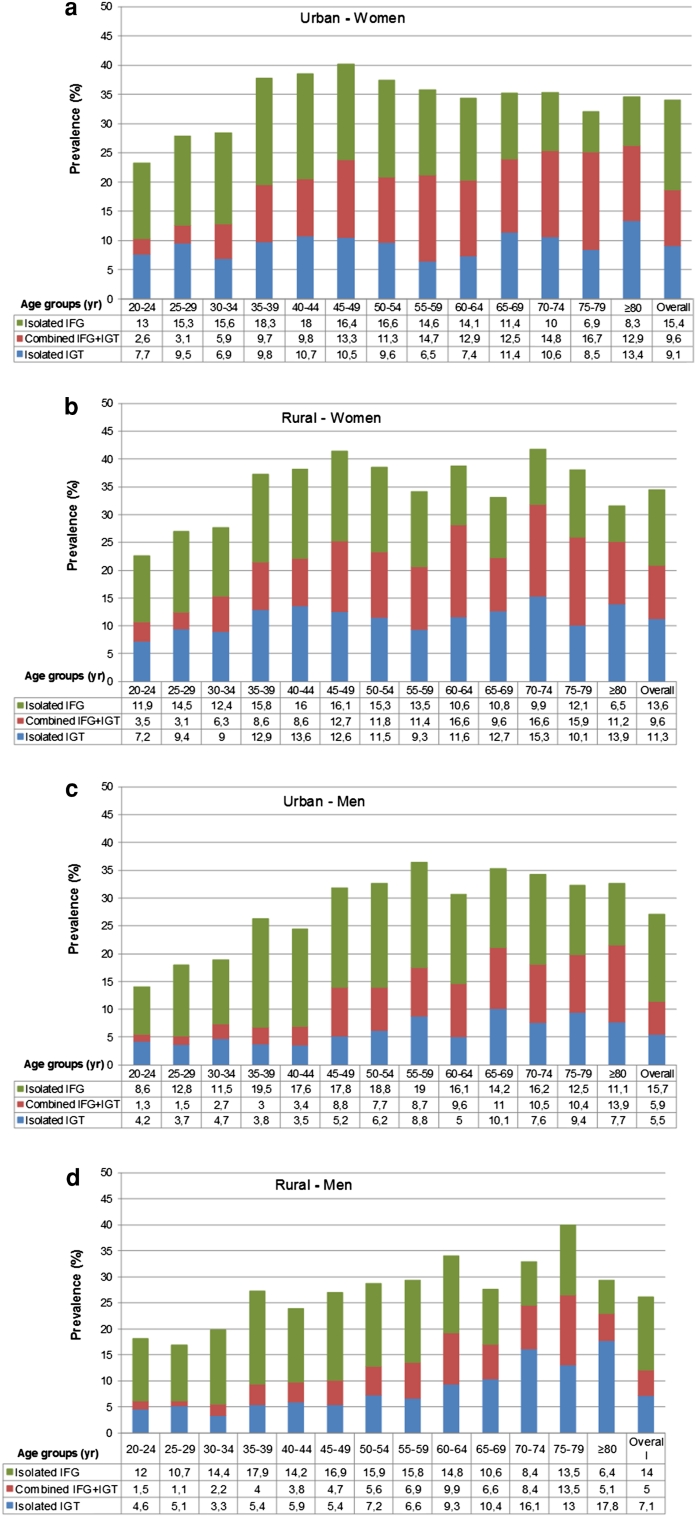
There is concern about an emerging diabetes epidemic in Turkey. We aimed to determine the prevalence of diagnosed and undiagnosed diabetes, prediabetes and their 12-year trends and to identify risk factors for diabetes in the adult Turkish population. A cross-sectional, population-based survey, 'TURDEP-II' included 26,499 randomly sampled adults aged ≥ 20 years (response rate: 87 %). Fasting glucose and biochemical parameters were measured in all; then a OGTT was performed to identify diabetes and prediabetes in eligible participants. The prevalence of diabetes was 16.5 % (new 7.5 %), translating to 6.5 million adults with diabetes in Turkey. It was higher in women than men (p = 0.008). The age-standardized prevalence to the TURDEP-I population (performed in 1997-98) was 13.7 % (if same diagnostic definition was applied diabetes prevalence is calculated 11.4 %). The prevalence of isolated-IFG and impaired glucose tolerance (IGT), and combined prediabetes was 14.7, 7.9, and 8.2 %, respectively; and that of obesity 36 % and hypertension 31.4 %. Compared to TURDEP-I; the rate of increase for diabetes: 90 %, IGT: 106 %, obesity: 40 % and central obesity: 35 %, but hypertension decreased by 11 % during the last 12 years. In women age, waist, body mass index (BMI), hypertension, low education, and living environment; in men age, BMI, and hypertension were independently associated with an increased prevalence of diabetes. In women current smoking, and in men being single were associated with a reduced risk. These results from one of the largest nationally representative surveys carried out so far show that diabetes has rapidly become a major public health challenge in Turkey. The figures are alarming and underscore the urgent need for national programs to prevent diabetes, to manage the illness and thus prevent complications.
土耳其出现糖尿病流行的情况令人担忧。我们旨在确定已确诊和未确诊的糖尿病、前驱糖尿病及其 12 年趋势的流行率,并确定土耳其成年人群中糖尿病的危险因素。一项名为“TURDEP-II”的横断面、基于人群的调查包括了 26499 名随机抽样的年龄≥20 岁的成年人(应答率:87%)。所有参与者均检测空腹血糖和生化参数;然后对符合条件的参与者进行 OGTT 以确定糖尿病和前驱糖尿病。糖尿病的患病率为 16.5%(新发病例为 7.5%),这意味着土耳其有 650 万成年人患有糖尿病。女性的患病率高于男性(p=0.008)。如果采用相同的诊断定义,那么按年龄标准化后,与 TURDEP-I 人群(1997-98 年进行)相比,糖尿病患病率为 13.7%(计算得出的糖尿病患病率为 11.4%)。孤立性 IFG 和糖耐量受损(IGT)以及合并前驱糖尿病的患病率分别为 14.7%、7.9%和 8.2%;肥胖症和高血压的患病率分别为 36%和 31.4%。与 TURDEP-I 相比;糖尿病的增长率为 90%、IGT 为 106%、肥胖症为 40%和中心性肥胖为 35%,但高血压在过去 12 年下降了 11%。在女性中,年龄、腰围、体重指数(BMI)、高血压、低教育程度和生活环境;在男性中,年龄、BMI 和高血压与糖尿病患病率的增加独立相关。在女性中,当前吸烟,而在男性中,单身与风险降低相关。这些来自迄今为止进行的最大规模的全国代表性调查之一的结果表明,糖尿病在土耳其迅速成为一个主要的公共卫生挑战。这些数据令人震惊,突显了迫切需要开展国家项目来预防糖尿病、管理该疾病从而预防并发症。